
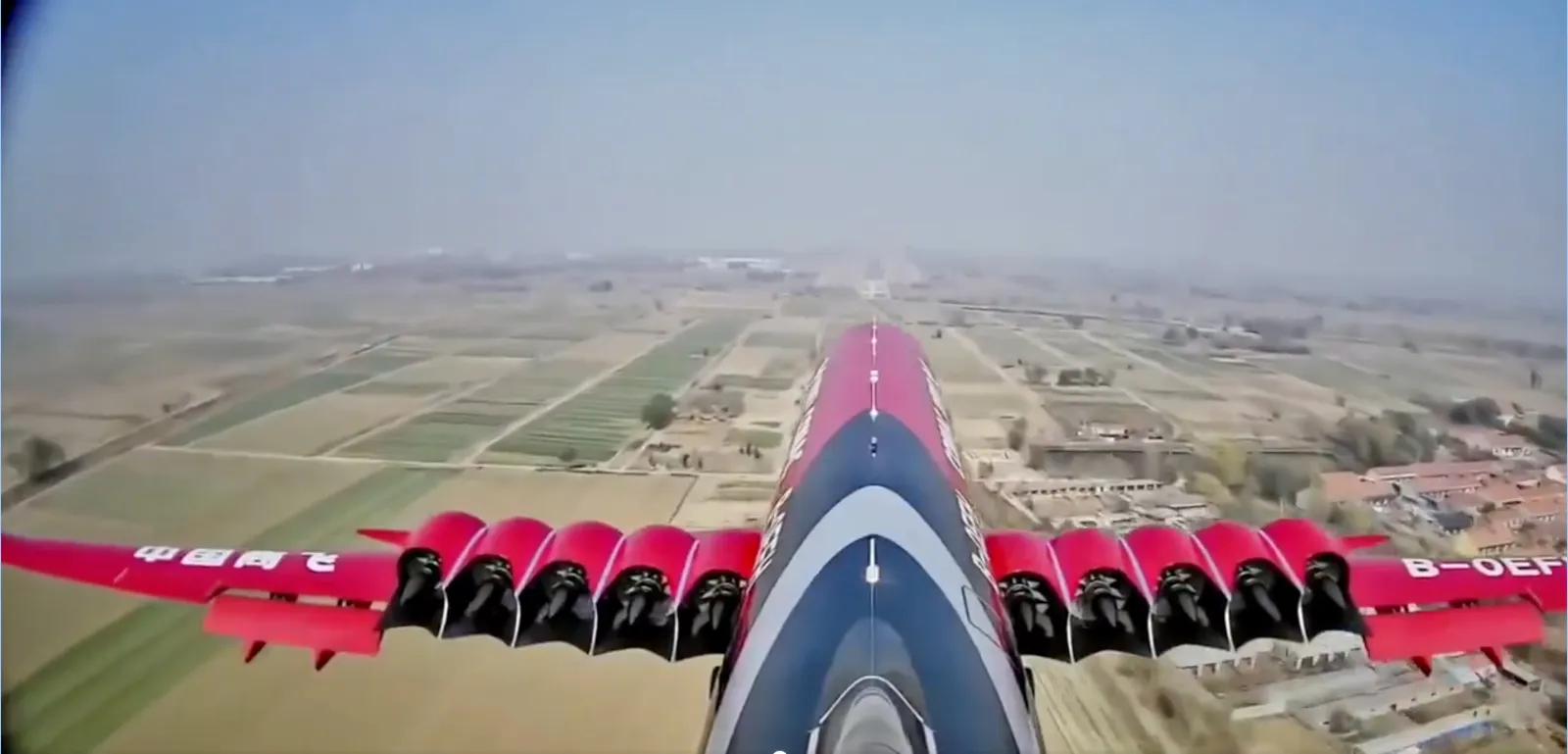
COMAC’s CE-25A battery-electric aircraft has completed its first flight with people aboard, a 16-minute, 38-second test that moves the 19-seat regional-aircraft project into its next development phase. The flight took place on November 14 in Binzhou, Shandong province, with two pilots and a flight-test engineer on board.
The aircraft covered 60.4 km during the sortie. COMAC said it operated normally and that monitored parameters remained within expected ranges. The crewed test followed 19 autonomous verification flights, beginning with the CE-25A’s first uncrewed flight on February 2, 2026.
Designed for regional routes, the CE-25A is COMAC’s first commercial electric-aircraft program. It was developed with battery maker CATL, Shanghai Jiao Tong University and other partners. COMAC lists a 400 km range; that is the stated design range, not the distance flown during the latest test.
- Capacity: up to 19 passengers.
- Propulsion: 10 ducted electric fans, with five mounted above each wing.
- Maximum takeoff weight: 10 tonnes.
- Claimed cruise speed: 300 km/h.
- Claimed operating altitude: about 2,400 meters.
The program’s next major hurdle is certification. The Civil Aviation Administration of China has accepted COMAC’s application for type certification, but that step does not mean the aircraft has been approved to carry commercial passengers. COMAC has not announced an entry-into-service date.

Electric propulsion avoids direct exhaust emissions during flight, although the overall environmental impact will also depend on electricity generation and battery manufacturing. The CE-25A is not the first electric aircraft to fly: Harbour Air tested an electric seaplane in 2019, while EASA certified the smaller training-focused Pipistrel Velis Electro in 2020. The unresolved question for COMAC is whether its larger 19-seat design can complete the certification path for regional passenger operations.