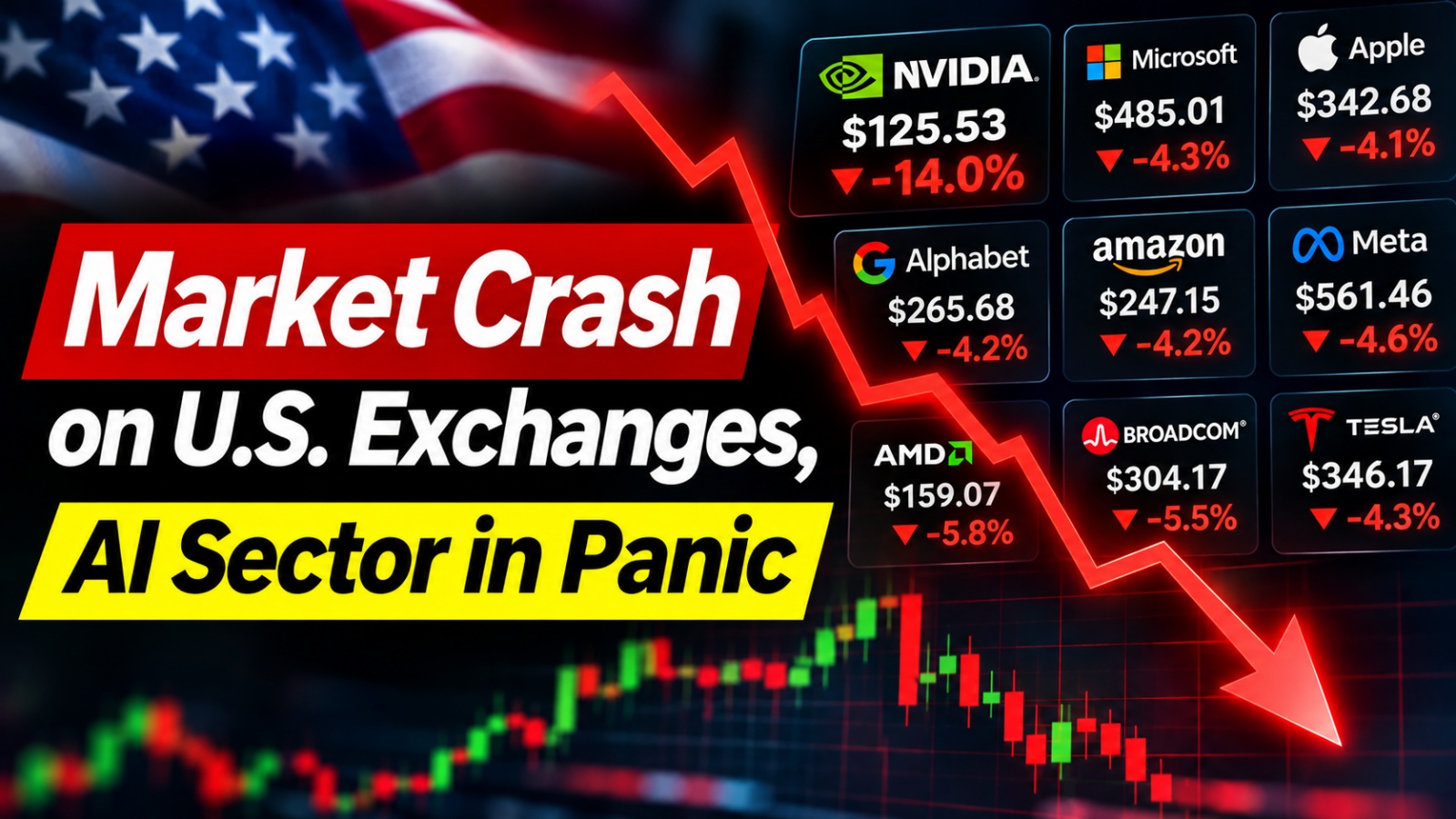
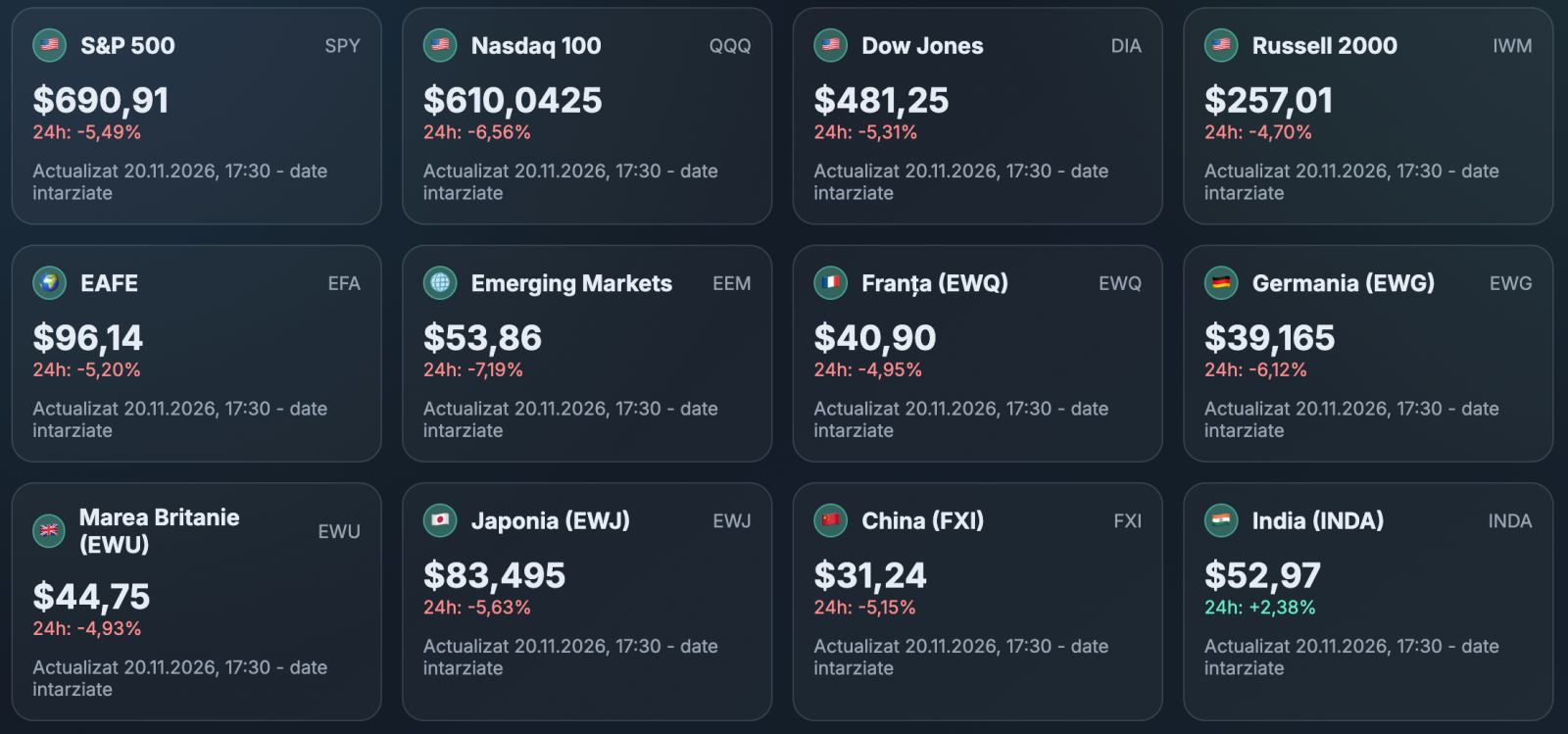
A sharp sell-off in technology and AI-linked shares drove the Nasdaq Composite down 5.28% on Friday, November 20, 2026, erasing the index’s gains for the year. The S&P 500 fell 3.70% and the Dow Jones Industrial Average lost 1.93%, with both indexes entering correction territory after declines of at least 10% from prior highs.
| Index | Close on Nov. 20 | Daily change | Weekly change |
|---|---|---|---|
| Nasdaq Composite | 22,617.73 | -5.28% | -10.0% |
| S&P 500 | 6,910.39 | -3.70% | -8.6% |
| Dow Jones Industrial Average | 48,147.33 | -1.93% | -8.0% |
| Russell 2000 | 2,581.79 | -2.8% | -7.5% |
The Nasdaq’s 10% weekly decline was its worst since March 2020, according to Associated Press closing data. Selling extended beyond a handful of high-profile AI companies: 3,964 Nasdaq-listed stocks finished lower, compared with 928 gainers. Total U.S. market trading volume reached 25.19 billion shares, above the 20-session average of 19.5 billion.
Chipmakers absorb the heaviest losses
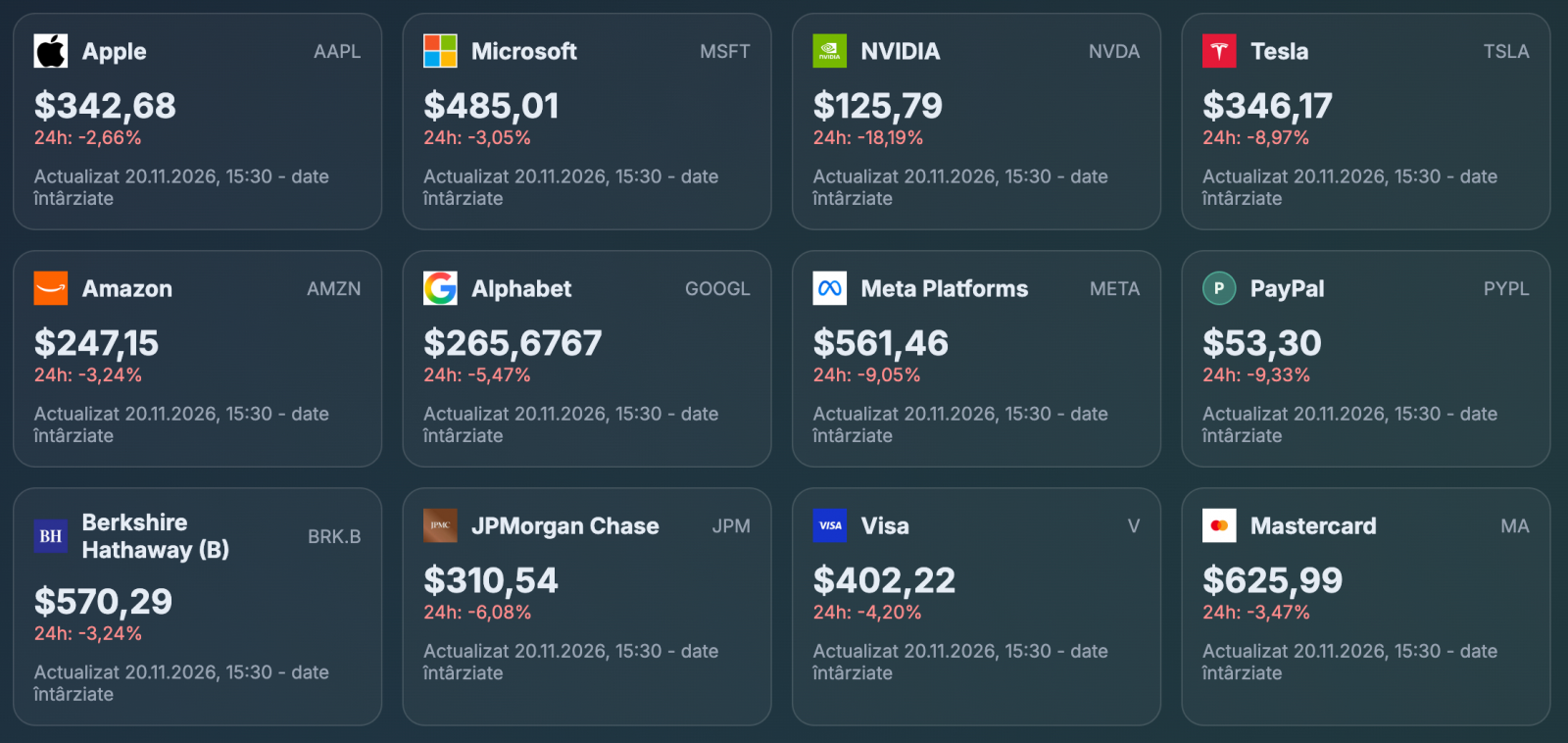
Semiconductor stocks were among the session’s biggest casualties. Nvidia closed at $125.53, down about 14% from the prior close, while AMD fell 13.2% to $424.39. Broadcom declined by roughly 12%, amid broad weakness across chipmakers and data-center equipment suppliers.
- Tesla fell 7.6% to $345.82.
- Meta dropped 5.9% to $560.84.
- Amazon declined 4.1% to $246.82.
- Microsoft fell 2.8% to $484.52.
- Alphabet dropped 2.7% to $265.29.
Several pressures converged on the sector. Reuters reported that the U.S. Securities and Exchange Commission is examining potential accounting issues at Nvidia, a development that accelerated a decline already exceeding 6% before details of the probe emerged. The existence of an inquiry does not establish that any wrongdoing occurred.
Investors were also weighing a weak start for Anthropic’s newly listed shares, which dropped 9.1% in their second trading session. At the same time, persistent U.S. inflation raised expectations that the Federal Reserve could lift its benchmark rate again in December. Higher rates can raise the cost of financing data-center construction and reduce the appeal of companies valued primarily on expected future profits.
The move highlights how heavily major indexes remain influenced by a small group of technology leaders. Reuters reported that the median S&P 500 stock was still up about 5% for the year, while the index itself was only about 1% higher, showing how declines in the largest companies can mask comparatively resilient performance elsewhere in the market.
For the AI industry, the next question is whether hyperscalers and other major customers will sustain spending on AI infrastructure at the current pace. Strong chip sales alone may not settle investor concerns over the eventual returns from the vast data-center investments supporting the AI buildout. Markets reopen Monday, November 23, with Nvidia, semiconductor shares and incoming U.S. inflation data likely to remain in focus.