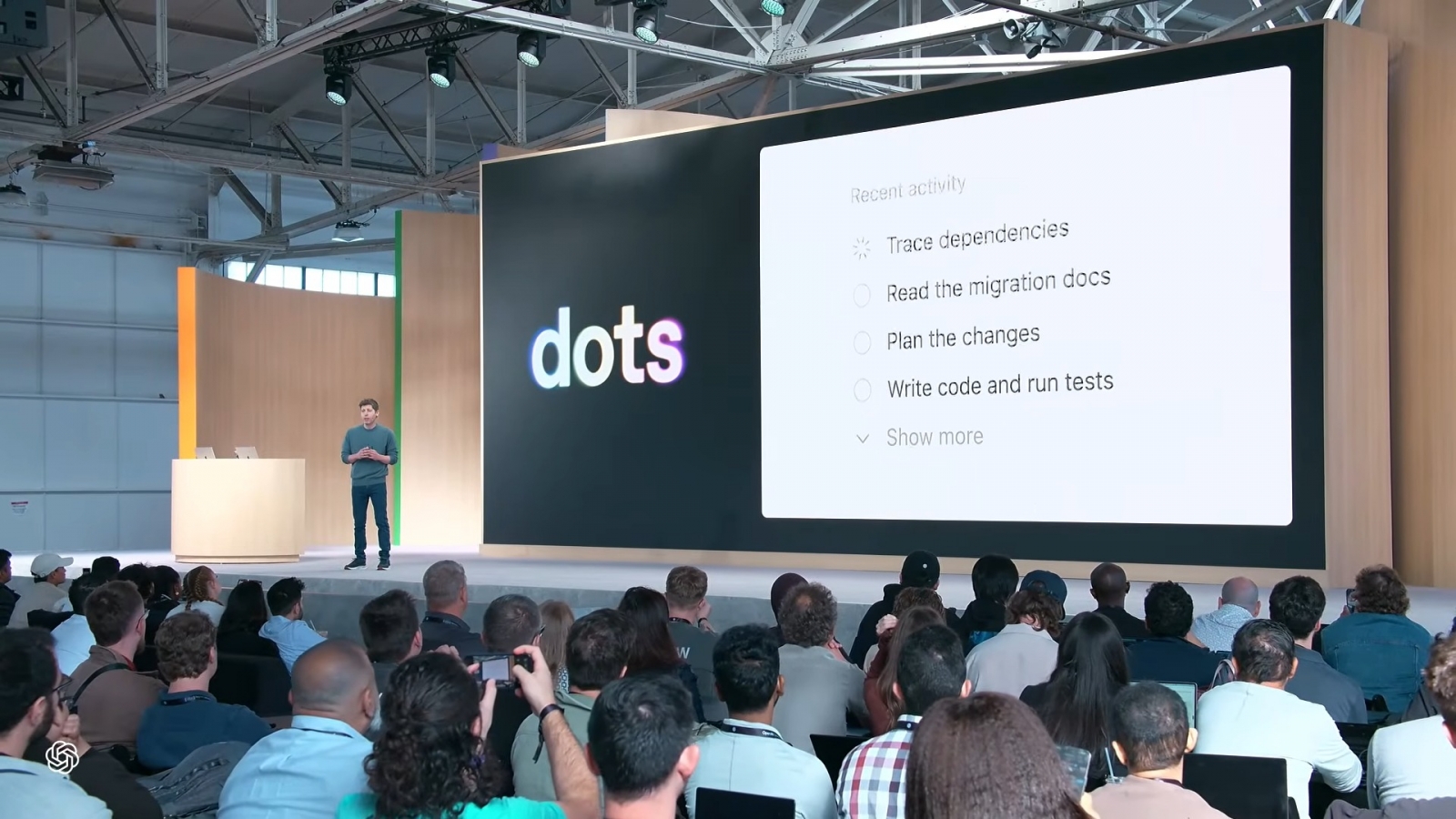
OpenAI has introduced Dots, a persistent AI-agent system built on GPT-6 Astra. Each Dot has its own cloud computer and browser, allowing it to continue pursuing an assigned goal around the clock rather than operating only while a ChatGPT conversation is open. OpenAI says the agents can use more than 4,000 applications through its plugin ecosystem.
The company unveiled Dots at DevDay 2026 as a layer above the browser and multi-step workflow capabilities previously associated with GPT-6 Astra. The intended shift is from issuing isolated prompts to assigning an ongoing responsibility that an agent can revisit and advance over time.
OpenAI’s examples include monitoring app feedback, identifying recurring bugs, building and testing fixes, and bringing pull requests through the approval process. A Dot could also receive product-launch materials and update them when specifications or campaign messaging changes. For publishing workflows, OpenAI says an agent can process an interview transcript, identify clips, prepare show notes and draft social posts, then learn from later user corrections.
Cloud workspace, local access and safeguards
Dots run in a workspace separate from the user’s own computer. Users can explicitly connect a personal machine, however, enabling access to local files, the local browser, Codex tasks and ChatGPT Work. That capability is off by default.
Custom Rules let users automatically allow or block selected operations, or require approval before they proceed. OpenAI says sensitive actions receive additional checks, while certain tasks, including changing a password, must be completed by the user. A Dot’s activity can be monitored, paused or redirected.
Dots also includes a proactive research mode. When no active assignment is running, an agent can examine information in connected applications for potentially useful findings. Its permissions are read-only in that mode: it cannot send messages, alter information or control the computer and browser.
A Dot can retain context while moving between supported communication and work surfaces, including:
- ChatGPT on desktop
- ChatGPT on the web
- ChatGPT on mobile
- Slack
- Microsoft Teams
SMS support is planned for a later stage. This cross-channel continuity means a task started in ChatGPT can later continue in a workplace conversation.
Access begins with a limited rollout
The rollout is gradual, so even eligible users may not see Dots immediately. OpenAI’s documented access terms currently differ by plan:
- ChatGPT Pro: rolling out in markets outside the European Economic Area, Switzerland and the United Kingdom.
- Business Premium: available across supported ChatGPT regions.
- Enterprise, Edu and Healthcare: beta access is available after an administrator enables it; Dots is off by default for Enterprise.
- All eligible plans: the first Dot is included at no additional cost.
OpenAI plans to let customers add more agents and increase available speed or workload capacity in the future. Standard Dot conversations do not use normal ChatGPT limits, but work a Dot launches in Codex or ChatGPT Work continues to draw on the resources associated with the relevant subscription.
Dots extends OpenAI’s broader push to make ChatGPT a hub for Codex, external services and longer-running work. The key open question is how quickly the company can expand access while maintaining the approval controls needed for agents that can operate persistently across connected tools.