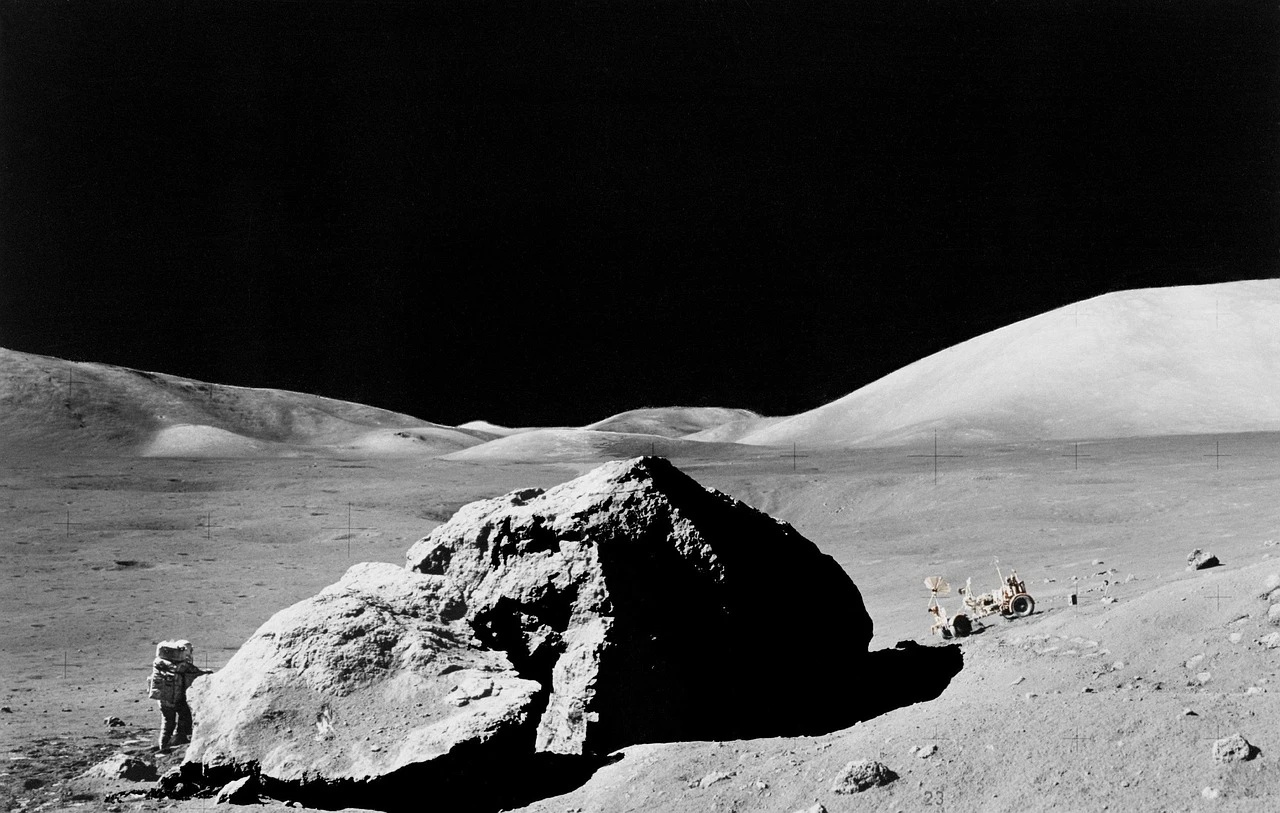
Astrolab plans to deploy its first LUMIS lunar power and communications node in 2028, using its FLEX rover to move the equipment from a landing site to terrain with stronger sunlight and radio coverage. The Lunar Utility Module for Industrial Services is designed as shared infrastructure for lunar surface operations, supplying electricity, wireless connectivity and local computing rather than requiring every mission to bring its own systems.
The commercial mission would carry FLEX aboard SpaceX’s Starship. Astrolab says the ability to reposition a node is particularly important around the lunar south pole, where shifting a site by as little as 50 meters can add hundreds of hours of darkness or halve the time Earth is visible.
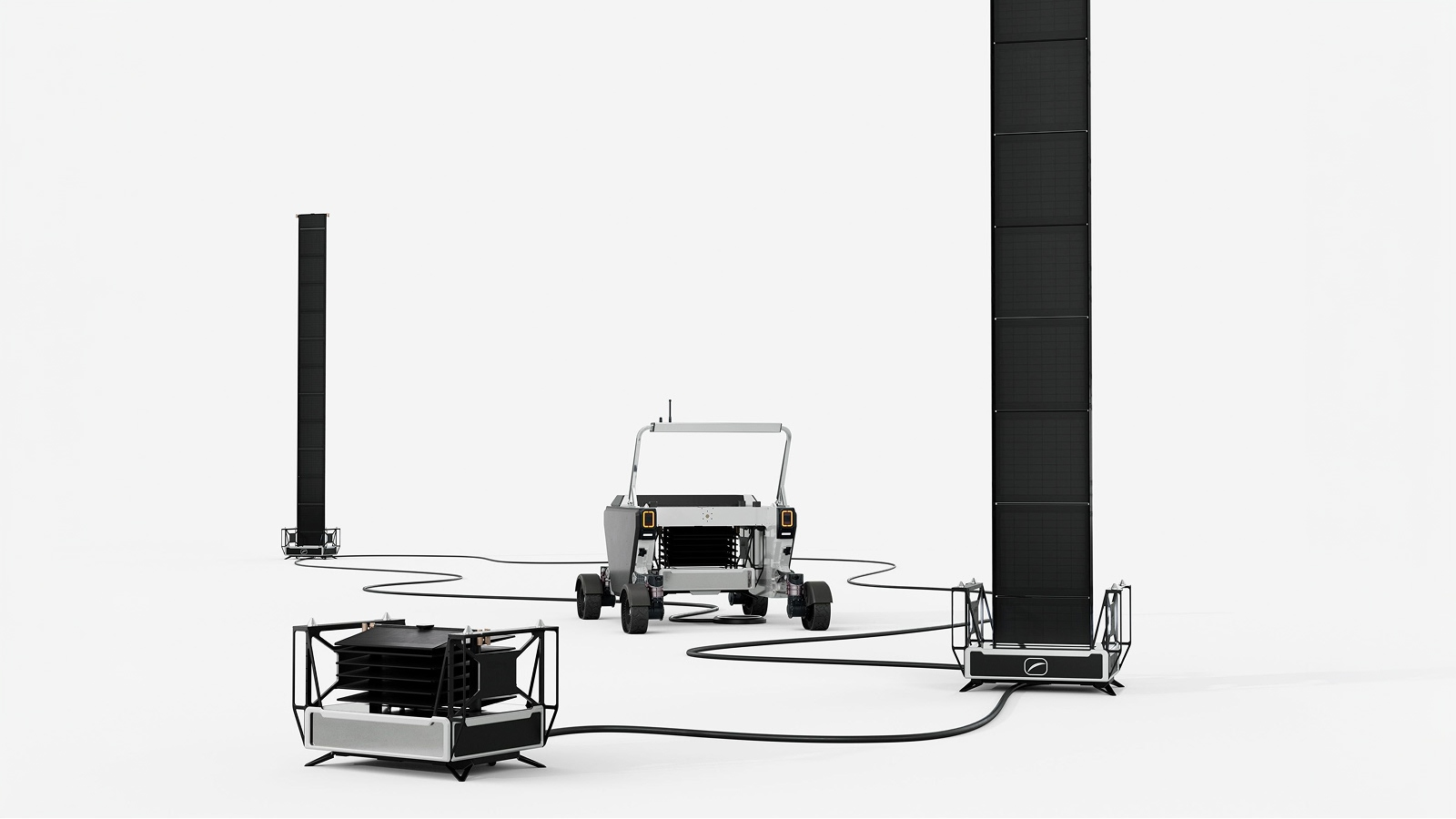
- Initial demonstration nodes are designed to provide 2 kW each.
- Later versions are planned to reach 20 kW per node.
- Interconnected installations could provide more than 100 kW in aggregate.
- Each node is intended to combine vertically arranged solar panels, batteries, antennas and onboard computers.
- Astrolab estimates that energy reserves could support more than 400 hours of operation, including power supplied to external equipment.
LUMIS would use Wi-Fi and 5G for local links between surface equipment, while radio connections between nodes could span more than 100 kilometers. A high-elevation node could relay data to Earth for installations lacking a direct line of sight. Astrolab also plans local data processing and wireless power transfer, potentially reducing the need for continuous contact with ground control.

As one proposed configuration, Astrolab says nodes on Malapert Massif and Mons Mouton could maintain near-continuous communications with Earth and relay data to the Shackleton–de Gerlache ridge more than 100 km away.
The nodes are part of Astrolab’s broader LUNAR OS initiative, which envisions transportation, energy and communications as services available to multiple lunar missions. The company’s model is intended to let smaller operations use an existing network while larger customers could deploy dedicated equipment.
Customers would pay for access and use rather than having to build and operate their own infrastructure.
Astrolab
Before a lunar deployment, Astrolab plans simulated-environment testing at the Texas Space Institute in Houston. The company has also been selected by NASA to provide a lunar rover for Artemis astronaut missions and is planning a new facility in Torrance, California, for 2027. The 2028 target and the planned endurance and network capacity still need to be demonstrated in lunar conditions.