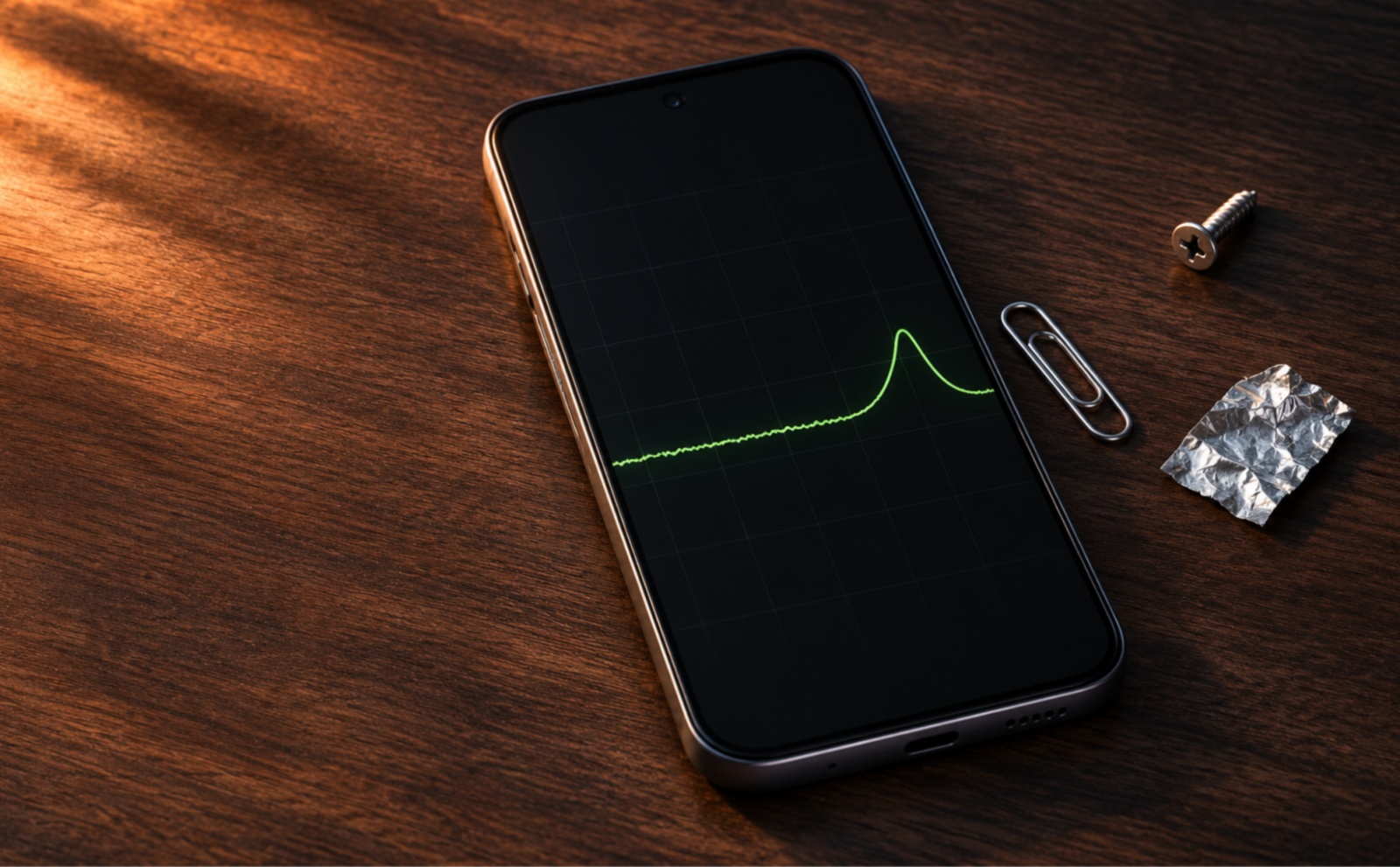
A phone with a built-in magnetometer can help locate a dropped screw or nail at very close range, provided the object is ferromagnetic. Metal-detector apps read changes in the same sensor used by a handset’s digital compass, displaying the magnetic-field strength or triggering an alert when the reading shifts sharply.
The magnetometer measures the magnetic field across three axes, typically in microtesla (µT). Iron and many forms of steel can distort the field near the sensor, making a nail or steel paper clip visible as a spike in an app’s readings. Earth’s magnetic field is normally measured in the range of tens of µT, so a nearby ferromagnetic object can produce a noticeable change.
Results depend heavily on distance, the sensor’s position inside the phone and the handset’s sensitivity. Magnetic cases, MagSafe-compatible accessories and car mounts can also affect readings, so they should be removed before testing. Not every smartphone includes a magnetometer.
A simple test can show whether the sensor is responding to a nearby steel object:
- Remove any case or accessory containing magnets.
- Place the phone on a wooden surface and open a magnetometer-based app.
- Move a steel paper clip slowly around the back of the handset and watch for the point where the reading changes most clearly; aluminum foil should leave the measurement close to its baseline.
NASA’s March 2025 educational guide on magnetism uses a similar experiment to locate a smartphone magnetometer with an iron nail. In its example, the reading rises from roughly 40–60 µT to more than 90 µT when the nail is placed over the sensor.
That does not make a phone a substitute for a dedicated metal detector. Conventional detectors generate an electromagnetic field with a coil, inducing weak electrical currents in conductive targets and detecting the resulting signal. That approach can identify conductive metals including gold, silver and copper, even underground; a phone magnetometer only monitors changes in the surrounding magnetic field. A lost gold ring in sand, for example, is outside the practical scope of a typical smartphone app.
For finding a steel screw in carpet or a misplaced paper clip on a desk, the feature may be useful. Its short range and inconsistent sensitivity between phone models remain the key limitations.