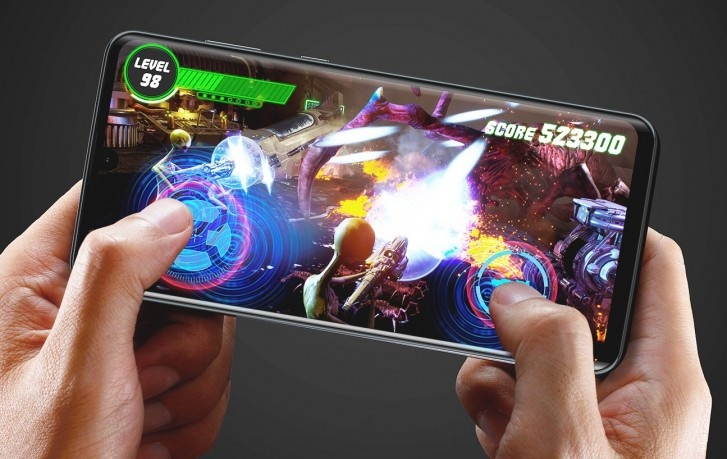
Four major Chinese display suppliers are reportedly testing 240Hz panels for premium Android phones, potentially bringing the ultra-high refresh rate to 2K-class smartphone displays as early as 2027. Digital Chat Station says TCL CSOT, Tianma, BOE and Visionox are all working on the technology, suggesting it could reach more than one handset brand rather than remain an isolated experiment.
BOE is reportedly preparing a 6.89-inch panel that pairs 2K resolution with a refresh rate of up to 240Hz, though that maximum mode remains under evaluation. The display is also said to use next-generation LIPO packaging for extremely narrow bezels on all four sides.
- 6.89-inch diagonal with 2K resolution
- Up to 240Hz refresh rate, still under evaluation
- Next-generation LIPO technology for narrow bezels on all four sides
- BT.2020 color-space support
- Custom display driver IC
The shift would substantially raise the rendering workload compared with current high-refresh flagships. The OnePlus 16, for example, has a 2772 × 1272 display that reaches an adaptive 165Hz in normal use and 185Hz in supported games. Moving to 3200 × 1440 at 240Hz would mean processing nearly 70% more pixels per second than at 185Hz, increasing pressure on the display pipeline and, for games rendered at native resolution, the GPU. That does not automatically translate into a proportional increase in power consumption.
A 240Hz OLED display has already appeared in the HONOR WIN Tablet, which launched with an 8.4-inch, 2304 × 1440 panel and claimed support for more than 40 games at that refresh rate. A tablet has more room for active cooling and a 10,000mAh battery, however, two advantages that are harder to accommodate in a conventional phone.
For phone makers, the key challenge will be sustaining 240Hz without cutting resolution or significantly compromising battery life. Native 240fps game support will also matter, since frame interpolation cannot deliver the same latency and input-response benefits as content rendered at a true 240fps.