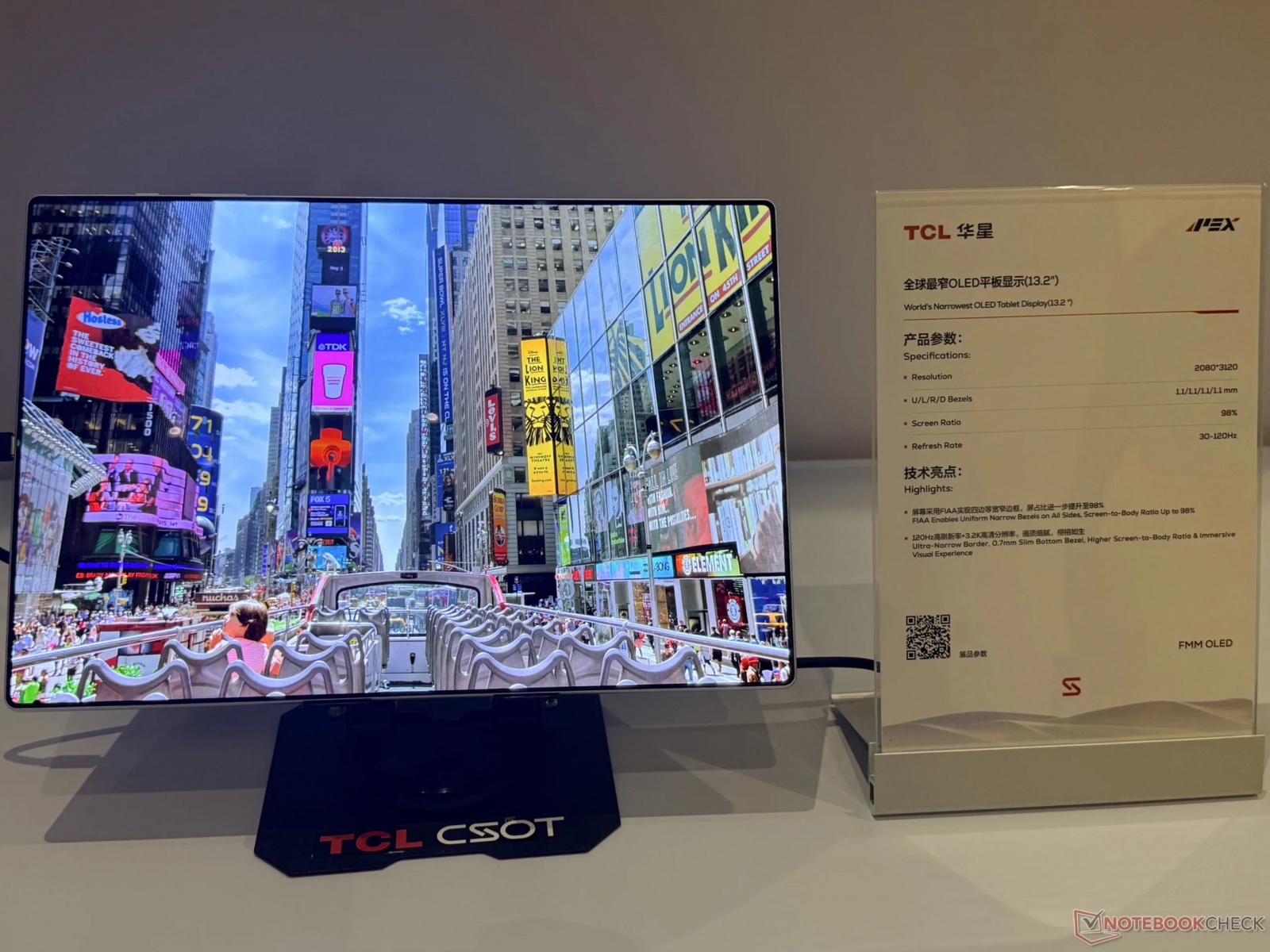
TCL CSOT has demonstrated a 13.2-inch OLED tablet display with 1.1 mm bezels on all four sides, enabling a claimed 98% screen-to-body ratio. The DTC 2026 prototype also supports a variable refresh rate of up to 120 Hz and is designed for thinner tablet hardware.
The panel advances TCL CSOT’s earlier 13.2-inch OLED prototype shown at DTC 2025. That model used 1.7 mm uniform bezels and had a 96% screen-to-body ratio, meaning the newer design reduces bezel thickness by roughly 35% while adding two percentage points of display coverage.
| Specification | DTC 2025 prototype | DTC 2026 prototype |
|---|---|---|
| Diagonal | 13.2 inches | 13.2 inches |
| Panel technology | OLED | OLED |
| Bezel width | 1.7 mm | 1.1 mm |
| Screen-to-body ratio | 96% | 98% |
| Refresh rate | Adaptive, 1–120 Hz | Variable, up to 120 Hz |
| Status | Prototype | Prototype |
TCL CSOT has not disclosed the panel’s resolution, peak brightness, color-gamut coverage or an exact thickness measurement. A high pixel density and 120 Hz operation were shown during the demonstration, but the display’s image quality and power performance will require evaluation in a finished product.
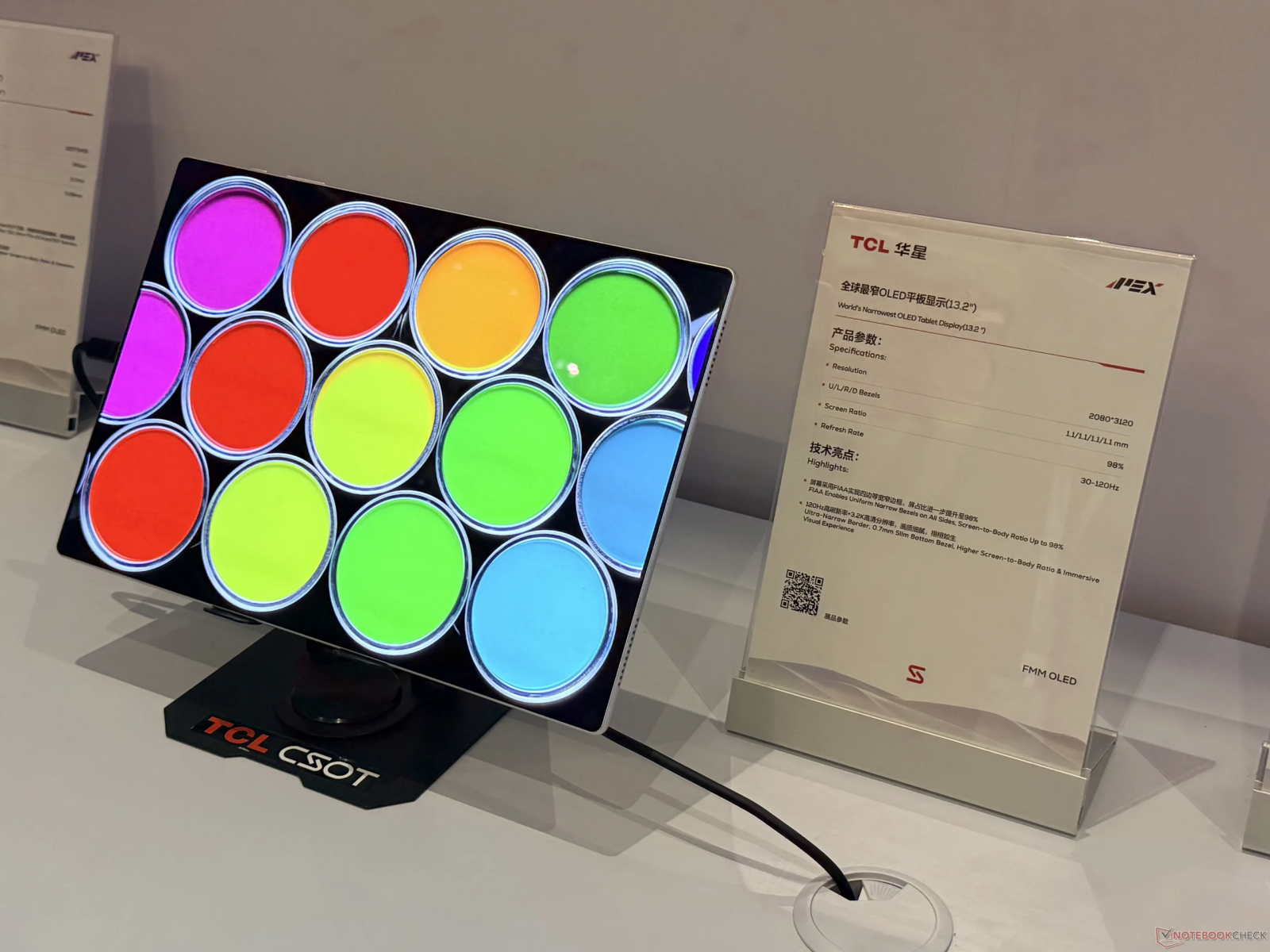
The company’s 2025 panel could run different refresh rates across separate portions of the display to reduce power consumption. Its newest concept instead puts the emphasis on maximizing active screen area. That differs from TCL’s NXTPAPER 14 and NXTPAPER 11 tablets, which focused on lowering reflections and creating a paper-like viewing experience.
As a display supplier, TCL CSOT could provide the technology to brands beyond TCL; it has also supplied panels for Xiaomi projects. The company is reportedly discussing the new OLED panel with industry partners, with the first commercial tablets potentially arriving in 2027. Neither volume production nor participating device makers has been confirmed, and a 98% screen-to-body ratio in a prototype does not ensure the same result in a retail tablet.