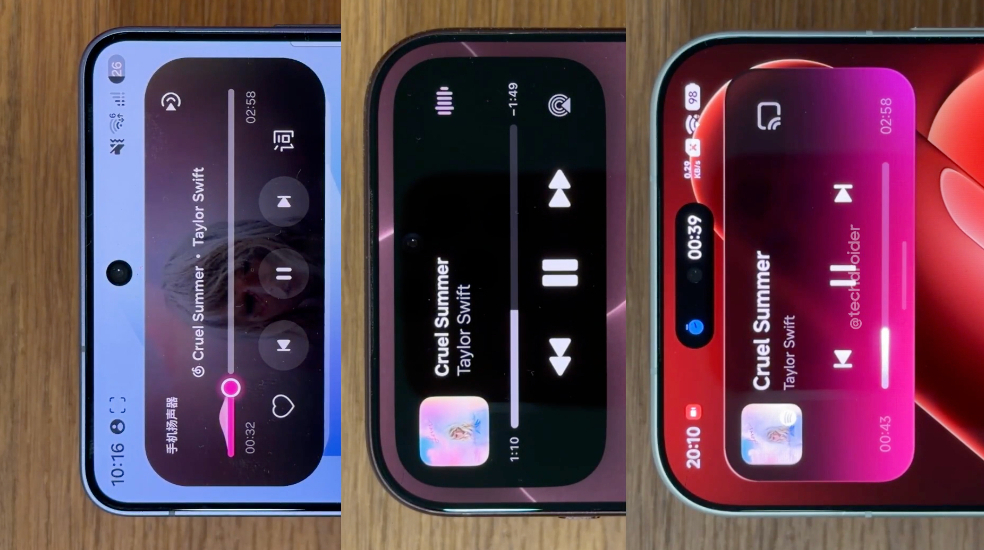
Apple’s Dynamic Island has become a broader interface idea, with Xiaomi already extending it to support multiple live activities and Samsung reportedly preparing a more camera-centered version for a future Galaxy flagship. A TechDroider comparison examines how the three companies use the space around the selfie camera for notifications and real-time controls.
On iPhone, Dynamic Island is built into iOS and animates around the camera cutout to surface music controls, calls, timers and other ongoing tasks. Xiaomi’s HyperIsland, also referred to as Super Island, takes a multitasking-focused approach: HyperOS 3 can show up to three islands at once, including information from delivery and travel services as well as active apps.
| Company | Interface | Live-activity handling | Software context |
|---|---|---|---|
| Apple | Dynamic Island | Music controls, calls, timers and other ongoing tasks | iOS |
| Xiaomi | HyperIsland / Super Island | Up to three simultaneous islands for deliveries, travel and active apps | HyperOS 3 |
| Samsung | Now Bar and Live Notifications | A separate approach that does not fully animate around the front camera cutout | One UI |
Samsung’s current Now Bar and Live Notifications approach does not directly reproduce Dynamic Island-style animations around the selfie camera. That may change with Moment Effects, a feature reportedly in development for One UI 9.5 and the Galaxy S27 series. The feature could bring interactive notifications and animations to the area around the front-camera cutout.
The comparison underscores a split in priorities: Apple emphasizes deep system-level integration, Xiaomi is pushing simultaneous activity cards, and Samsung may yet move its notifications closer to the camera hardware. Moment Effects remains an unannounced work in progress, so its final design and rollout have not been confirmed.