
Huawei's Mate 90 Pro Max has surfaced in Geekbench 7 with a Kirin 9050 Pro score of 1,528 points in single-core testing and 6,169 points in multi-core testing. The strongest result for the CMM-AL10 model narrows the multi-core gap to results associated with Snapdragon 8 Gen 3 devices, although its single-core performance remains behind current flagship Android chips.
The tested handset is identified as the Mate 90 Pro Max variant with 16GB of RAM and the Kirin 9050 Pro. Huawei also offers a model with 12GB of RAM and the standard Kirin 9050, making it important to distinguish the two configurations when comparing benchmark results.
Thirteen Geekbench 7 entries are currently available for the CMM-AL10. Their average is about 1,326 points for single-core and 5,363 points for multi-core performance. The spread between runs is substantial, suggesting that temperature, performance settings and software versions may significantly affect the outcome.
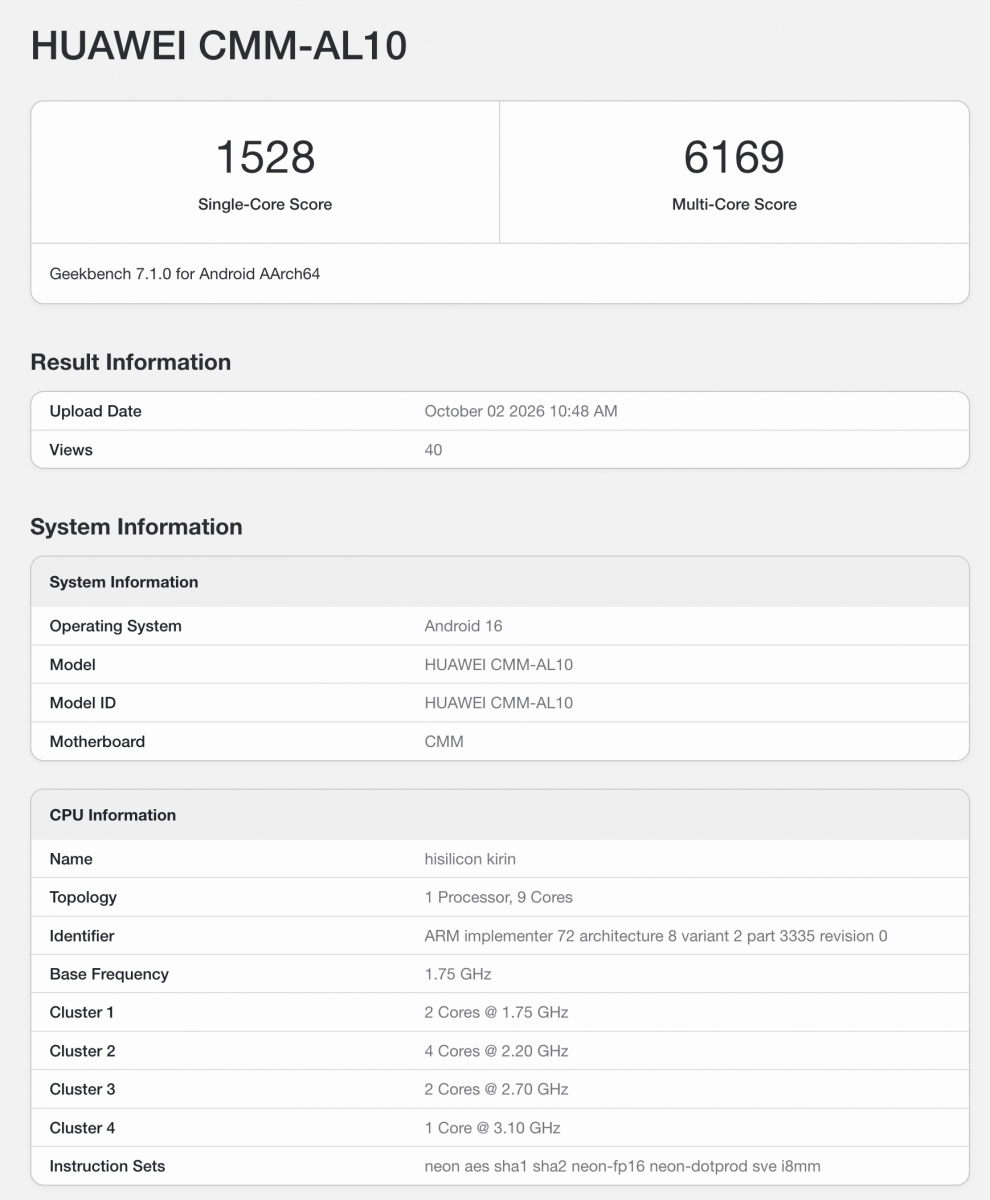
The peak result lists a nine-core CPU with 16 threads, an unusual layout that appears designed to favor heavily parallel workloads:
- One core clocked at 3.10GHz
- Two cores clocked at 2.70GHz
- Four cores clocked at 2.20GHz
- Two cores clocked at 1.75GHz
For perspective, a Galaxy S24 Ultra powered by Qualcomm's Snapdragon 8 Gen 3 can exceed 1,800 points in Geekbench 7 single-core testing, depending on the run. The Mate 90 Pro Max's 6,169-point multi-core peak sits much closer to Snapdragon 8 Gen 3 territory, but that alone does not establish overall performance parity. Results from different Geekbench versions should not be compared directly.
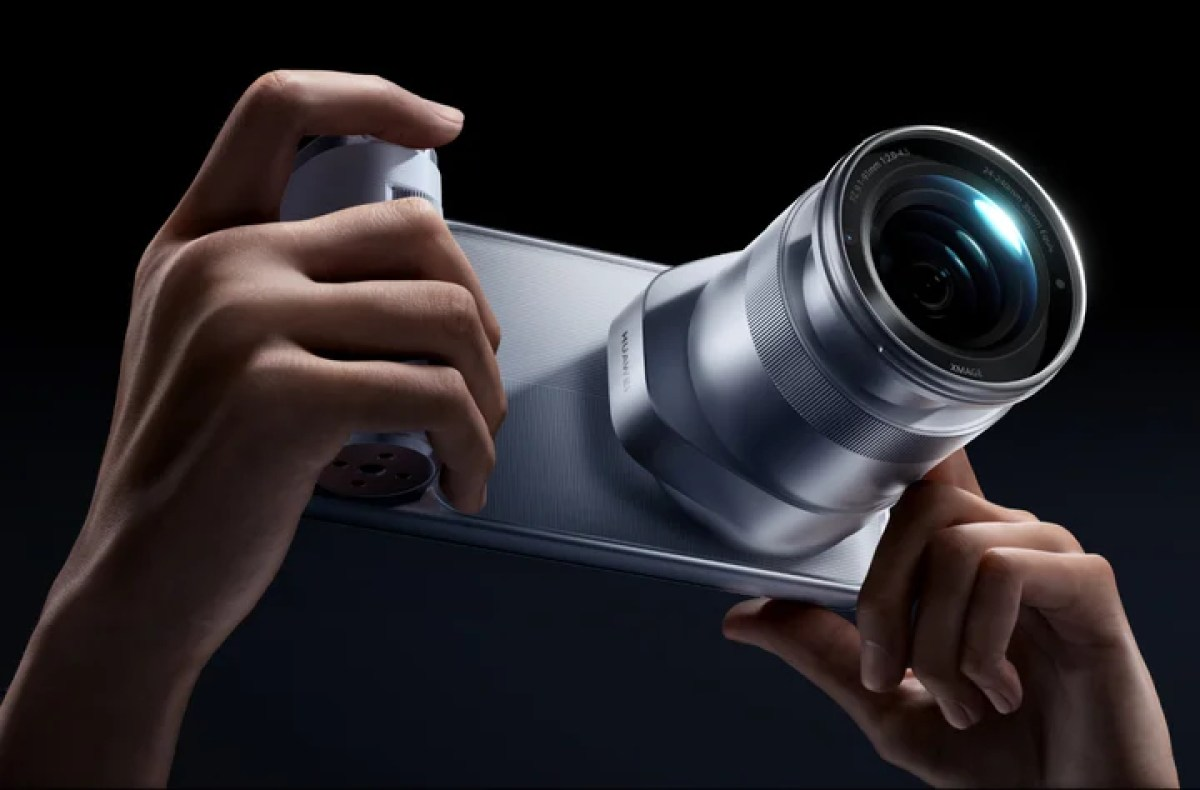
LogicFolding faces broader tests
The Mate 90 Pro Max is also among the first devices to show how Huawei's LogicFolding approach may translate into benchmark results. The architecture stacks chip components to partly offset manufacturing-process disadvantages, while a later microscopic analysis reportedly confirmed a two-die physical structure.
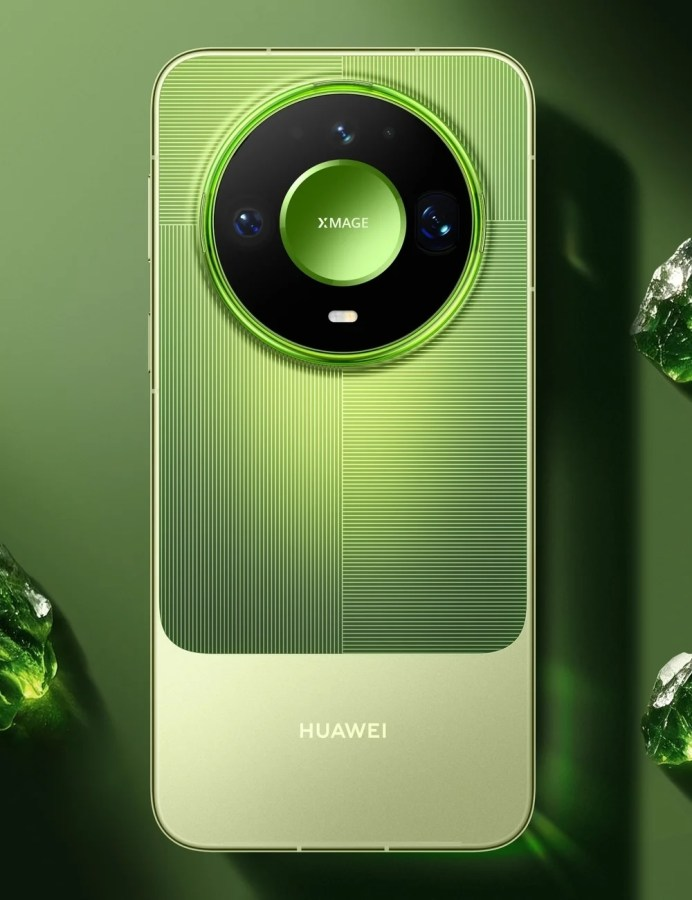
Huawei does not have access to the same leading-edge manufacturing nodes used by Apple, Qualcomm and MediaTek, and is pursuing gains through chip architecture, packaging and parallelism instead. These Geekbench results suggest that strategy is most effective in multi-core workloads, while single-core performance still trails.
GPU performance from the Maleoon graphics hardware, power draw and sustained performance have yet to be established. Those measurements will determine whether the Kirin 9050 Pro can maintain its multi-core showing in gaming, graphics-heavy tasks and longer workloads.