
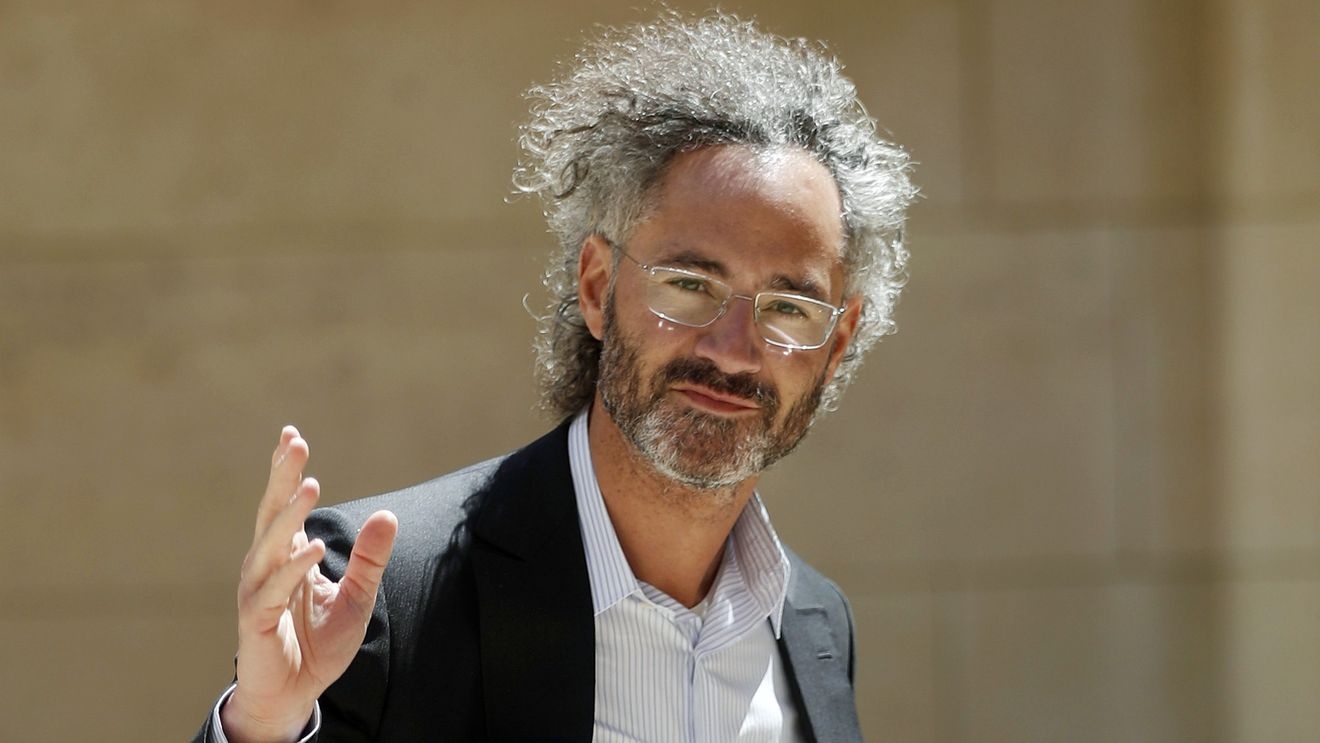
Palantir CEO Alex Karp has argued that people with practical vocational training and people he broadly describes as neurodivergent have clearer paths forward in an AI-driven economy. But the viral interpretation—that only those two groups will survive the AI era—overstates what he said and overlooks the wider economic effects of automation.
There are two ways you can know you have a future: have vocational training or be neurodivergent.
Alex Karp, speaking to TBPN on March 12, 2026
Karp, who has dyslexia, uses “neurodivergent” in a broad sense in the discussion. His framing includes people who do not follow an established playbook, including unconventional problem-solvers and entrepreneurs, rather than being limited to a clinical diagnosis.
The first part of the argument is straightforward. Trades such as electrical work, plumbing, mechanics and welding involve physical environments, unpredictable conditions and hands-on judgment. Generative AI can explain a repair procedure, but it cannot independently show up to fix a burst pipe or assess a difficult real-world installation.
That does not make trade work economically immune. A job can be difficult to automate directly while still being affected by an AI-led downturn in adjacent sectors. If automation suppresses income or employment among customers, demand for repairs, renovations and other services can fall. Displaced workers may also enter remaining skilled trades, increasing competition and potentially putting pressure on wages.
There is another consequence: people with less disposable income may attempt more repairs themselves, using online tutorials and AI assistance rather than paying a professional. The resilience of a role therefore depends on the broader economy, not only on whether an AI model or robot can perform its core task.
AI’s pressure on the entry-level career ladder
Karp’s broader point is that repetitive, predictable tasks are becoming professionally risky. That is particularly significant for entry-level work, which has traditionally let graduates and junior employees build the experience needed for senior roles.
The concern is not simply whether AI can generate text, analyze a spreadsheet or write code. It is whether organizations continue to need as many people to perform those foundational tasks before they can gain experience, context and decision-making responsibility.
The capabilities that remain harder to standardize are often upstream of a prompt: recognizing that a problem exists, deciding what question should be asked, testing whether an AI output is reliable, and taking responsibility for a resulting decision. Those skills can matter in both technical and hands-on professions.
Neurodivergence should not be treated as an AI-proof professional advantage. ADHD, autism and dyslexia are distinct experiences that can bring strengths in some settings and challenges in others; a diagnosis does not provide automatic job security.
Likewise, basic familiarity with tools such as ChatGPT is unlikely to remain a differentiator as access becomes widespread. More durable advantages may come from knowing how to frame a task, identify errors, verify results, apply domain experience and turn AI-generated material into an accountable decision.
Karp’s comments are best read as a warning about predictable work, not a definitive list of safe careers. Vocational expertise and unconventional thinking may be valuable, but the next labor-market question is how effectively workers in every field can combine judgment, practical knowledge and AI tools as entry-level tasks continue to change.