Huawei spent CNY 192.3 billion on research and development in 2025, equal to 21.8% of its revenue and nearly 2.8 times its CNY 68 billion net profit for the year. The figure underscores the scale of the company’s push to develop chips, software and other technologies under its own control.
According to Huawei’s 2025 annual report, cumulative R&D investment from 2007 through the end of 2025 exceeded CNY 1.8 trillion, or roughly $268 billion. Richard Yu disclosed the total during a roundtable with international media, and Huawei subsequently published the figure.
| Huawei R&D metric | Reported figure | Period |
|---|---|---|
| R&D spending | CNY 192.3 billion | 2025 |
| R&D as share of revenue | 21.8% | 2025 |
| Net profit | CNY 68 billion | 2025 |
| Cumulative R&D investment | More than CNY 1.8 trillion | 2007–2025 |
| R&D workforce | 114,000 employees, or 53.7% of workforce | End of 2025 |
| Active patents | About 165,000 | End of 2025 |
The company increased R&D spending from CNY 179.7 billion in 2024, when research accounted for 20.8% of revenue. Huawei says it allocated around 10% of revenue to research in its earlier years, but that proportion has remained above 20% for the past five years.
More than half of Huawei’s workforce was assigned to R&D at the end of 2025. The company reported 114,000 research employees out of a workforce of more than 200,000, alongside about 165,000 active patents worldwide.
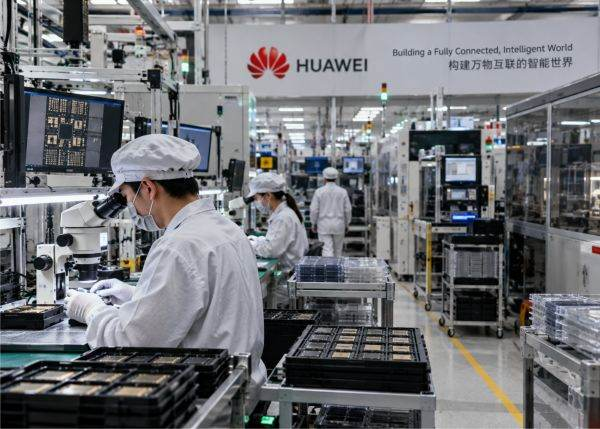
Chips and HarmonyOS remain central to the effort
The spending provides context for Huawei’s efforts to reduce its dependence on overseas technology following US sanctions that restricted access to key components and software. Its recent work includes Kirin chip development, HarmonyOS and flagship smartphones built around its own hardware and software stack.
Huawei’s Mate 90 series, including the Kirin 9050 Pro, has been presented as an example of that strategy. The company is pursuing a LogicFolding architecture intended to shorten paths within the chip, an approach aimed at offsetting limits in access to the most advanced lithography technologies. HarmonyOS 7 is the corresponding software component of that wider in-house platform.
Huawei is also expanding HarmonyOS beyond its origins as an alternative platform, with plans to incorporate AI agents capable of carrying out actions across multiple apps and services. The company’s willingness to sustain high R&D spending has come with a profitability trade-off: during the first half of 2026, it directed more than a quarter of revenue to research while net profit fell 36%. How effectively its chip, AI and software investments translate into competitive products will remain the key test of that strategy.