Huawei’s Kirin 9050 Pro uses a two-layer silicon design intended to bring compute resources, cache and supporting circuitry closer together. An analysis by YouTube channel Geekerwan identifies the approach as LogicFolding and says it is used in the Mate 90 Pro Max, with the aim of reducing data-transfer latency and energy use.
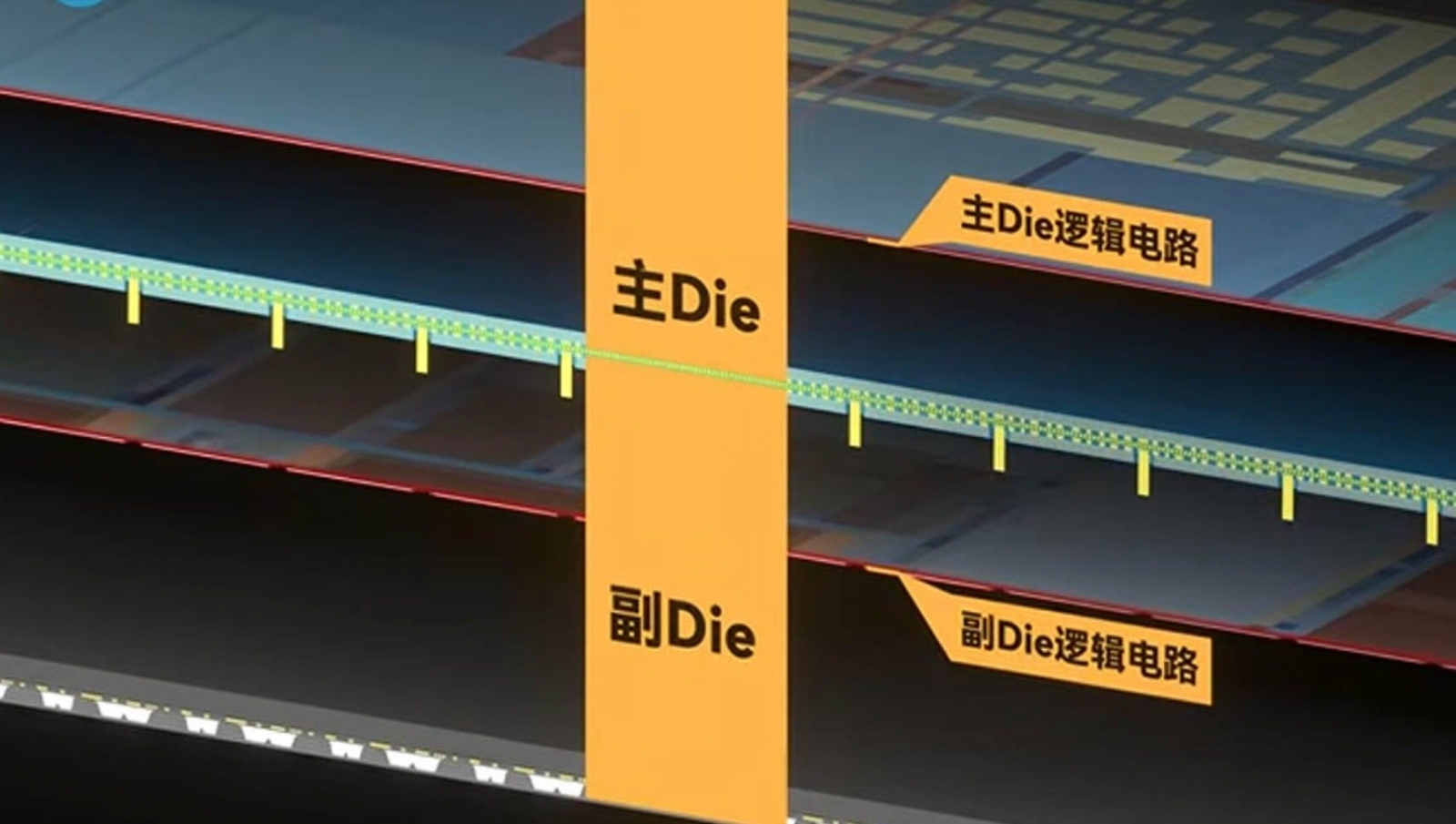
Rather than placing all chip functions across a single die, the design stacks two dies with different roles. The arrangement can shorten electrical paths between processing blocks and the memory structures that hold frequently used data, although the real-world benefit will depend on Huawei’s implementation, software and thermal management.
- Main die: built on Huawei’s N+3 process and housing most of the chip’s compute units.
- Secondary die: built on the N+2 process and carrying cache, communications and synchronization circuitry.
- Interconnect: copper-to-copper hybrid bonding joins the layers, while roughly 80,000 through-silicon vias, or TSVs, handle power and signal connections through the stack.
The N+3 and N+2 labels refer to different manufacturing processes; they should not be read as 3nm and 2nm node designations. Cache is particularly central to the layout because it provides very fast local storage for data the processor needs repeatedly.
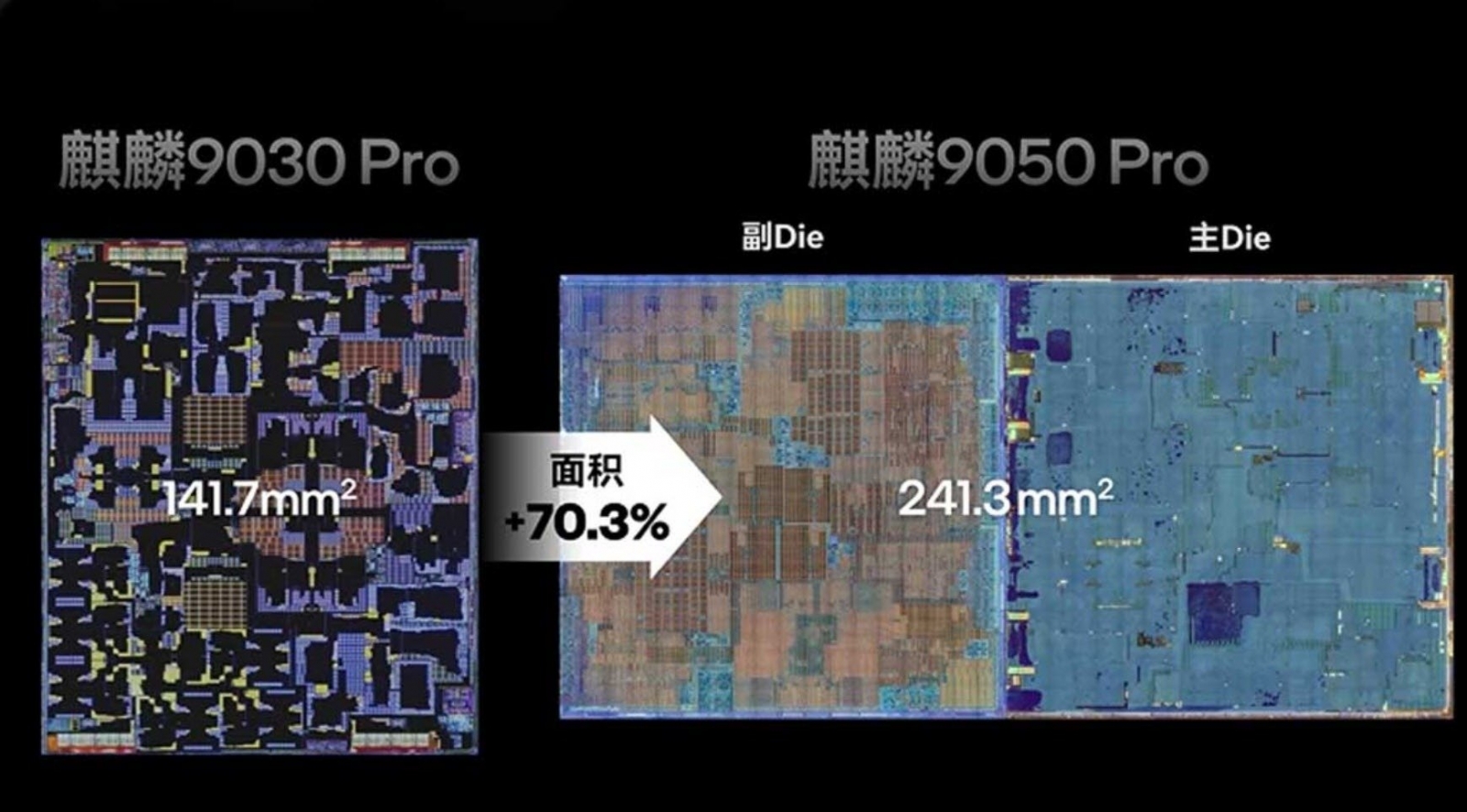
Geekerwan’s imagery puts the combined silicon area of the stacked design at 241.3 mm², compared with 141.7 mm² for the Kirin 9030 Pro—an increase of about 70.3%. That figure is the sum of both dies, not an equivalent increase in the phone’s circuit-board footprint. The analysis also reports a 150% increase in the total area allocated to the NPU, the chip’s AI-focused processing component.
More NPU area does not by itself mean AI features will run 2.5 times faster, and a reported overall performance gain of 42% would not necessarily apply to every application. The more consequential detail is Huawei’s use of vertical integration alongside process improvements, a route that can improve data movement but also makes chip fabrication and heat dissipation more complex.