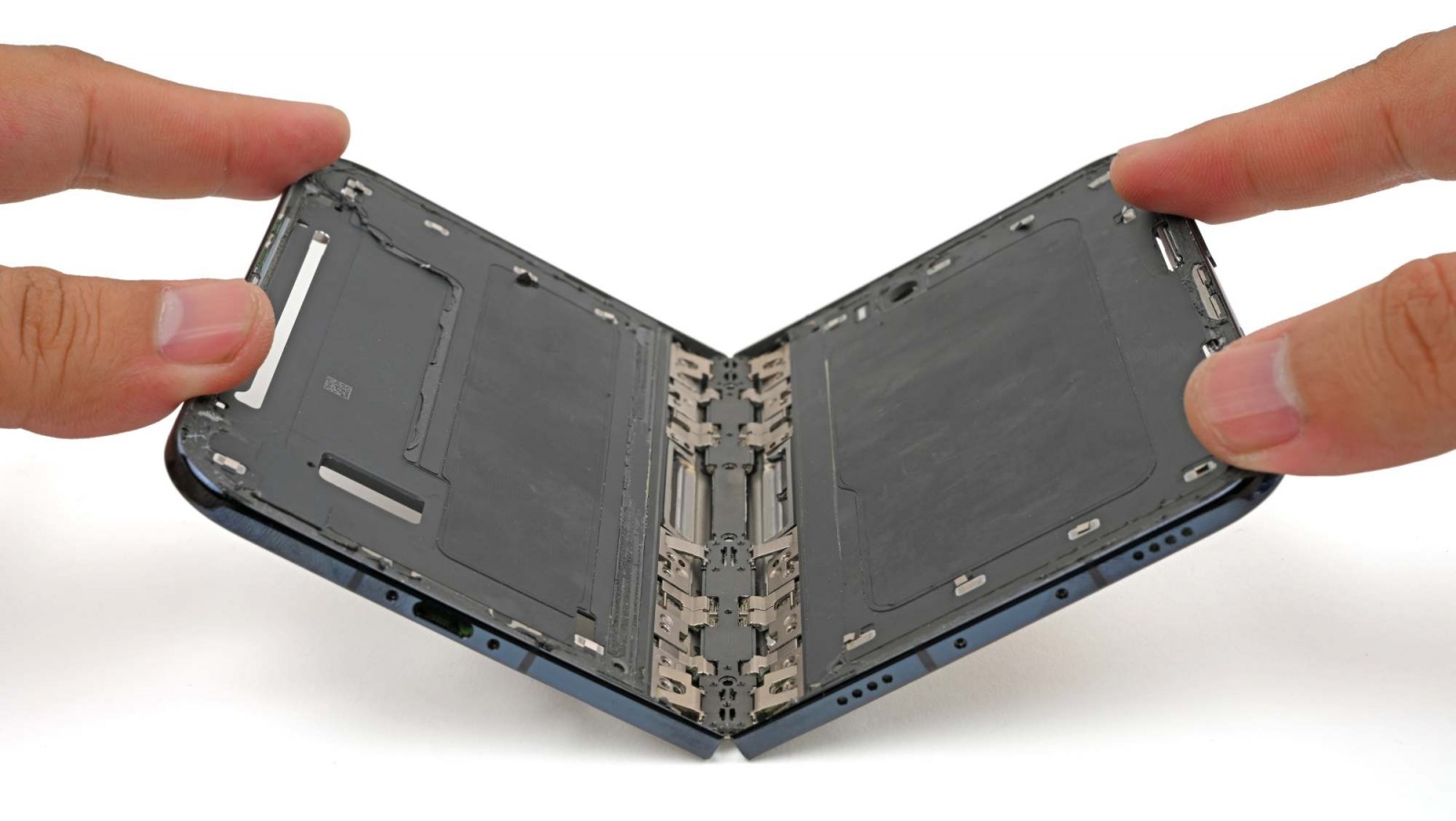
iFixit has identified a possible mechanical stress point in the iPhone Duo hinge that may correspond with reports of cracks, bright lines and damaged pixels appearing along the foldable display. Its analysis does not establish a confirmed cause, and Apple has not acknowledged a design defect or announced a recall.
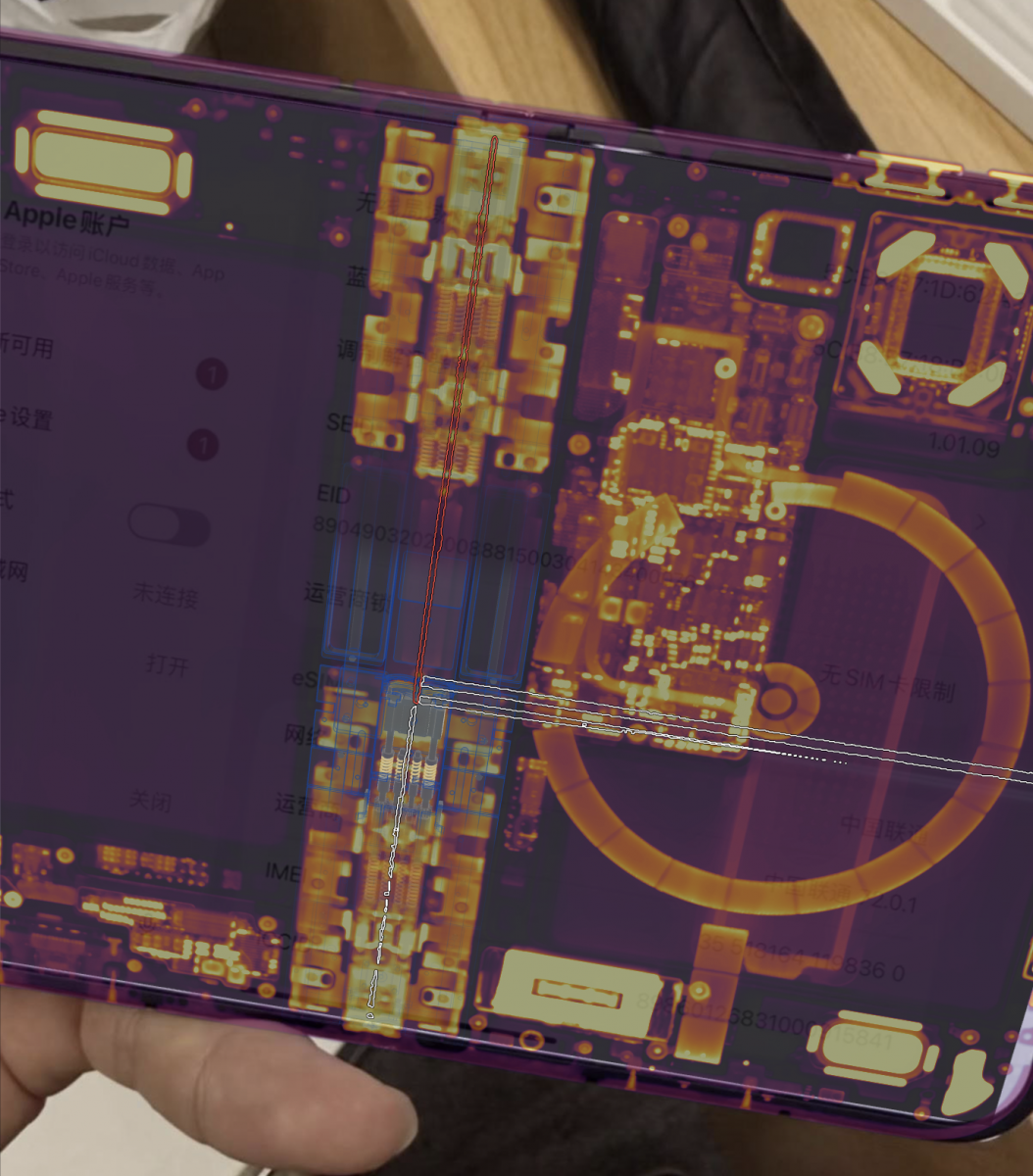
Reported failures have followed a similar pattern: a sound while opening or closing the phone, a small mark at the crease, and then a bright line extending across the panel. iFixit compared images of those failures with CT scans, Apple patents and its own 3D model of the hinge assembly.
A potential pressure point beneath the crease
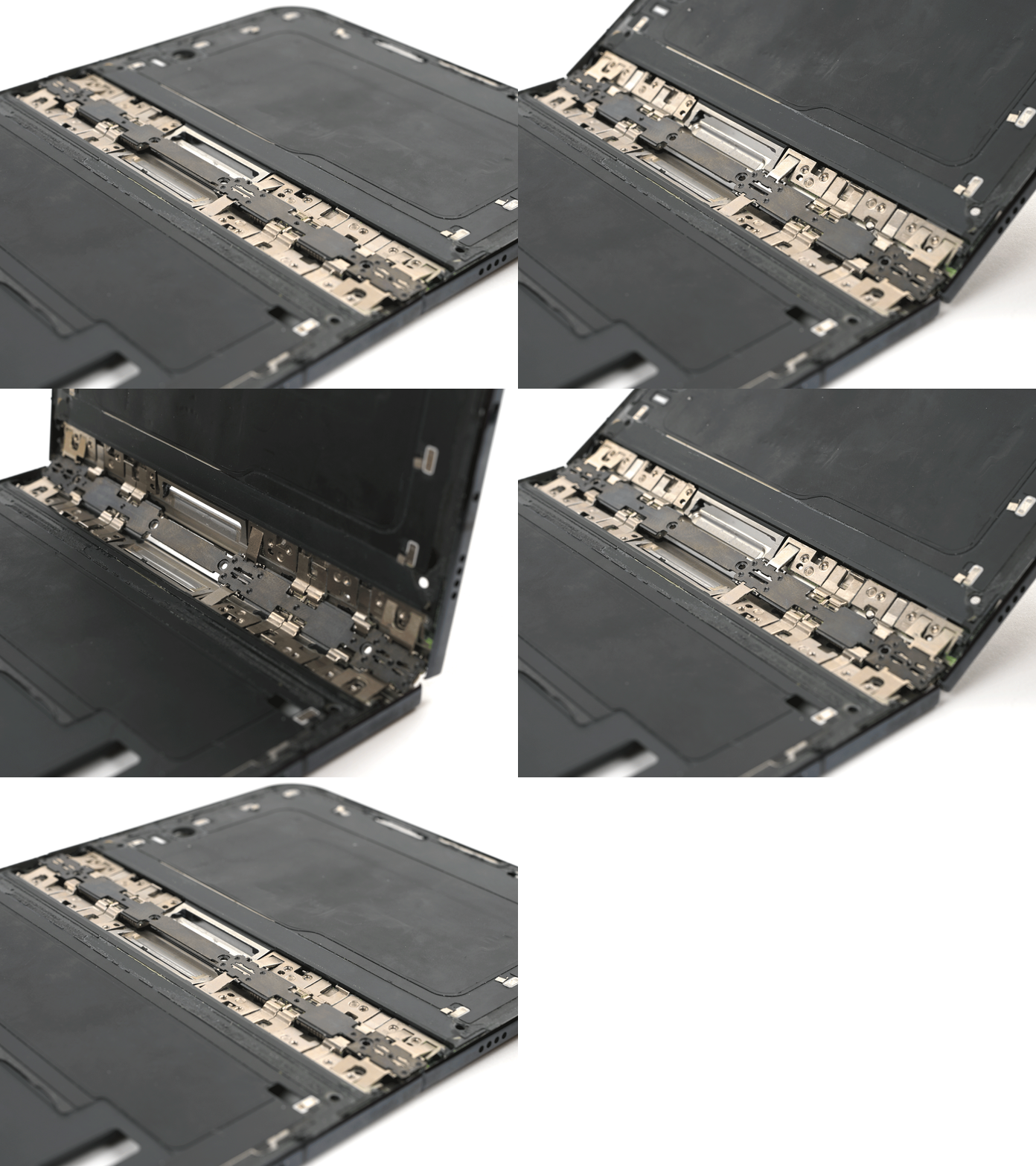
The suspected area sits beneath the flex cable that connects the two halves of the phone, where the display transitions over the hinge’s central support. Several edges and supporting elements meet there while the ultra-thin inner panel changes shape during each fold.
In iFixit’s simulation, the central support bar may not retract far enough when the device closes. That could allow it to press on the curved display layer in roughly the same area as the reported damage. It is a plausible engineering explanation rather than a final diagnosis.
The finding also adds context to durability concerns around the mechanism. A JerryRigEverything test previously showed that dust can enter the hinge and cause unpleasant sounds or tactile interference, though that does not prove a link to the display failures examined by iFixit.
Strong repairability, but difficult repairs where it matters most
iFixit has provisionally awarded the iPhone Duo a 5/10 repairability score, its highest score so far for a foldable phone. Several parts are designed to be more accessible than on many competing foldables:
- The outer display can be removed without destroying it.
- The phone’s two batteries use electrically releasable adhesive.
- Many internal components can be accessed without fully disassembling the handset.
The inner display and hinge remain the most complex and potentially costly repairs—the same components now under scrutiny. Apple’s display design uses nano-texture to diffuse reflections and layered materials intended to slide over one another to reduce mechanical stress. Whether the central support behaves differently under particular conditions remains the key unresolved question.