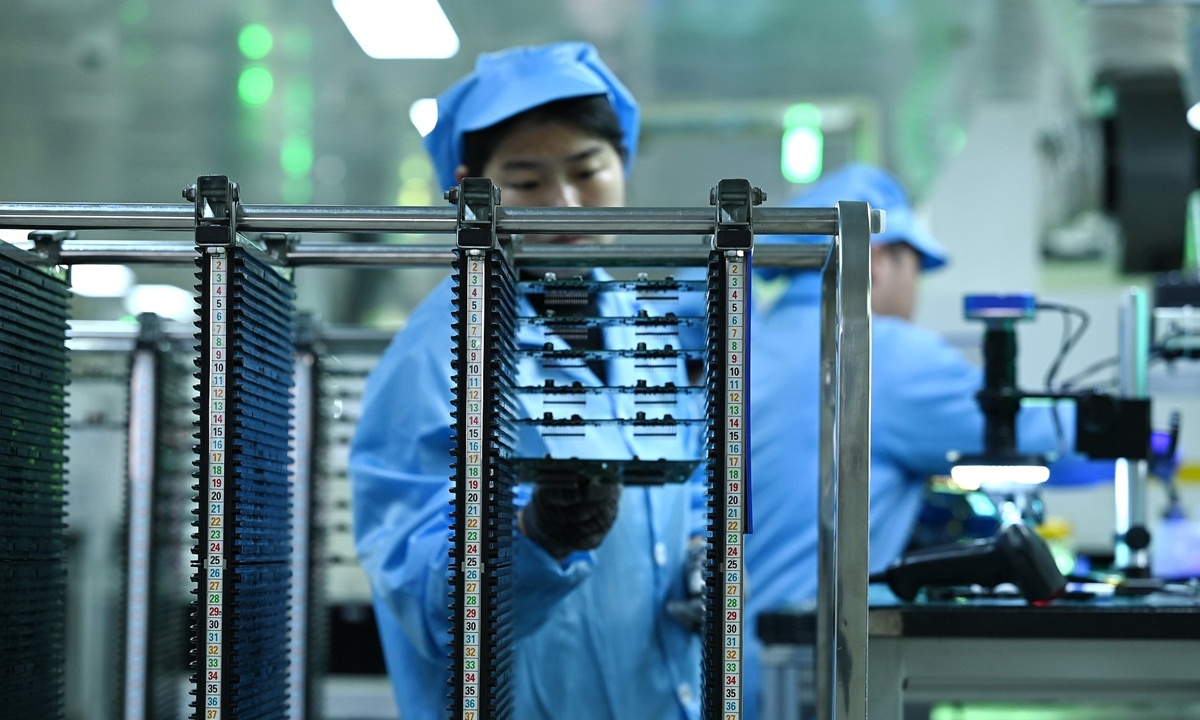
China’s Semiconductor Manufacturing International Corp. reported record third-quarter 2026 revenue of $3.19 billion, up 33.9% year over year, as AI infrastructure demand drove its fabs close to full capacity. Net profit attributable to shareholders rose 123.4% to $428.4 million.
SMIC said its factories operated at 97.3% utilization during the quarter. Co-CEO Zhao Haijun expects capacity pressure to potentially continue through 2027 and even 2028, although that outlook depends on AI orders and the pace of manufacturing expansion.
The AI buildout is increasing demand beyond the high-profile accelerators used in servers. Data centers also require power-management chips, controllers and specialized memory, and demand for those AI-linked components at SMIC has exceeded the company’s expectations, according to Global Times.
That pull on mature-node manufacturing could have wider supply-chain effects. Nexperia has warned that data-center demand is contributing to crowded production lines for chips made on mature processes, potentially affecting components used in automotive and industrial equipment. The pressure does not mean every chip category faces a shortage, but it highlights how AI investment can compete for capacity outside leading-edge logic.
Scale gap with TSMC remains substantial
| Company | Q3 2026 revenue | Year-over-year revenue growth |
|---|---|---|
| SMIC | $3.19 billion | 33.9% |
| TSMC | About $46.7 billion | About 51% |
TSMC’s quarterly revenue was therefore nearly 15 times SMIC’s, underlining the continuing gap between the two contract chipmakers. Their businesses overlap only partly: SMIC is benefiting from demand for components produced on older process technologies, while TSMC remains strongly positioned in leading-edge chip manufacturing.
SMIC also has strategic importance for China’s effort to build domestic semiconductor alternatives amid U.S. export restrictions. The company has been linked to chip production for Huawei, but its stronger financial results do not by themselves indicate parity with TSMC’s most advanced process technologies.
For the fourth quarter, SMIC forecasts sequential revenue growth of 4% to 6%. It also expects gross margin to decline to 26%–28% from 29.9%, indicating that high utilization and AI-related demand have not removed cost pressure.