
NVIDIA, Google and Emerald AI have formed the AI Energy Management Alliance (AEMA), an effort to make AI data centers more responsive to electricity-grid conditions. The group’s approach is to reduce pressure on the grid at peak times by dynamically adjusting data-center power use rather than drawing the same amount of electricity continuously.
That flexibility could be particularly relevant during events such as heat waves, when air-conditioning demand puts grids under strain. AI operators could keep essential services running while temporarily scaling back less urgent computing work, moving some tasks to other hours or relying on batteries to reduce their draw from the grid.
- Temporarily reduce non-urgent compute workloads during periods of high grid demand.
- Shift selected AI workloads to times when electricity demand is lower.
- Use battery capacity to limit the facility’s immediate power draw from the grid.
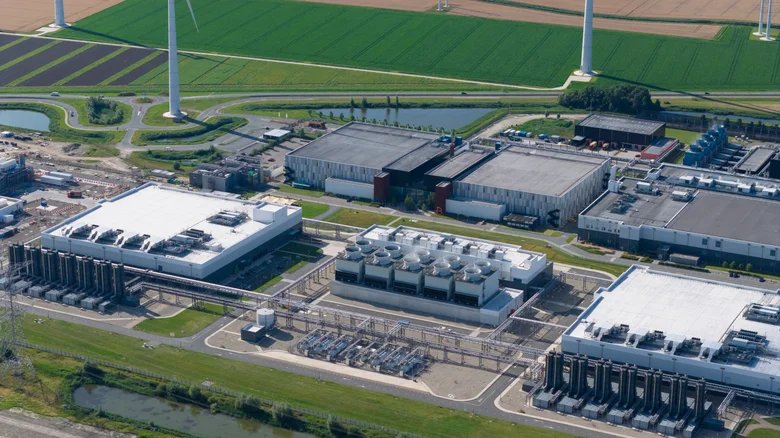
Google says it has already incorporated about 1 GW of demand-response capacity into its energy contracts. Separately, NVIDIA and Emerald AI are preparing a nearly 100 MW experimental data center in Virginia for 2026, intended to demonstrate grid-responsive AI power management at commercial scale.
Emerald AI founder Varun Sivaram has said that wider adoption of flexible data centers could enable an additional 100 GW of capacity to connect to the existing US grid, according to Fortune. That figure is not a guaranteed reduction in energy use; it reflects the potential to use existing grid infrastructure more efficiently.
The model could reduce the grid-expansion investment required for new data centers, speed up connections and potentially limit cost increases for consumers. Its economics still need to be proven, however, since operators must see sufficient value in deploying the required power-management systems. More flexible data centers could also encourage further construction, meaning lower peak demand would not automatically reduce total electricity or water consumption.