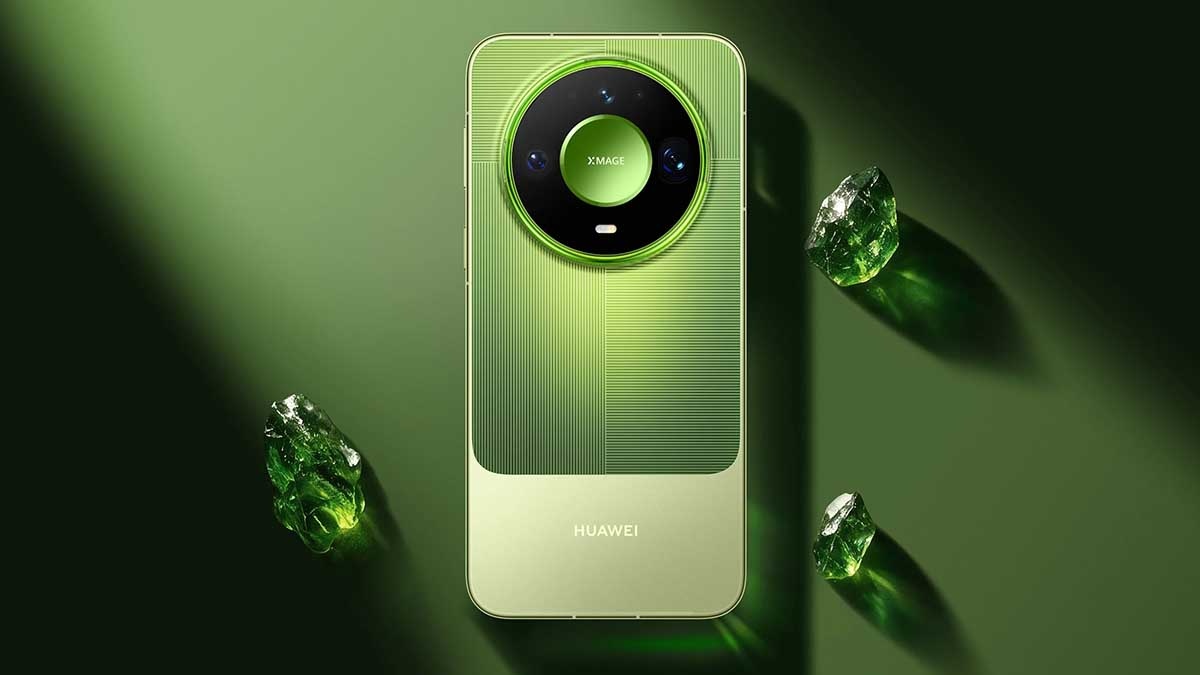
Huawei has launched the Mate 90 series with its Kirin chips and HarmonyOS 7 at the core of a strategy designed to extract more performance from domestic hardware. Huawei says the base Mate 90 delivers a 27% performance increase over the Mate 80, while its higher-end models are rated for up to 31% higher overall performance than the prior generation.
- Mate 90: Kirin 9030
- Mate 90 Pro Max: Kirin 9050 Pro
- Mate 90 RS: Kirin 9050 Pro
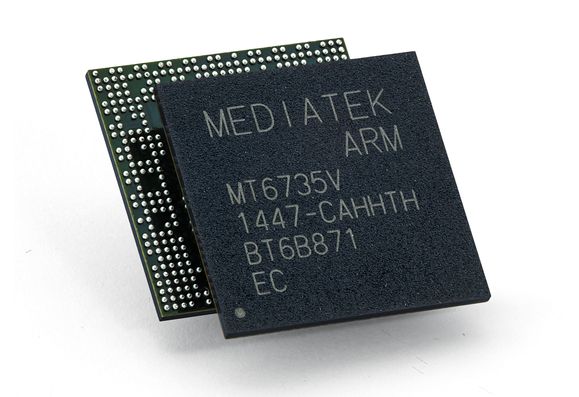
The Kirin 9050 Pro is Huawei’s first commercial chip to use LogicFolding, an architecture intended to shorten critical signal paths, reduce propagation delays and raise logic density. Rather than relying solely on a move to a smaller manufacturing node, the approach uses vertically connected layers to reduce the distance signals must travel within the chip.

That does not make LogicFolding equivalent to access to the industry’s most advanced 2nm-class manufacturing. The design is more complex and requires additional wafers, but it gives Huawei another route to performance improvements when leading-edge process technology is not readily available.
The availability of production capacity for advanced semiconductors in China remains very limited.
Richard Yu, CEO of Huawei’s Consumer Business Group, speaking to Reuters
The capacity constraint is especially significant because smartphone processors are competing with Huawei’s Ascend AI accelerators for the same production resources. China’s chip industry continues to depend on DUV lithography, while access to the EUV equipment used for the most advanced manufacturing processes remains restricted.
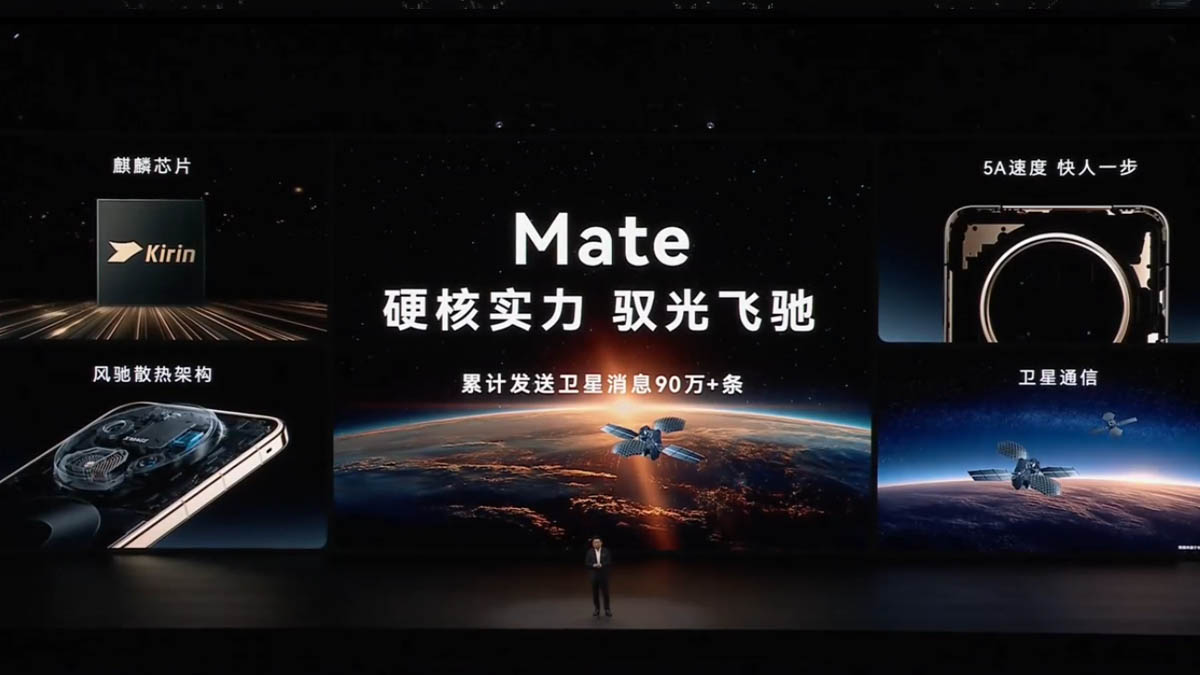
Hardware and software are being developed together
Huawei is also leaning on HarmonyOS 7, which ships on the Mate 90 series and is built around AI agents. The company’s broader aim is to control the chip, operating system, services and AI layer together, allowing hardware and software optimization to contribute alongside raw silicon performance.
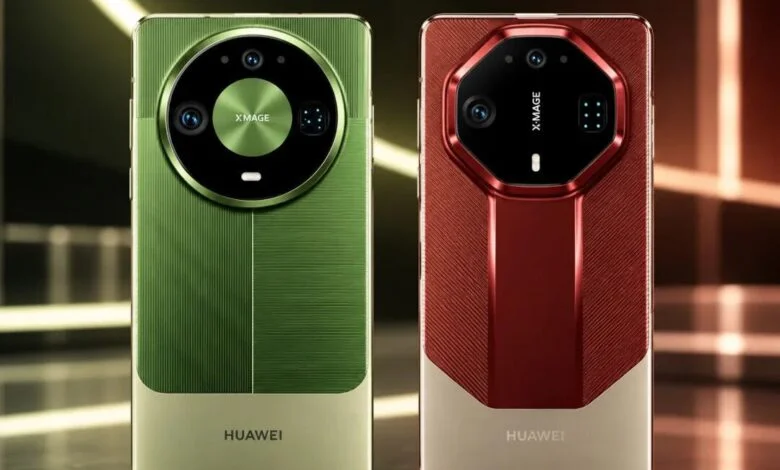
The Mate 90 Pro Max also carries flagship-class hardware around the new chip, including a 6.9-inch LTPO OLED display, a 6,800mAh battery, 100W charging and a 200-megapixel telephoto camera.
Independent benchmarks will determine how much of Huawei’s claimed generational uplift comes from the Kirin hardware, HarmonyOS 7 and their combined tuning. The Mate 90 series does, however, show Huawei pursuing architectural and software-led gains while advanced chipmaking capacity remains a limiting factor.