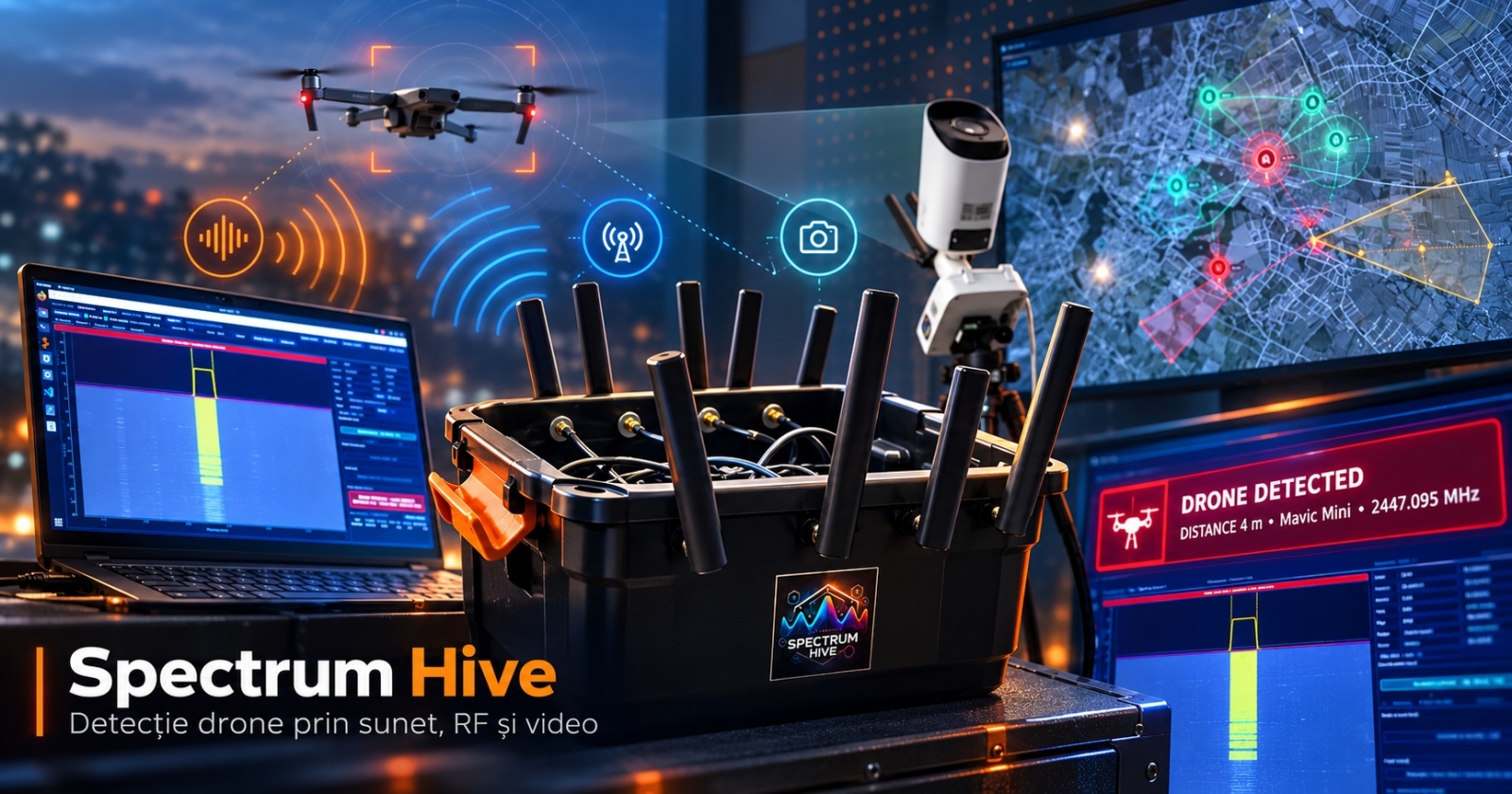
Spectrum Hive has demonstrated a counter-drone detection platform that combines radio-frequency monitoring, acoustic sensors and camera-based AI classification. The multi-layer design is intended to keep detecting drones when one source of evidence is unavailable or unreliable, including in cases where a drone’s control link cannot be found through conventional RF monitoring.
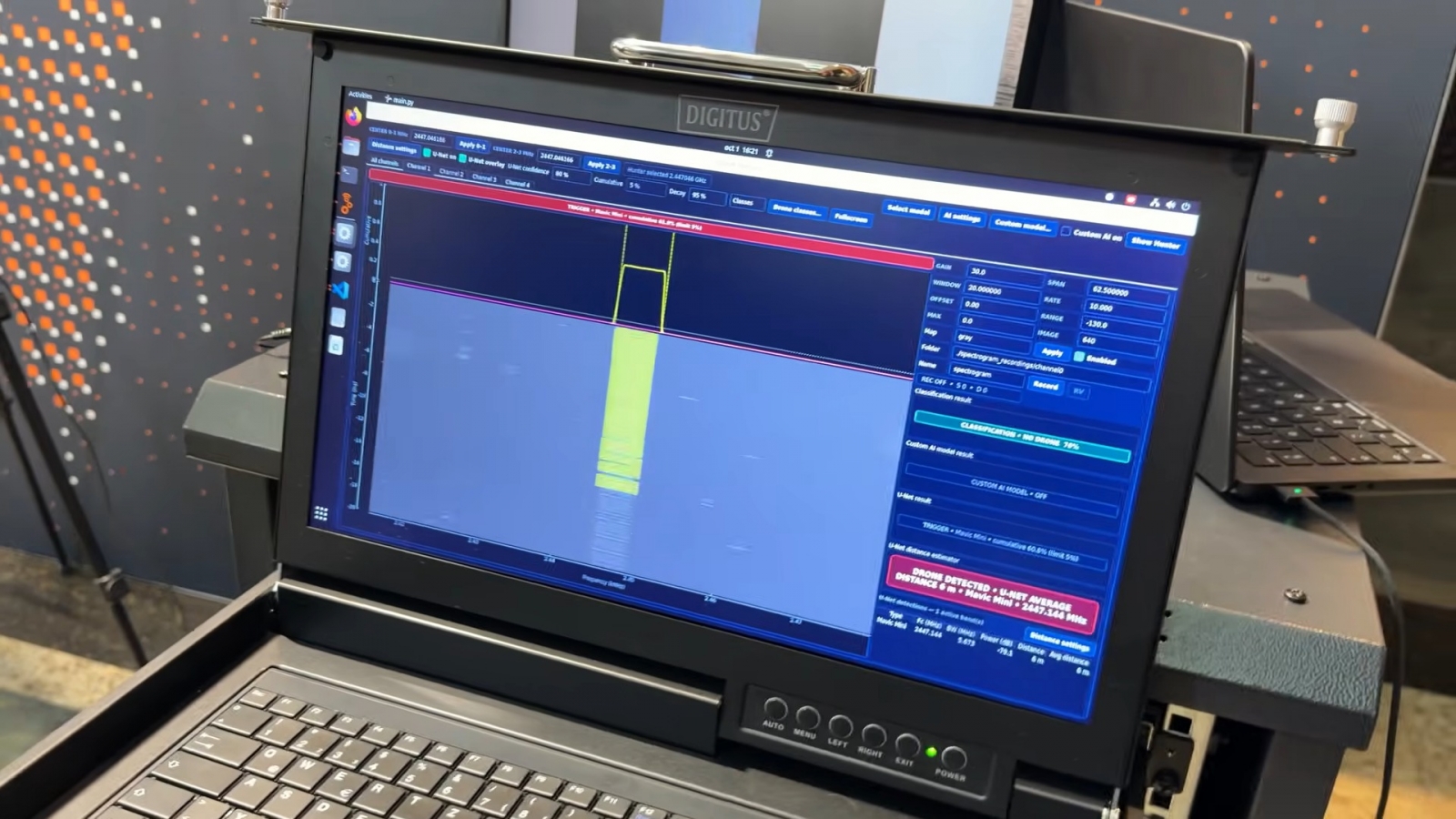
The system was shown at Orange Business Tech Now 2026. Developed by a team associated with Ștefan cel Mare University of Suceava, it brings RF antennas, microphone arrays, cameras and local processing into a shared interface that correlates detections in real time.
| Detection layer | What it analyzes | Role in the platform |
|---|---|---|
| RF | Signals emitted or used by a drone | Identifies suspicious radio activity |
| Acoustic | Motor and propeller sound signatures | Passively detects and classifies drone noise |
| Video AI | Objects in a camera feed | Classifies objects such as drones, aircraft and birds |
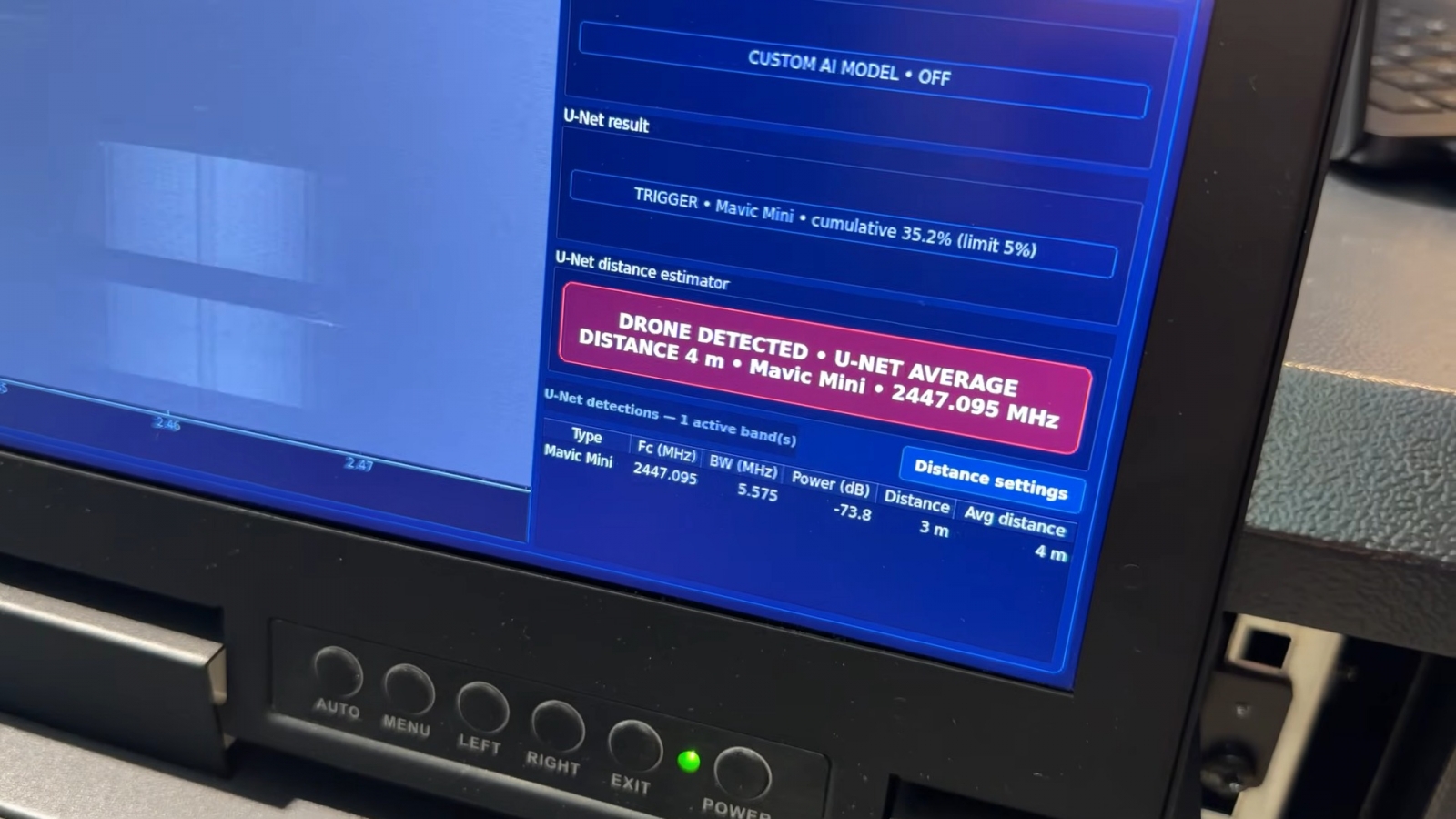
Spectrum Hive says its main RF unit analyzes frequencies from 680 MHz to 8 GHz, while an embedded version covers 70 MHz to 6 GHz. The system is designed to distinguish drone-related activity from wider spectrum noise, and the team says it can estimate a drone’s type, distance and certain operating parameters.
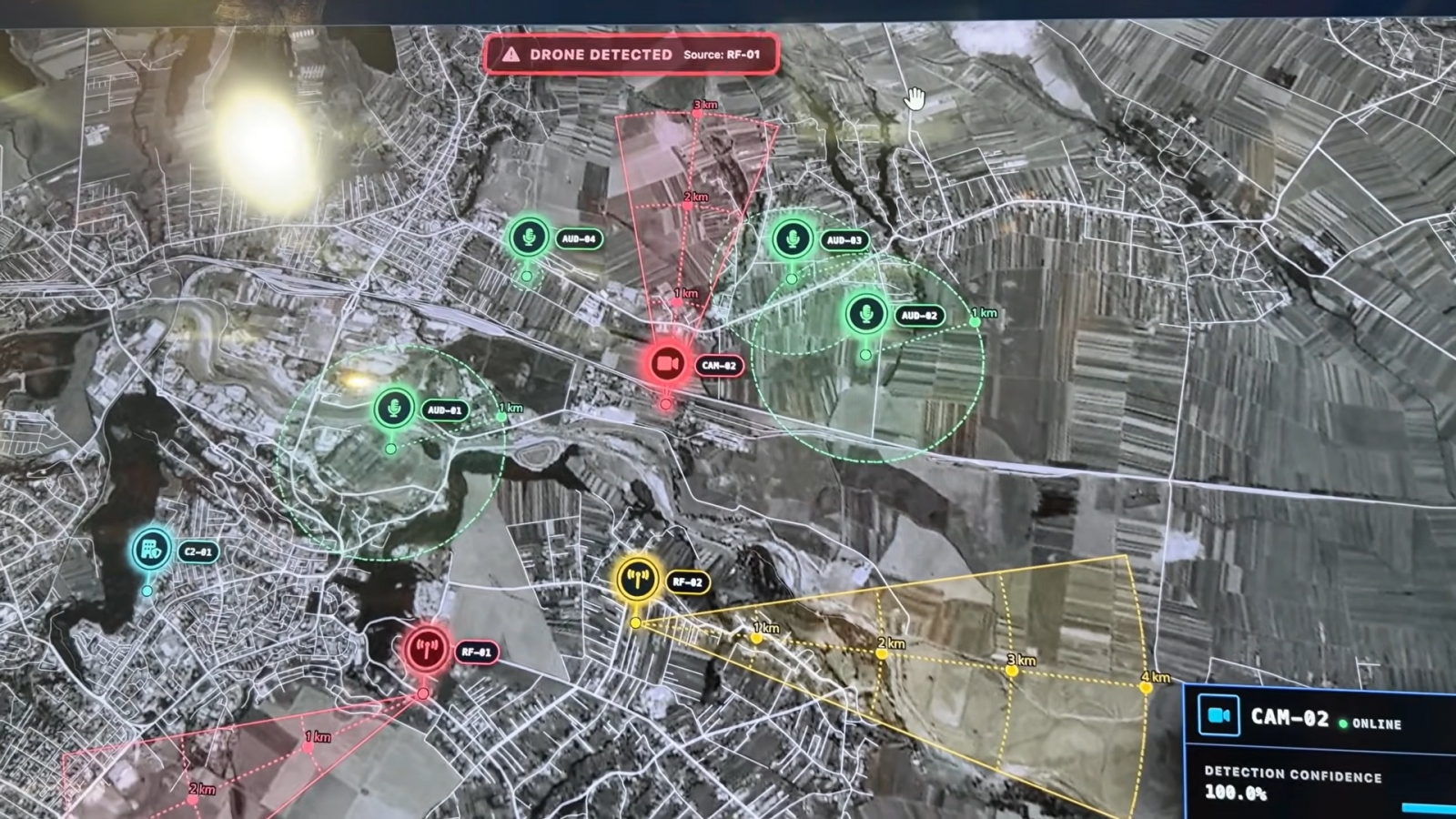
The acoustic element can use a directional microphone array as well as smaller distributed sensors. Spectrum Hive describes this as a passive architecture that applies AI classification and then correlates the result with RF and video data.
We have microphones with very high sensing capabilities, as well as embedded devices able to sample acoustic-domain signals from drones.
Spectrum Hive
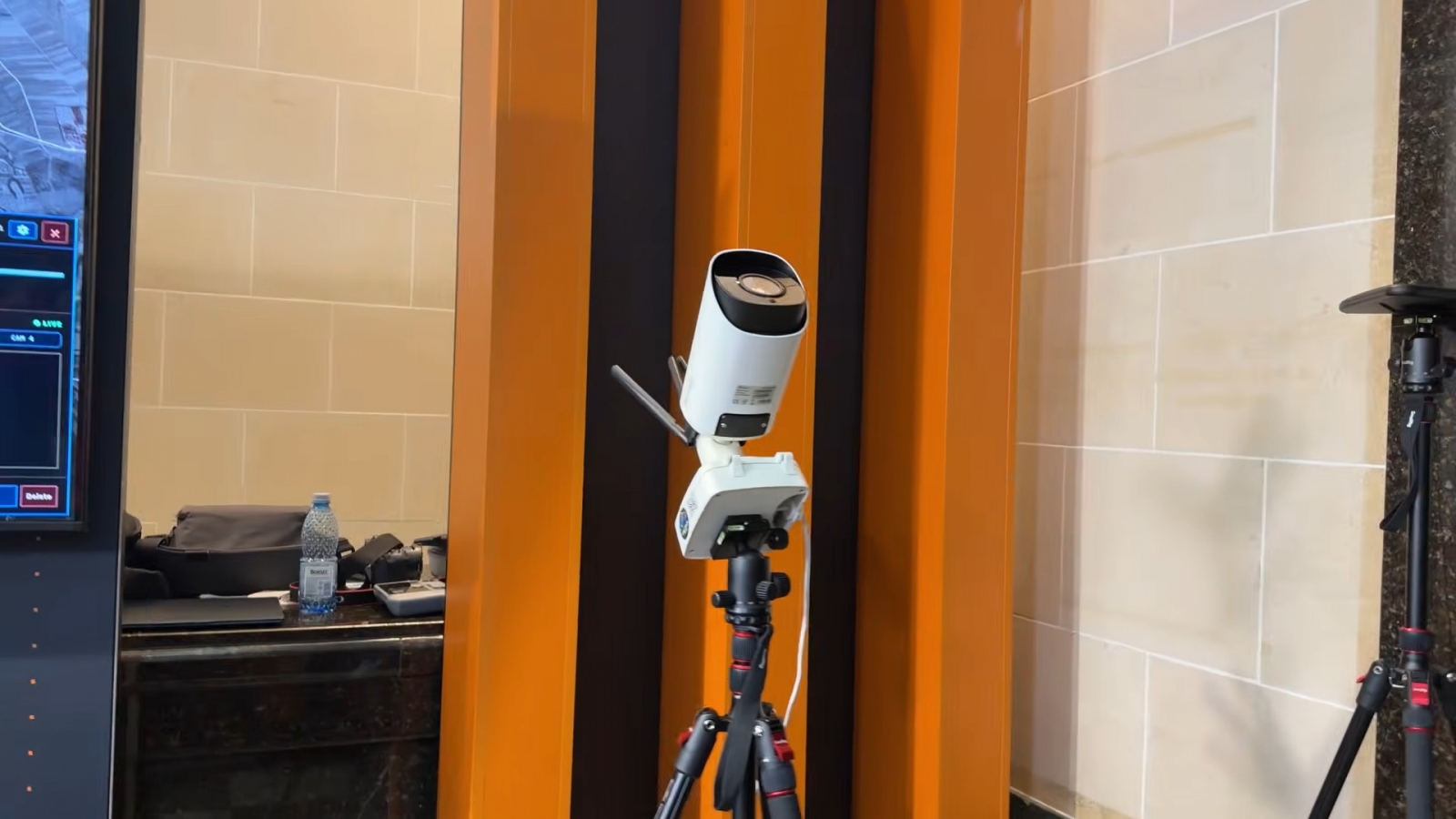
On the video side, the platform does not require purpose-built cameras, according to the team. It can process feeds from different cameras and use AI to identify the observed object, including differentiating a drone from an aircraft or a bird. Spectrum Hive says the platform supports real-time UAV detection and classification, automatic tracking, and video correlation with RF and acoustic events. It can also integrate existing surveillance infrastructure.
We do not need special cameras, only the artificial intelligence we designed, capable of differentiating between an aircraft and a drone.
Spectrum Hive
Designed for edge deployment
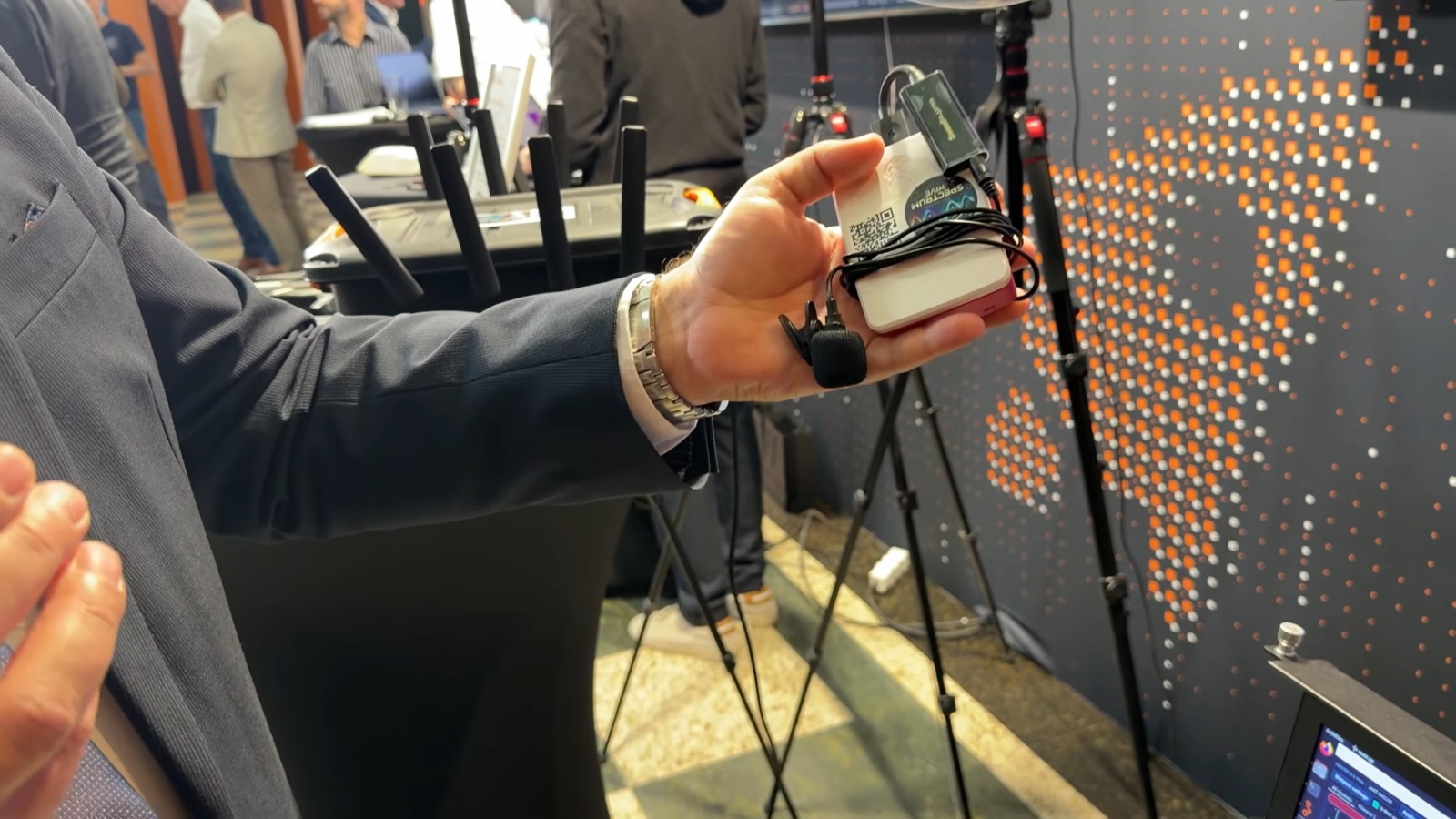
Alongside its larger setup, Spectrum Hive has developed a compact field unit that performs AI processing locally on NVIDIA hardware. Its website identifies an embedded model based on NVIDIA Jetson, with CUDA and Tensor Core acceleration, edge RF processing and support for distributing multiple sensors across a geographic area.
A demonstration unit was said to track eight channels and feed results into the same central interface. The team indicated that the exhibited configuration could reach roughly 10 kilometers, although practical range depends on the sensor, antenna, terrain, ambient noise and target type.
The three sensing methods matter increasingly as fiber-optic-controlled drones emerge in military use. These aircraft unspool a thin fiber-optic cable in flight rather than relying on a radio control link, making conventional RF jamming ineffective against that link. The UK Ministry of Defence has sought technologies to detect and defeat such systems, describing them as immune to classic radio countermeasures.

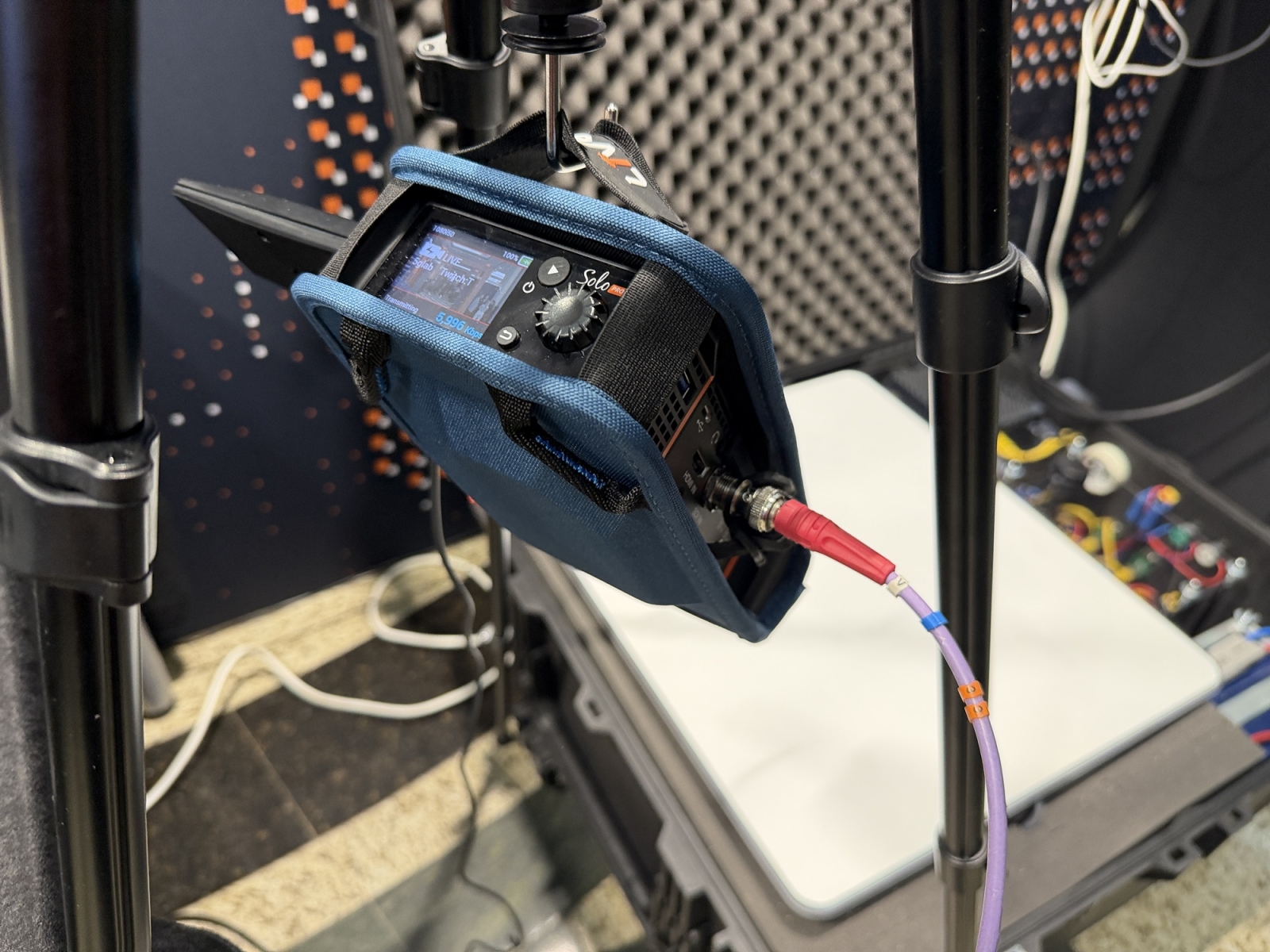

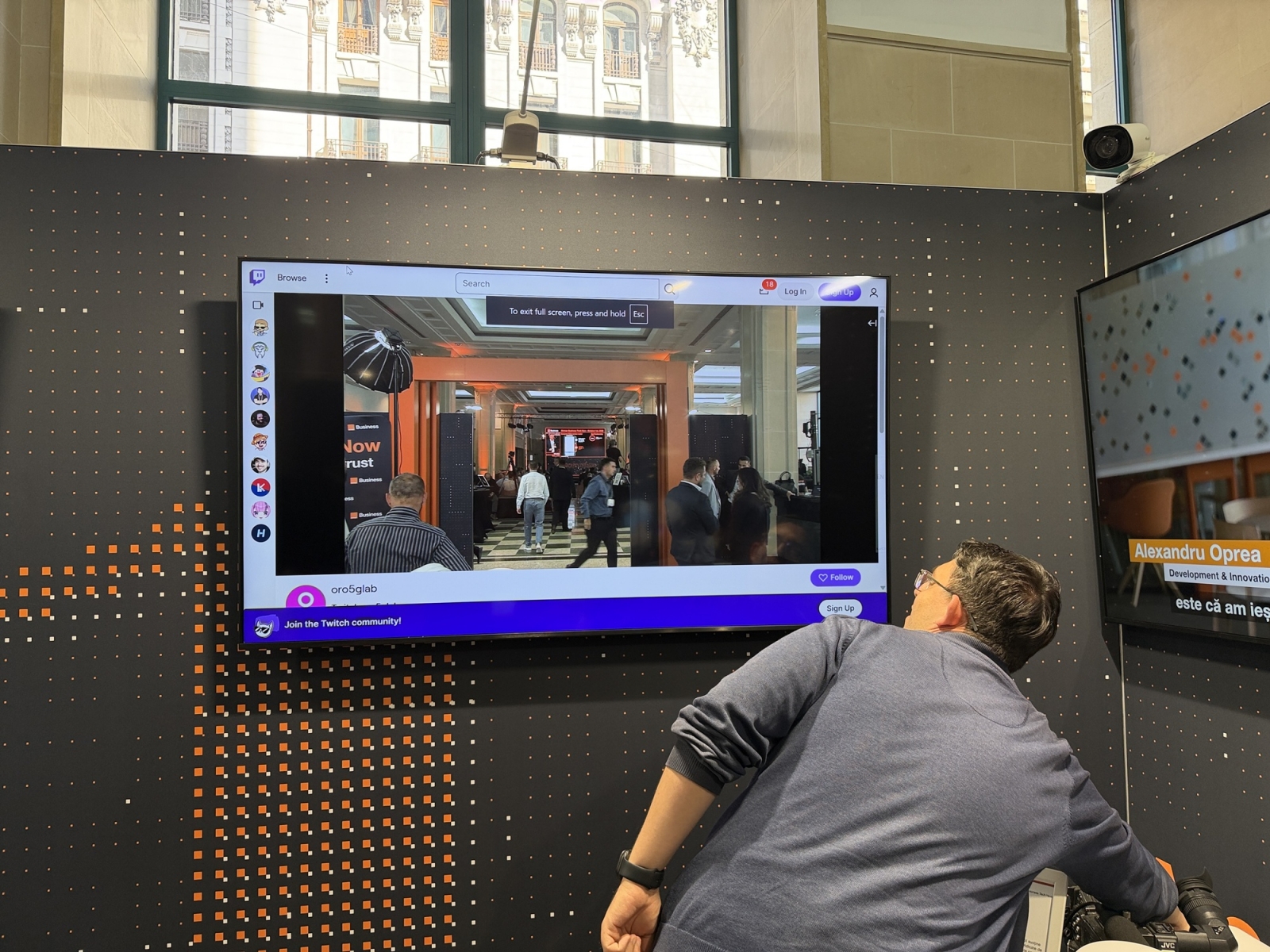





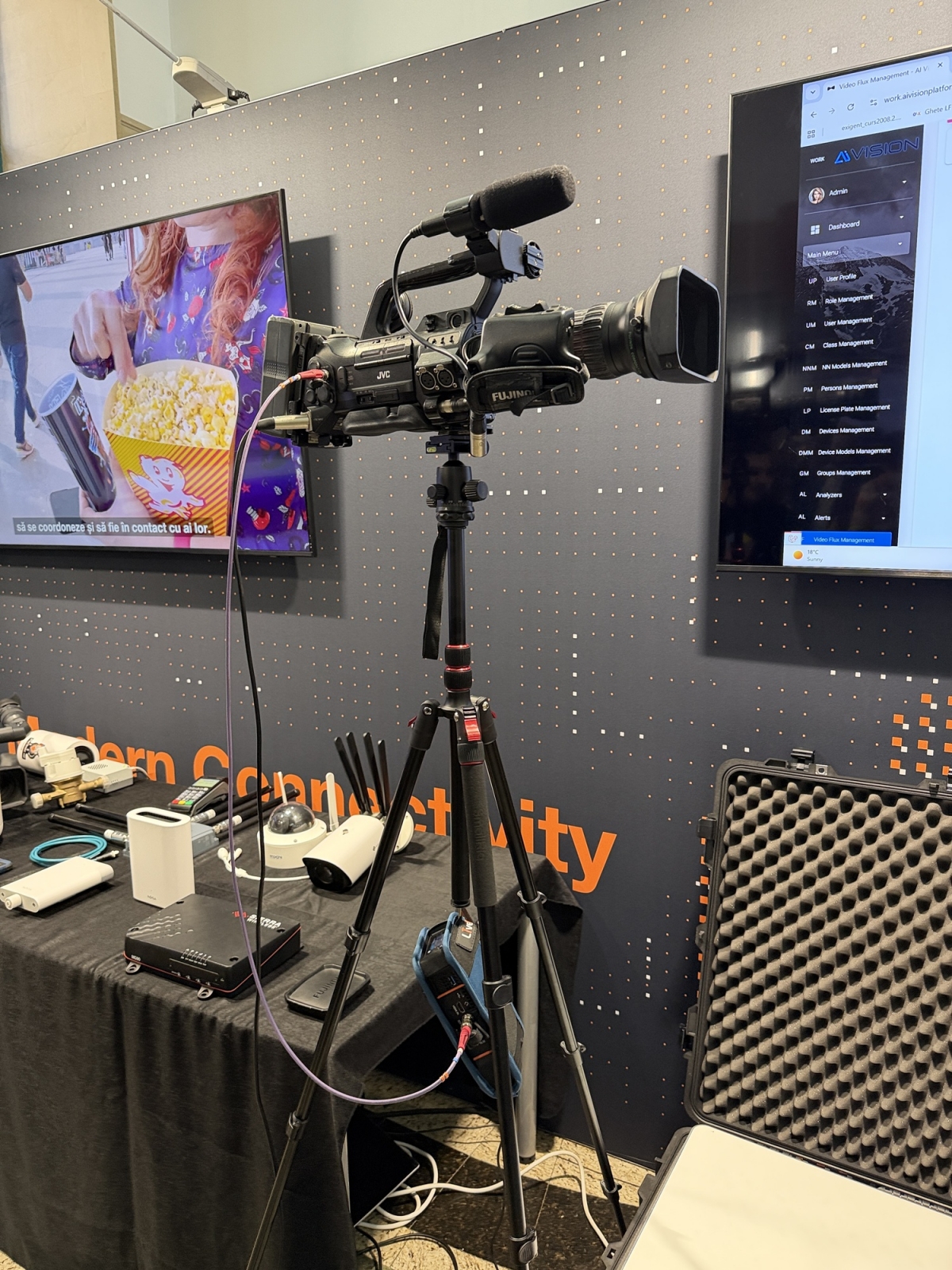
A fiber-optic drone may evade detection of its command link through RF analysis, but its motors can still create an acoustic signature and it can still be seen by a camera. Conversely, a radio signal becomes stronger evidence when an acoustic sensor and video feed point to the same area at the same time.
Spectrum Hive said that, for radio-controlled drones, its detection system can be connected to a jamming component. The company stressed that a human operator makes the final decision on detection and jamming; RF jamming does not address drones controlled over fiber optics, which require other neutralization methods.

Because this is also a military-related application, we need the user. The user makes the final decision on detection and the drone-jamming process.
Spectrum Hive
The team previously won the Defence & Security category at Air Hack Iași for a project aimed at protecting the airspace around Iași Airport, and also received an Orange special prize. Spectrum Hive lists researchers including Alexandru Lavric, Adrian-Ioan Petrariu, Alin-Mihai Cailean and Partemie-Marian Mutescu, with work spanning machine learning, signal processing and wireless communications.

The platform’s value will ultimately depend on performance beyond controlled demonstrations, particularly in cluttered RF environments, noisy locations and complex terrain. Its central proposition, however, is clear: fuse independent sensor types so that the loss or weakness of one detection method does not end the search for a drone.