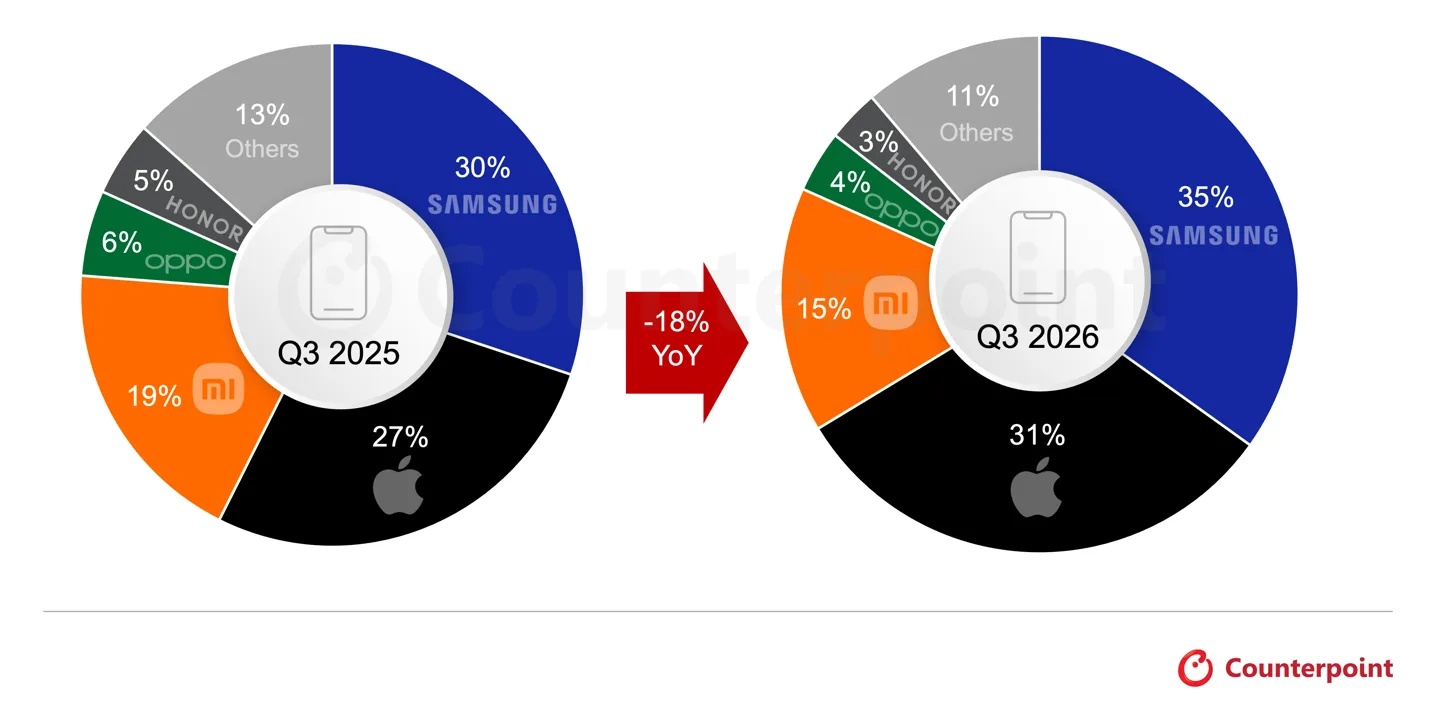
European smartphone shipments dropped 18% year over year in Q3 2026, reaching their lowest quarterly level in more than 13 years, according to Counterpoint Research. The market contraction nevertheless strengthened Samsung and Apple’s position: together, the two vendors accounted for 66% of shipments, up from 57% a year earlier.
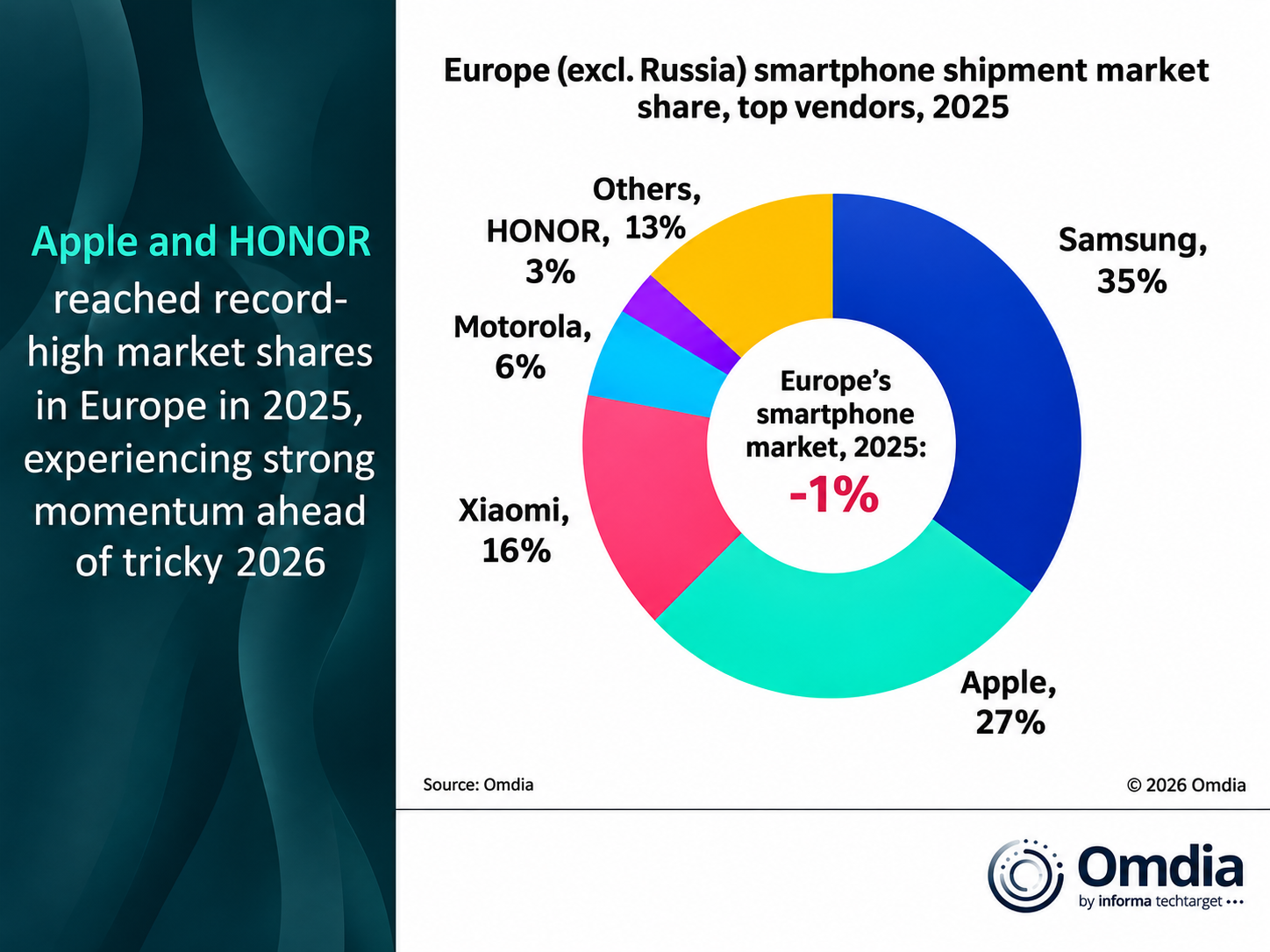
Samsung led the market with 35% share, while Apple followed at 31%. Both companies increased their share even as their own shipment volumes declined year over year, indicating that they withstood the broader downturn better than their rivals.
| Vendor | Q3 2025 share | Q3 2026 share | Change |
|---|---|---|---|
| Samsung | 30% | 35% | +5 percentage points |
| Apple | 27% | 31% | +4 percentage points |
| Xiaomi | 19% | 15% | -4 percentage points |
| OPPO | 6% | 4% | -2 percentage points |
| HONOR | 5% | 3% | -2 percentage points |
| Other vendors | 13% | 11% | -2 percentage points |
Xiaomi remained Europe’s third-largest smartphone vendor, but its share fell four percentage points to 15%. OPPO, which includes OnePlus and realme in Counterpoint’s figures, declined to 4%, while HONOR slipped to 3%. Totals may differ slightly from 100% because of rounding.
Premium resilience, pressure on lower-priced phones
Counterpoint links the pressure on Chinese vendors partly to rising RAM and NAND prices. Brands with greater exposure to budget and mid-range devices face a choice between raising retail prices, accepting lower margins, or reducing their portfolios. The firm said some Chinese manufacturers are also moving away from broad European expansion, concentrating instead on niche categories such as mobile photography and gaming or on markets with better margins.
Samsung’s share gain was supported by demand for the wider, passport-style Galaxy Z Fold8. Counterpoint characterized it as Samsung’s fastest-selling foldable in Western Europe, with demand placing pressure on production. Premium foldables do not generate the volumes of Galaxy A-series phones, however, and weaker demand for affordable devices contributed to Samsung’s overall shipment decline.
Apple also recorded its first annual shipment decline in Europe since Q1 2024. Its first foldable, the iPhone Duo, reached stores only in October, while the base model in the new iPhone generation was delayed until Q1 2027, limiting its contribution during the third quarter.
Counterpoint expects component pricing to remain unsettled until at least mid-2027. With the market’s lower-priced tiers under the most pressure, the next question is whether the traditionally stronger fourth quarter can slow Europe’s shipment decline without further widening the gap between Samsung and Apple and the rest of the field.