
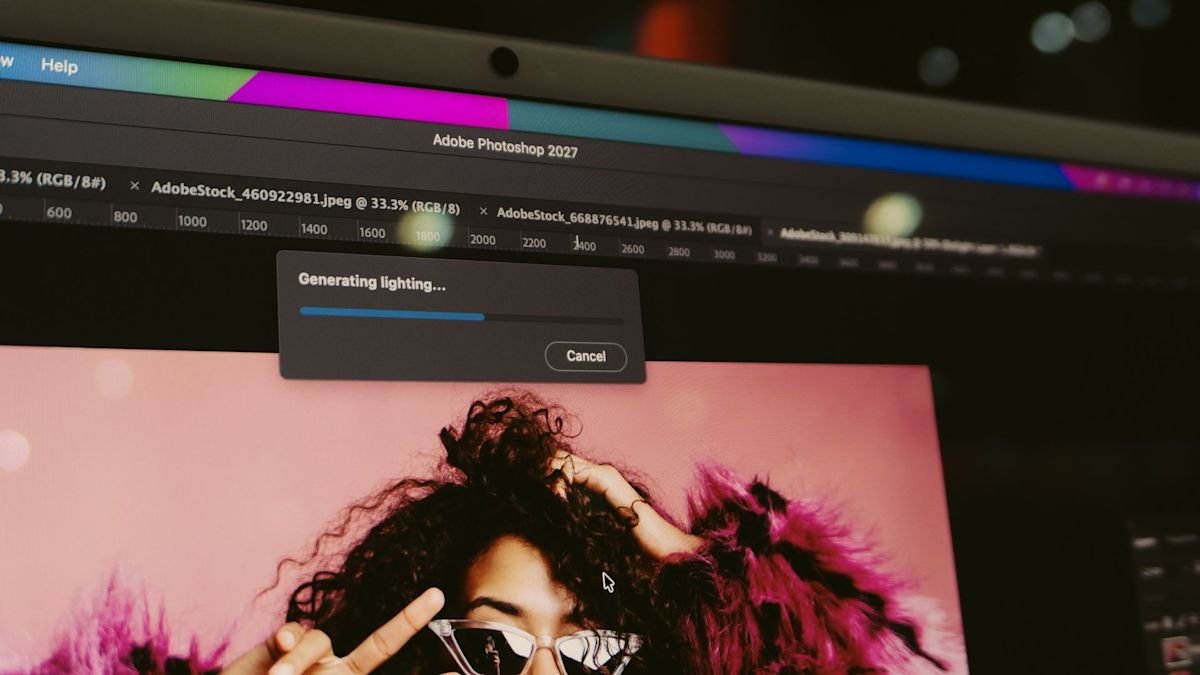
The New York Times has told contributing photographers to use older versions of Adobe Photoshop for work commissioned by the publication, steering them away from Photoshop 2027 version 28.0.0 and later updates. The concern is that generative AI features may be used without a photographer realizing it, potentially adding information about AI intervention to an image’s metadata.
That metadata can have visible consequences after an image is published. Social platforms can read AI-related signals in image files and may display labels indicating that a picture was generated or edited with AI tools. Meta, for example, can label both AI-generated images and images altered with such features, with the label placement varying by the type of change.
The publication permits limited color adjustments intended to faithfully reproduce a news photograph, but prohibits retouching and digital manipulation. A spokesperson for the newspaper, Graham James, confirmed that the instruction applies to photographs commissioned by its newsroom.
Released in November, Photoshop 2027 introduced an AI Assisted Editor mode that brings together several AI-based editing capabilities:
- Text-prompt-based image editing
- Frame expansion
- Resolution upscaling
Adobe also updated its Remove tool to erase an object along with related traces such as shadows or reflections. Generative Fill and AI-assisted object removal were already available in previous versions, while Photoshop 27.7 added an on-device AI model for those kinds of edits in May.
The guidance does not identify the specific Photoshop tools that prompted the restriction, leaving the immediate policy focused on avoiding the affected 2027 release and its subsequent updates for commissioned news photography.