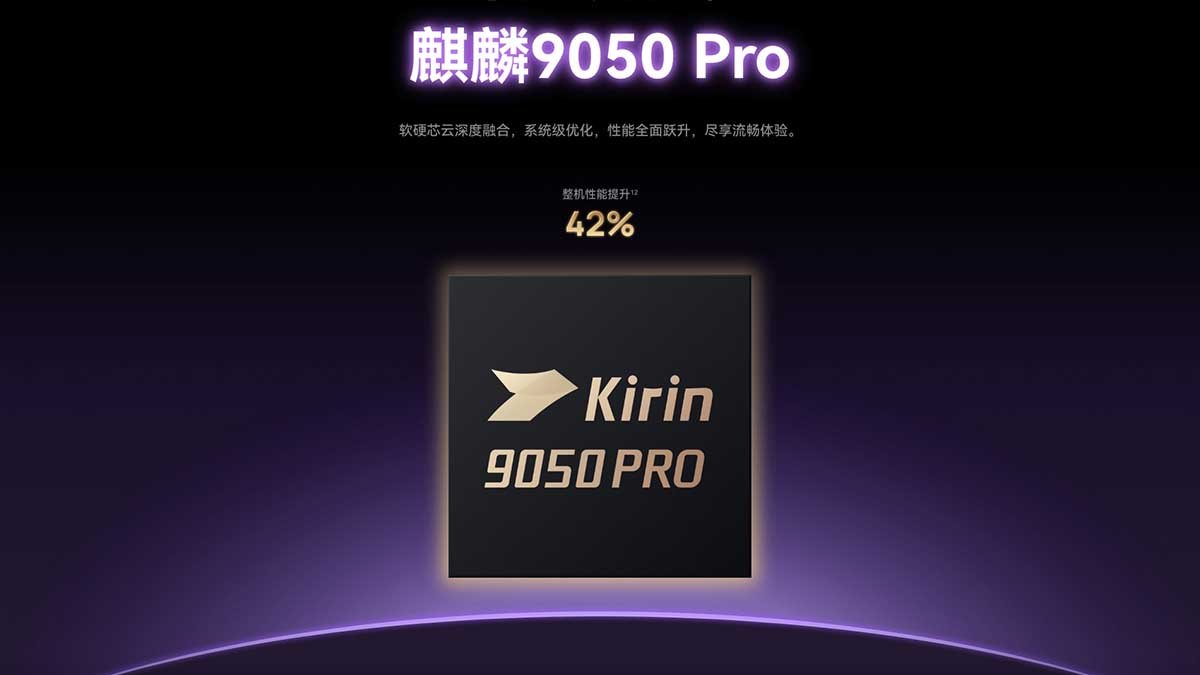
Huawei’s Kirin 9050 Pro reportedly delivers higher Geekbench 6 multi-core scores than Apple’s A17 Pro, according to an analysis from Bernstein Research. The result is notable because the Kirin chip is estimated to use an approximately 7nm-class manufacturing process, while Apple’s A17 Pro is made on a 3nm node.
Huawei has not confirmed the Kirin 9050 Pro’s production node. Bernstein estimates that it is manufactured using SMIC’s N+2 or N+3 technology, placing it broadly in the 7nm range. A stronger multi-core result does not establish a lead in every workload, but it suggests that architecture and software-level optimization can still narrow the gap with chips built on more advanced nodes.
The report attributes the progress in part to Tau Scaling Law and LogicFolding techniques, which are intended to offset manufacturing constraints through chip design changes. Bernstein estimates transistor density increased from roughly 155 million to 238 million transistors per square millimeter, a gain of more than 50%.
- Compared with the Kirin 9030 Pro, the Kirin 9050 Pro is said to offer 20% higher multi-core performance.
- Graphics performance is estimated to be 39% higher than on the Kirin 9030 Pro.
- NPU performance in AI tasks is reported to be up by 150% versus the previous chip.
The gains do not erase the broader CPU gap at the top of the market. Bernstein estimates that the Kirin 9050 Pro remains about 30% behind Apple’s 2nm A20 Pro. With Huawei yet to disclose the chip’s process technology, independent confirmation of the manufacturing node and wider benchmark results remains the key outstanding detail.