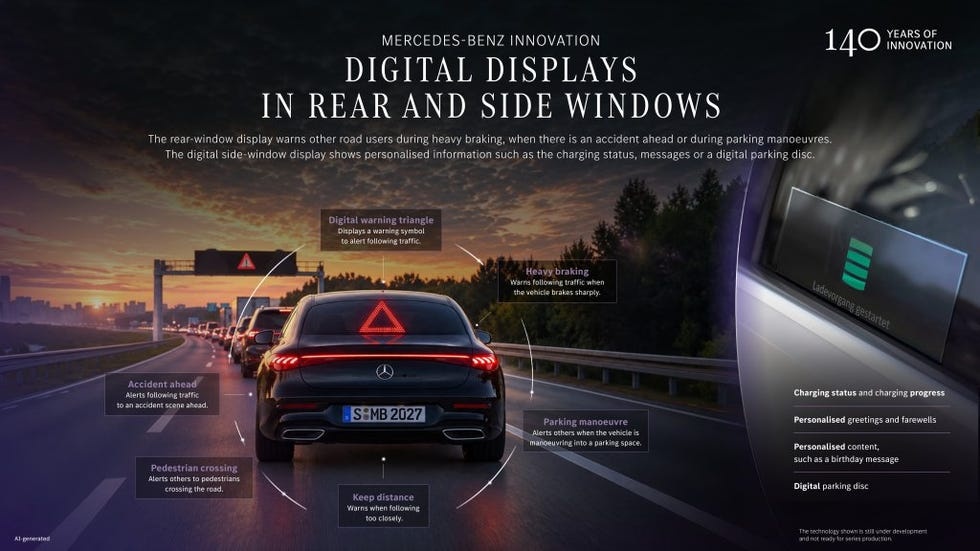
Mercedes-Benz is developing two display technologies that could turn a vehicle’s glass surfaces into contextual screens: LEDs embedded directly in windows, and a windshield projection system capable of showing separate content to the driver and front passenger. The company has not announced a production model or launch timetable for either concept.
| Technology | Display location | Potential uses |
|---|---|---|
| Intelligent Display in Glass | Rear and side windows | Warnings, symbols and information for other road users |
| Holographic Display | Windshield | Navigation, driving information, points of interest, video calls and entertainment |
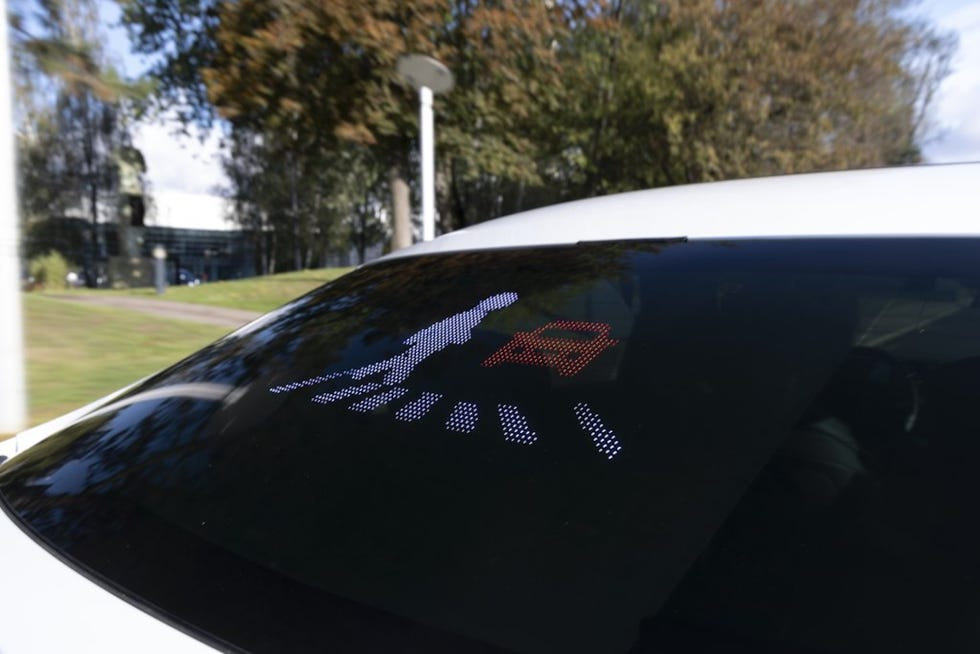
Intelligent Display in Glass places LED elements within laminated glass. Mercedes-Benz says the elements are nearly invisible when switched off. A rear window could display an accident symbol, a pedestrian warning or a “KEEP DISTANCE” message, making a vehicle’s warning more explicit to surrounding traffic.
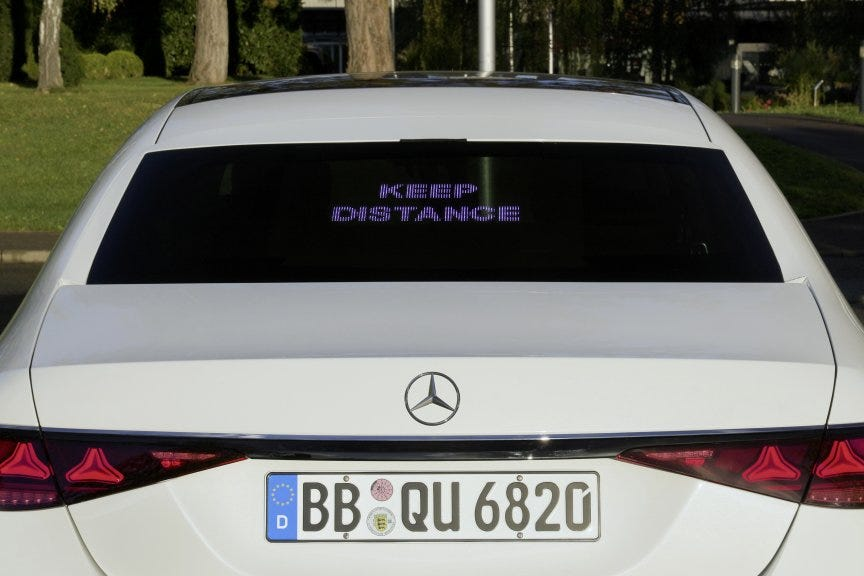
The system is being evaluated in two forms: Mini LED for larger surfaces such as the rear window, where it could show tail-light functions or warning symbols, and Micro LED for smaller window areas that need higher-resolution graphics and animations.
A windshield display with separate viewing zones
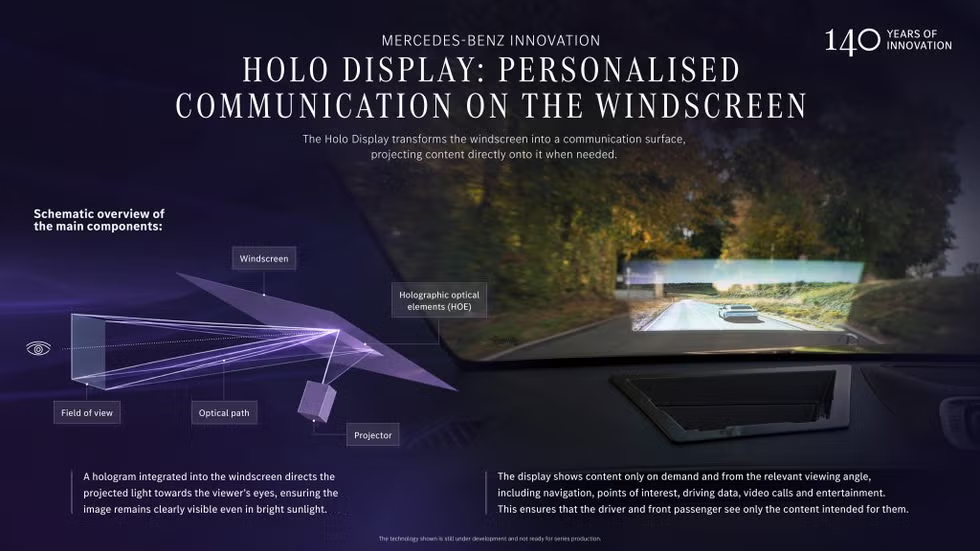
Mercedes-Benz’s Holographic Display is not a free-floating cabin hologram. It combines a projector concealed in the dashboard with a transparent film laminated into the windshield. Holographic optical elements in that film selectively reflect the projector’s light, with the aim of keeping the image visible in strong sunlight.
Its central feature is viewing-angle control. The driver and passenger could see different material on the same windshield: navigation guidance and vehicle data for the driver, while the passenger receives route-related points of interest, entertainment or video-call content.
The approach extends the augmented-reality head-up display concept beyond a limited area used for speed and navigation prompts. It also fits Mercedes-Benz’s broader push toward increasingly digital cabins, including Gemini integration in MBUX for the new CLA.
Important questions remain outside the demonstration: how unobtrusive embedded LEDs will be at night or in rain, and how effectively windshield imagery will work under direct sun. Mercedes-Benz has yet to identify the models that may receive either technology or confirm when they could reach production.