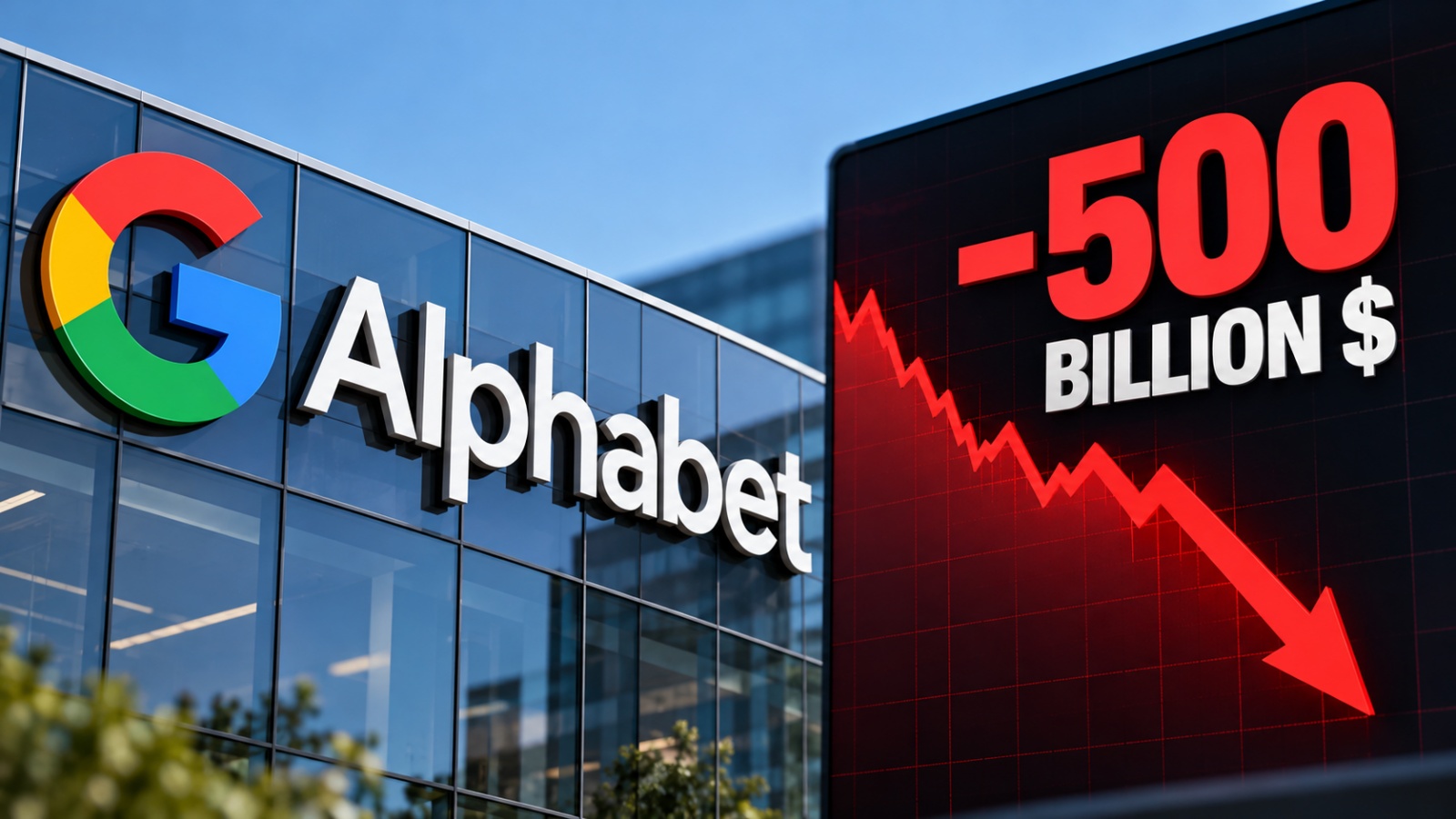
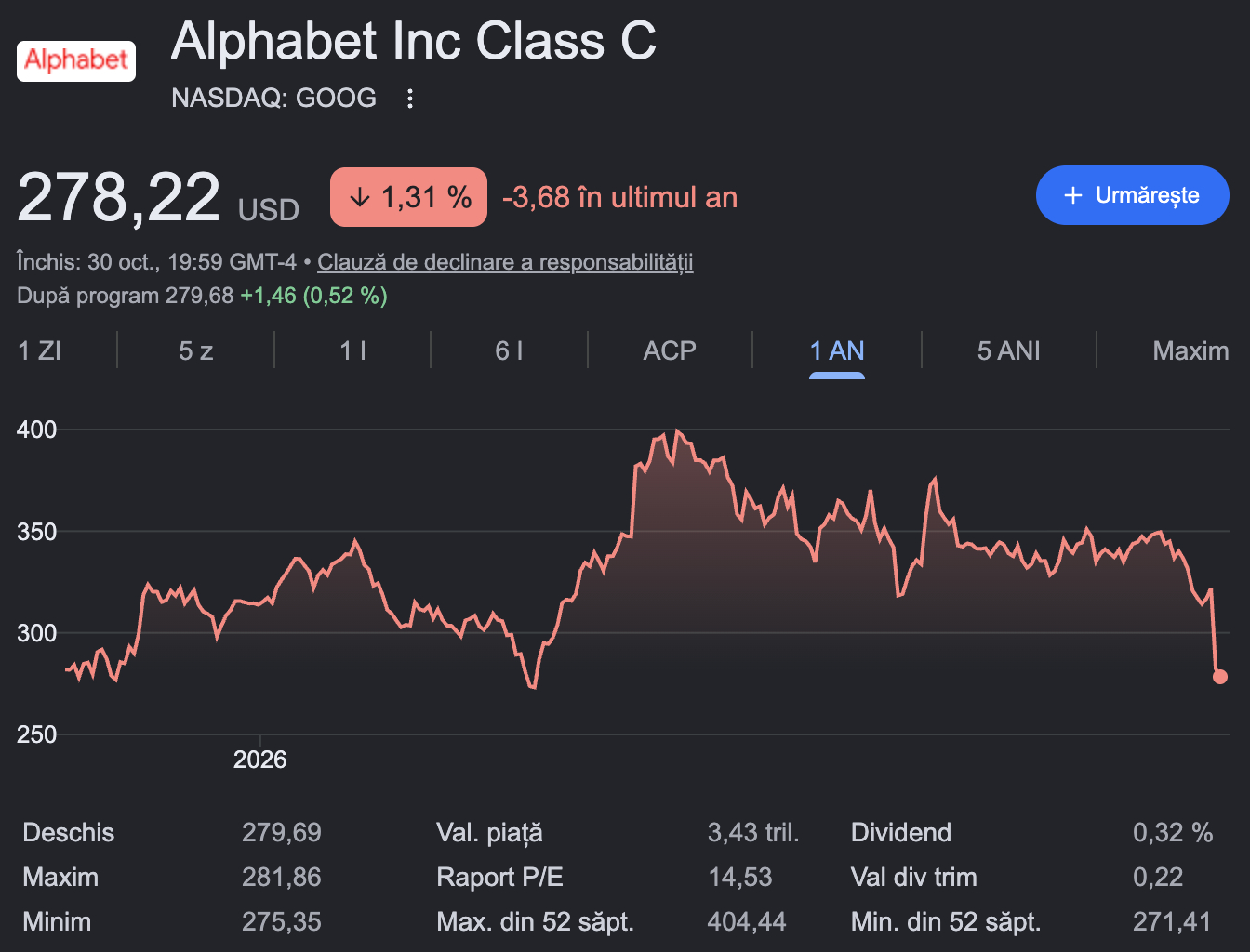
Alphabet lost nearly $500 billion in market value in a single day after its shares fell almost 13% on October 29, focusing investor attention on the growing cost of the AI infrastructure race. The sell-off came even as the Google parent reported strong revenue growth and a sharp expansion at Google Cloud.
Third-quarter revenue rose about 25% year over year to $127.6 billion, while Google Cloud revenue more than doubled to $30.7 billion. But capital expenditure climbed faster than operating cash generation, reaching $51.4 billion and leaving Alphabet with negative free cash flow of about $9.1 billion for the period.
| Metric | Q3 2025 | Q3 2026 |
|---|---|---|
| Total revenue | $102.3 billion | $127.6 billion |
| Google Cloud revenue | $15.2 billion | $30.7 billion |
| Net income | $35.0 billion | $26.5 billion |
| Cash from operations | $48.4 billion | $42.3 billion |
| Capital expenditure | $24.0 billion | $51.4 billion |
| Free cash flow after capital expenditure | +$24.5 billion | -$9.1 billion |
The figures are rounded. Alphabet’s capital spending includes technical infrastructure, with AI data centers, servers and chips accounting for a major part of the investment. The company expects total capital expenditure of $195 billion to $205 billion in 2026.
Negative free cash flow does not mean Alphabet is unprofitable. It means the company spent more on capital projects than it generated in operating cash during the quarter. Net income also fell year over year, although the result was affected by a significant accounting write-down on Alphabet’s SpaceX investment, rather than AI spending alone.
The industry’s monetization test
Alphabet is not alone in making enormous bets on AI capacity. Microsoft, Meta and Amazon are also expanding data-center infrastructure, while Nvidia supplies many of the accelerators required for advanced AI workloads. The central question for investors is whether revenue from enterprise services, subscriptions and advertising can rise quickly enough to justify the build-out.
Google faces a particularly sensitive transition in search. Its AI Mode can compete with the conventional search experience, but advertising within AI conversations has not yet matched the monetization of traditional search results. Google has begun widening advertising in AI Mode as it works to improve the business case for generative search.
The pressure is spreading across the sector. S&P Global revised Meta’s financial outlook to negative, citing its heavy AI infrastructure spending, while Reuters reported that the Nasdaq 100 was on track to shed more than $2 trillion in market capitalization during October amid deepening concern over AI expenditure.
AI demand itself has not disappeared: cloud revenue growth at Alphabet points to continued uptake of its services. What remains unresolved is the pace at which the industry can convert that demand into returns sufficient to fund increasingly expensive data centers. Alphabet’s next financial updates will be watched closely for evidence that rising AI revenue can begin to narrow that cash-flow gap.