

Levent Alpöge, a mathematician and member of Anthropic’s technical team, says he has proved the Riemann Hypothesis with decisive help from Claude. If confirmed, the result would resolve one of mathematics’ longest-standing open problems—but it has not yet undergone formal validation by the wider mathematical community.
Alpöge published a four-page document on his personal website dated November 20, 2026. He says the AI system was particularly important during the final stages of the work, producing a body of more than 250,000 pages of mathematical material during the research process.
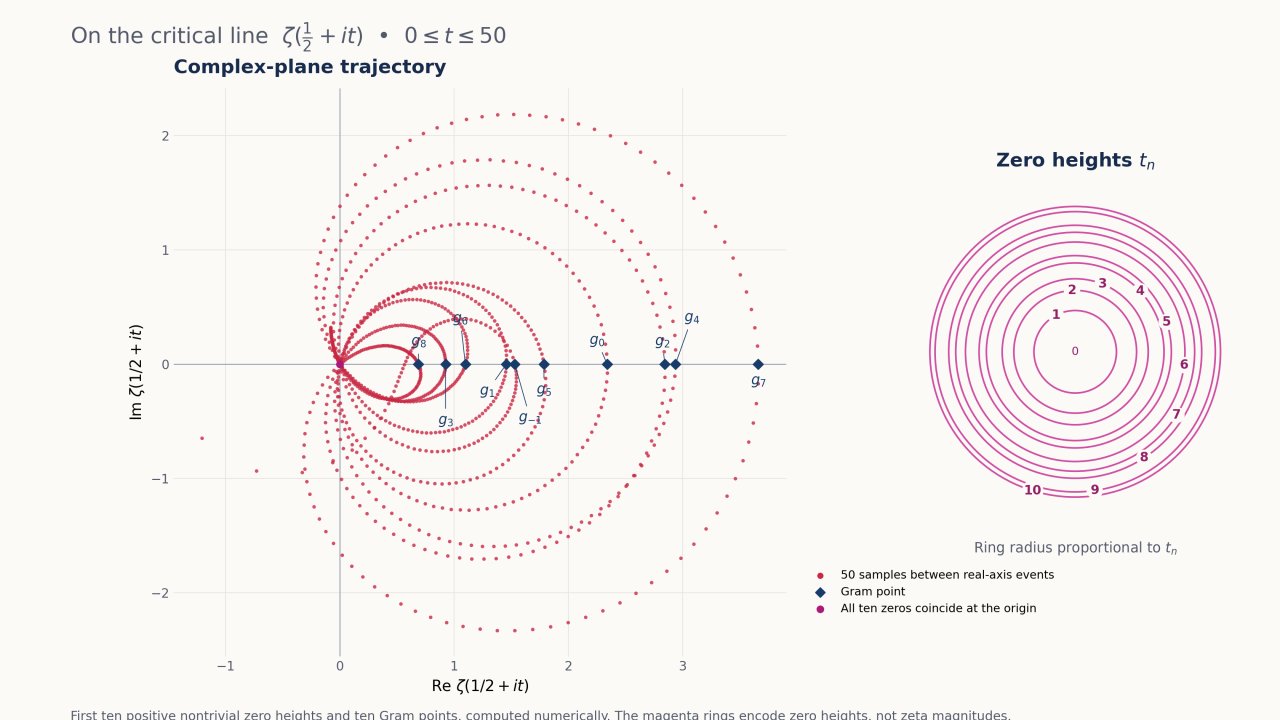
First proposed in 1859, the Riemann Hypothesis concerns the distribution of prime numbers. It is one of the Clay Mathematics Institute’s seven Millennium Prize Problems, with a US$1 million award attached to a proof that meets the institute’s validation requirements.
The hypothesis remains listed as unsolved by the Clay Mathematics Institute. Its president, Martin Bridson, has described the announcement as potentially historic while cautioning that verifying and fully understanding the proposed proof will take time.
The claim follows reports of possible AI-assisted progress on the Navier-Stokes equations, another famous mathematical challenge, from OpenAI. For now, the decisive milestone is not the volume of AI-generated work but whether independent experts can check and accept Alpöge’s proof.