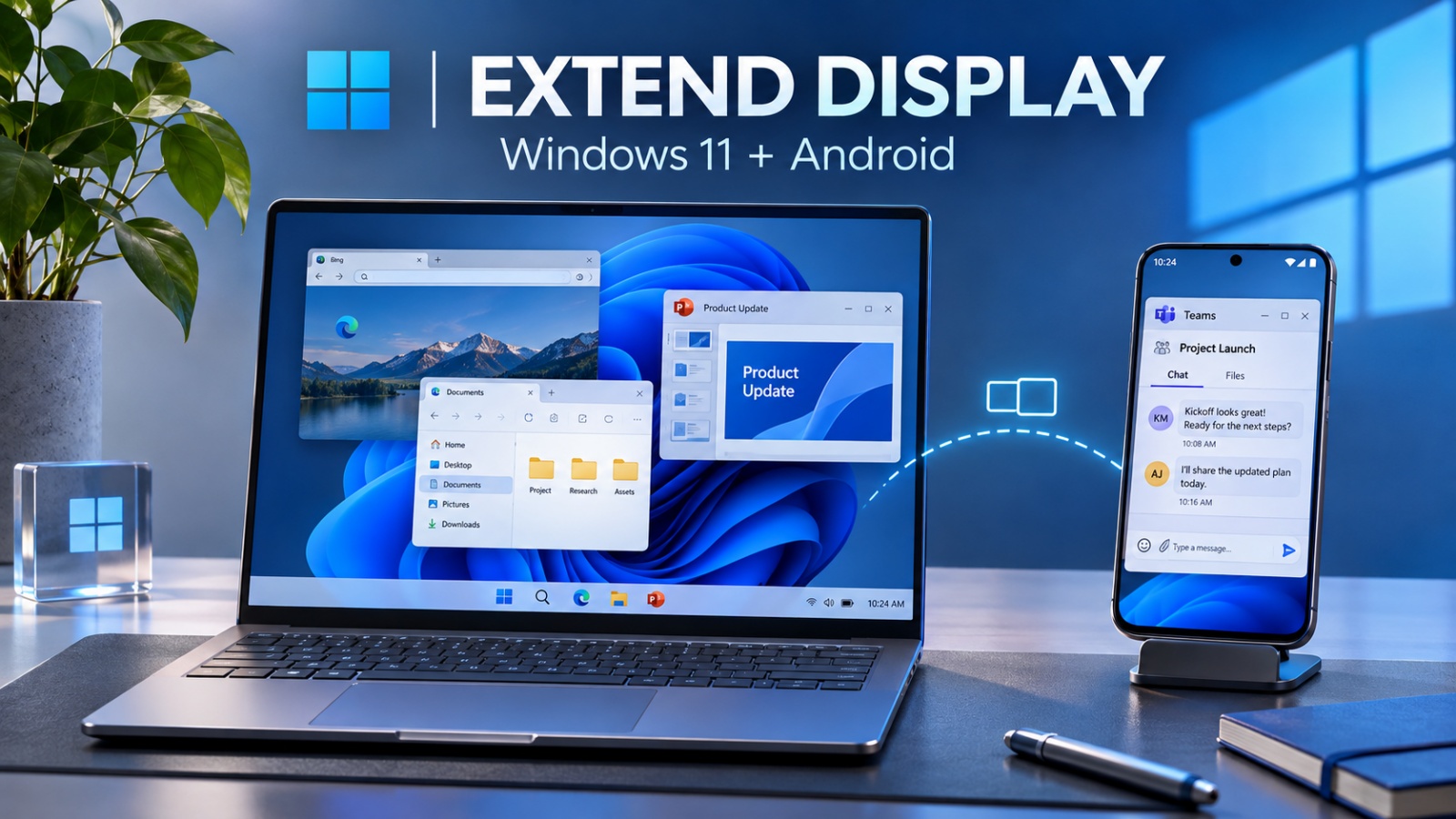
Microsoft appears to be developing a Windows 11 feature that would turn compatible Android phones and tablets into secondary displays. References to an option called “Extend display” were found in the Link to Windows app by Windows Latest, pointing to desktop extension rather than simply mirroring a phone screen on a PC.
The feature could let users move Windows apps or windows onto an Android device much as they would with a conventional external monitor. Tablets could be especially useful for the role, potentially giving older Android hardware a second purpose alongside a laptop or desktop.
Code found in the Android app includes controls to end a display session, display-management commands and icons depicting two screens. It also references H.264 and HEVC video codecs, along with resolution and refresh-rate parameters, suggesting that the Windows desktop would be delivered to the Android device as a video stream.
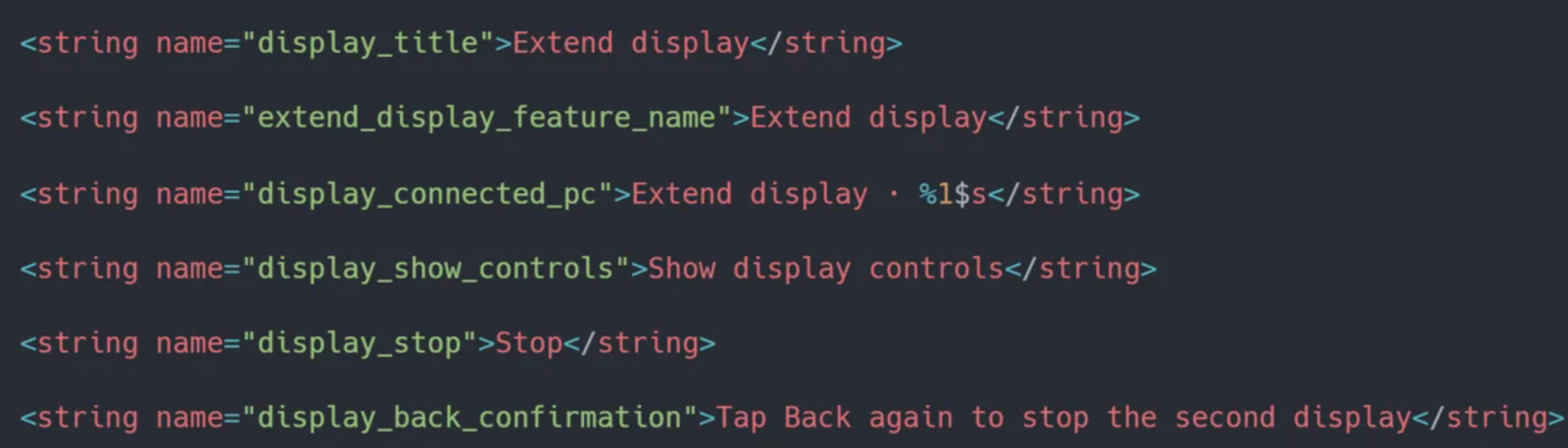
The session may be startable either from the PC or within Link to Windows. Microsoft also appears to be preparing automatic shutdown behavior when the PC is locked or the connection drops. The code does not reveal whether the feature would use Wi-Fi, USB or both connection methods.
Microsoft already offers several Windows-to-Android integration features through Phone Link, including access to photos, messages and calls, while app streaming is available on select handsets. Android phones can also be used as Windows webcams. However, the company’s more advanced cross-device features are often restricted to supported devices from specific manufacturers, so “Extend display” should not be assumed to work on every Android device.
- Samsung devices
- HONOR devices
- OPPO devices
- OnePlus devices
- Xiaomi devices
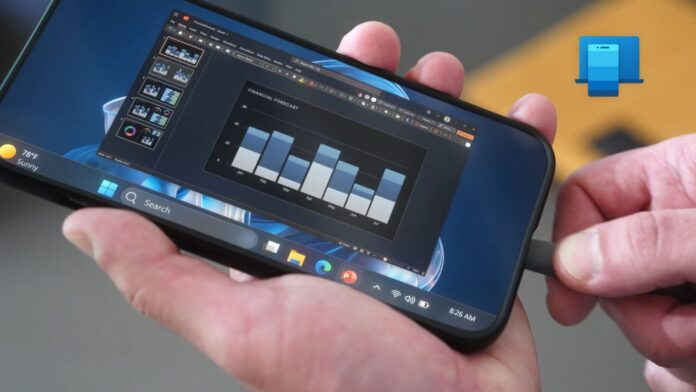
The idea would place Windows 11 closer to Apple’s Sidecar feature, which lets an iPad serve as a second display for a Mac but does not support the iPhone. Samsung already offers a comparable Second Screen capability on certain Galaxy tablets. Microsoft’s potential advantage would be broader Android support without relying on a third-party app, though compatibility remains unconfirmed.
Microsoft has not formally announced Extend display or provided a release timeline, and the code reportedly includes unfinished components. Its eventual connection requirements, device eligibility and whether it reaches a public Windows 11 release remain the key unanswered details.