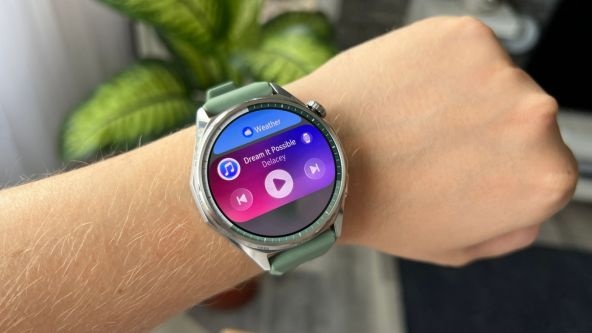
Huawei is rolling out a HarmonyOS update in China that brings an elevated blood glucose risk assessment to the Watch GT 6, extending a health feature previously available on the Watch GT 6 Pro. The tool analyzes heart-rate and sleep data collected over several days, but does not provide a blood glucose reading or replace medical testing.
The feature is included in HarmonyOS 7.0.0.108 SP8, announced on November 22 and now being distributed gradually for the Watch GT 6 and Watch GT 6 Pro. Users start the assessment through the Huawei Innovative Research app on the watch. It typically takes three to 14 days and requires the watch to be worn day and night.
Huawei requires at least 20 hours of daytime resting data and 40 hours of sleep data during the assessment period. Once complete, the result is delivered as a notification on the watch. The assessment can also be used from the wrist when paired with an iPhone, even though the Innovative Research app is not available on iPhone.
- No abnormalities identified: Huawei advises users to maintain a healthy lifestyle and undergo regular testing.
- Suspected diabetes or prediabetes: Huawei recommends consulting a doctor and obtaining specialist tests.
- Insufficient data: the assessment could not be completed and must be repeated.
Risk screening, not glucose monitoring
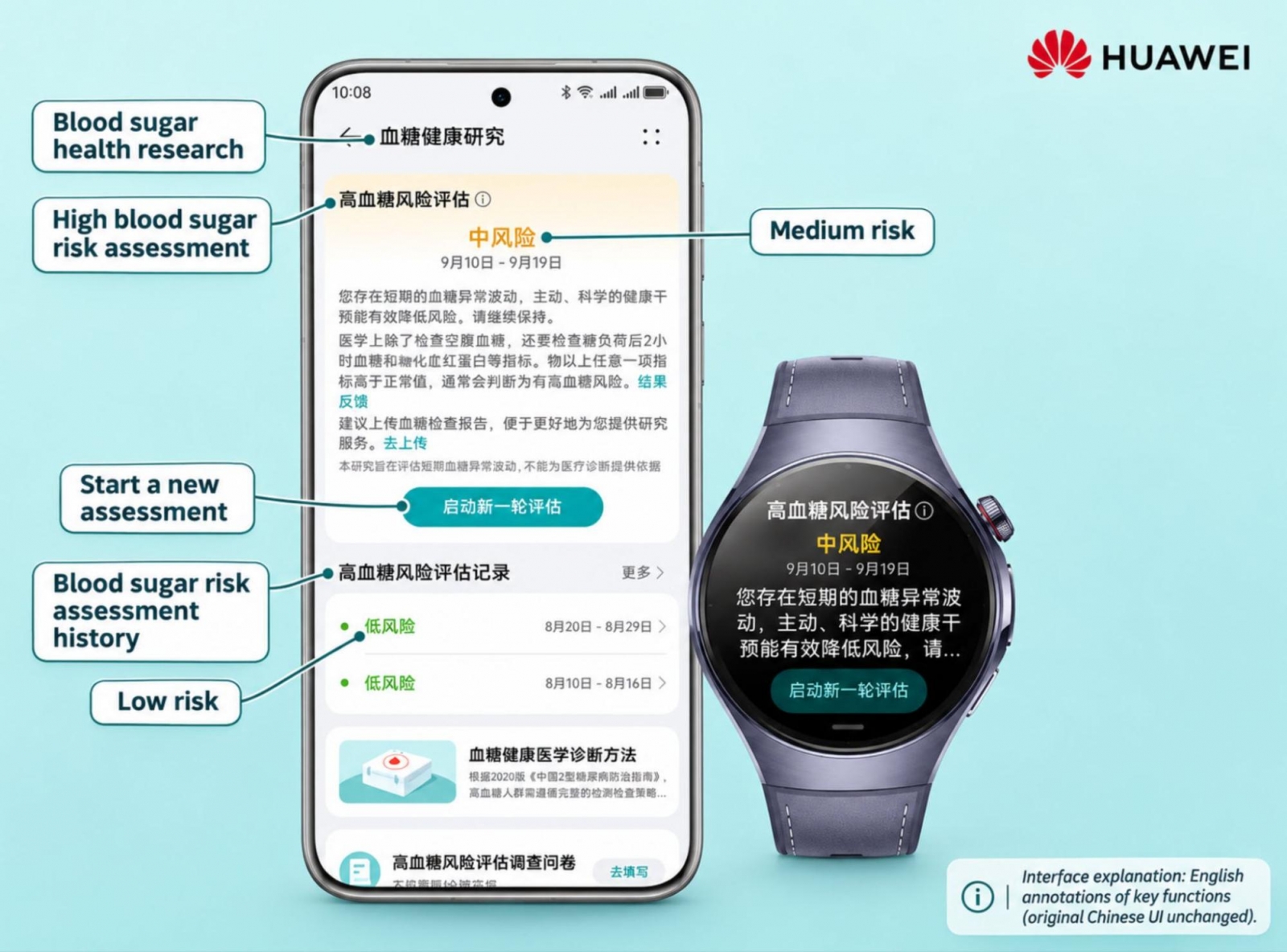
The result is a risk estimate rather than a direct glucose measurement, and Huawei does not display a reading in mg/dL. The company has been researching the technology since the Watch 4 generation in 2023, using physiological signals associated with hyperglycemia rather than measuring glucose concentration itself.
Huawei says the feature is intended for reference only and must not be used to establish a diagnosis or treatment plan. A result showing no abnormalities does not rule out diabetes. The U.S. Food and Drug Administration has also warned consumers not to use smartwatches or smart rings that claim to measure blood glucose without piercing the skin, as such devices can produce inaccurate results and create serious health risks.
For continuous glucose monitoring, Huawei has a separate product, the Sense G1, which uses a filament sensor inserted beneath the skin to measure glucose in interstitial fluid and can operate for up to 16 days.
The same update includes a revised sleep-monitoring algorithm, ski-mode optimizations, and pairing changes for Android phones and iPhones. It also enables watch-recorded audio to sync with Huawei Health on both platforms. On compatible HarmonyOS 7 phones, users can answer WeChat calls on the watch. Huawei has not confirmed a wider international rollout for the update or the glucose-risk assessment.