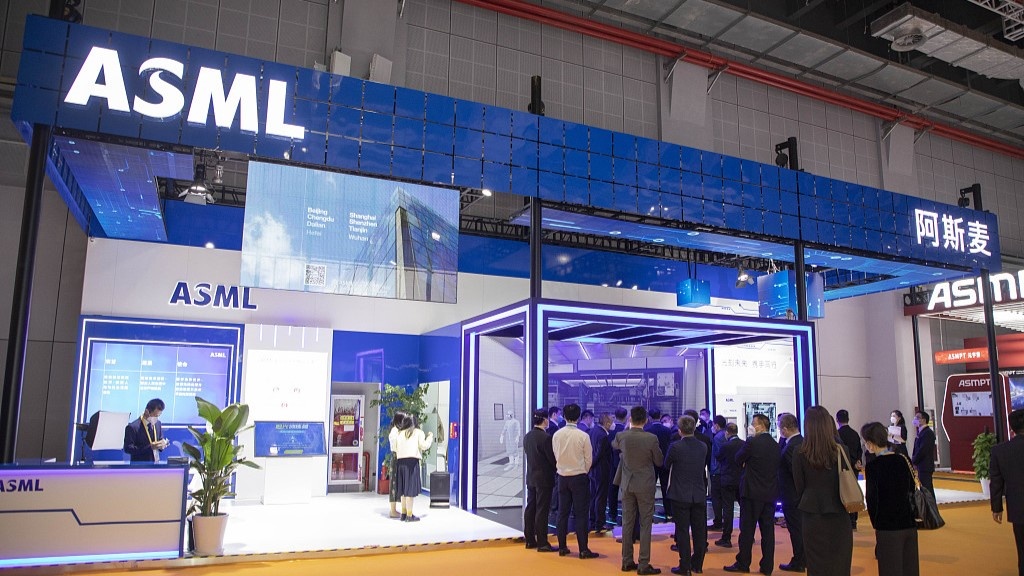
The Netherlands is pushing back against a proposed US law that could further restrict ASML equipment exports to China and limit the company’s ability to maintain machines already installed there. Dutch officials argue that Washington should not unilaterally dictate trade policy for a European company whose lithography systems are central to the global semiconductor supply chain.
The United States is not the boss of Veldhoven.
Sjoerd Sjoerdsma, Dutch trade minister
Veldhoven is home to ASML’s headquarters. The Dutch government is working with Germany, France and the European Commission to oppose the restrictions in their proposed form, according to reports cited by the government’s position.
The bipartisan MATCH Act is intended to align export controls on semiconductor-manufacturing equipment. Its backers cite national-security concerns and say US suppliers face tougher restrictions than some overseas competitors.
- Restrict exports of advanced immersion DUV lithography equipment.
- Limit maintenance services and technical support.
- Expand restrictions to fabs operated by Huawei.
- Expand restrictions to fabs operated by SMIC.
- Expand restrictions to fabs operated by CXMT.
- Expand restrictions to fabs operated by YMTC.
- Expand restrictions to fabs operated by Hua Hong.
- Allow the US to impose unilateral controls on foreign equipment incorporating US technology if talks with allies do not make progress within 150 days.
Why DUV servicing is central to the dispute
China does not officially have access to ASML’s EUV lithography systems. Chinese manufacturers have instead used DUV equipment, including multiple-patterning techniques, to produce finer circuit designs. Restrictions on immersion DUV tools would therefore affect an important alternative route for advanced chip manufacturing.
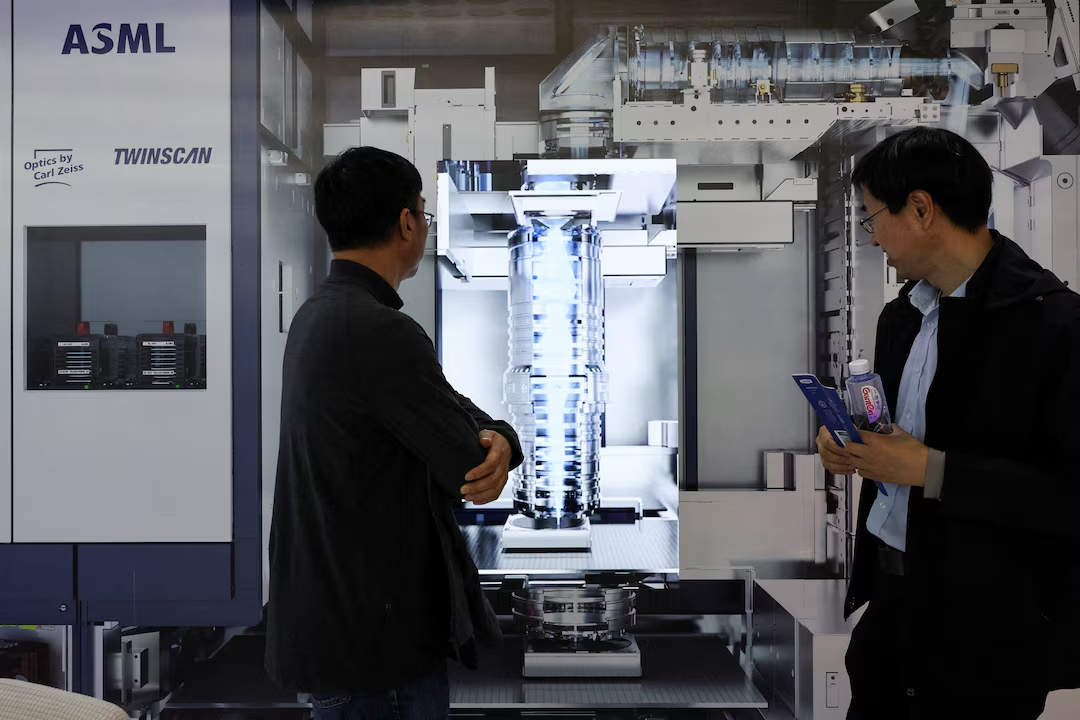
Service limits could be just as consequential for fabs that already own ASML systems, potentially affecting their productivity. The Netherlands already controls exports of advanced chipmaking equipment under rules introduced in September 2023 and expanded in April 2025, but it assesses export-license applications individually and retains final decision-making authority.
The commercial exposure is substantial. ASML reported accelerating growth in the third quarter of 2026 amid AI-related investment, while China is expected to account for roughly 20% of its 2026 revenue, or nearly €9 billion based on the company’s full-year outlook. That does not mean the entire amount would automatically be affected by any new restrictions.
| Metric | Q2 2026 | Q3 2026 |
|---|---|---|
| Revenue | €9.33 billion | €11.66 billion |
| Net income | €2.92 billion | €4.96 billion |
| Service and field-option sales | €2.76 billion | €3.29 billion |
| Gross margin | 54% | 57.5% |
ASML CEO Christophe Fouquet recently warned that tougher controls could have the opposite of their intended effect by accelerating the development of competing Chinese technologies. China is already investing heavily in domestic lithography efforts, including an EUV-equipment project reportedly involving former ASML engineers.
Dutch Prime Minister Rob Jetten said he would raise the matter directly with Donald Trump at the G20 summit in Miami on December 14-15. A cross-party motion has also been filed in the Dutch parliament calling on the US Congress not to adopt the MATCH Act in its current form, leaving the next round of US-allied negotiations as the key test for the proposal.