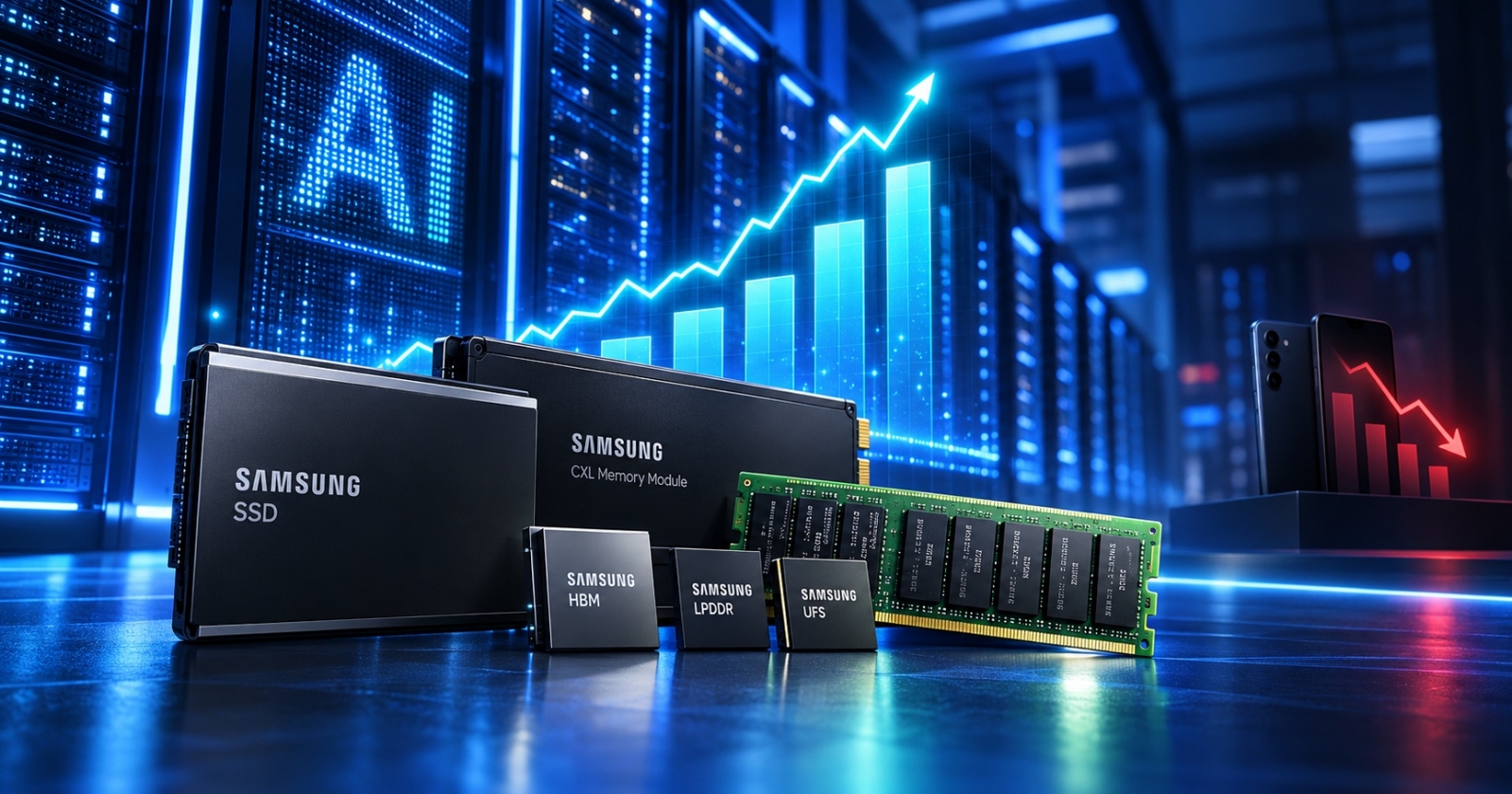
Samsung Electronics has projected third-quarter 2026 revenue of about $144.9 billion and record operating profit of $79.8 billion, with demand for AI infrastructure memory emerging as the main driver of the forecast.
The company’s memory and storage business is expected to account for much of the gain. Samsung is already supplying HBM4 memory to NVIDIA and has reportedly secured approval for HBM4E, which is intended for NVIDIA’s future Rubin Ultra platform.
The preliminary figures would represent a 782.5% increase in operating profit and a 126% rise in revenue from the same period in 2025, producing an operating margin of roughly 55%. Analysts are also forecasting operating profit of around $409 billion in 2027, 45% above their 2026 estimate.
Higher memory costs pressure device businesses
The AI-led memory boom is not benefiting every Samsung operation equally. Rising memory prices are increasing manufacturing costs across its device businesses, while competition remains intense in consumer electronics.
- Samsung Foundry and System LSI are estimated to have posted combined losses of about $743 million.
- The Mobile eXperience division, which covers smartphones and other devices, is estimated to have lost $1.11 billion.
- Samsung’s TV and home-appliance businesses are estimated to have lost $371.5 million, with higher costs and competition from Hisense and TCL cited as factors.
Samsung has recently decided to raise flagship prices in several markets, and reports suggest the Galaxy S27 series could arrive at considerably higher prices than its predecessors. Specific pricing and market-by-market plans have not been confirmed.
Samsung’s estimates remain preliminary, with final third-quarter results expected to clarify how far AI-memory demand can offset mounting cost pressure in its mobile and consumer-device divisions.