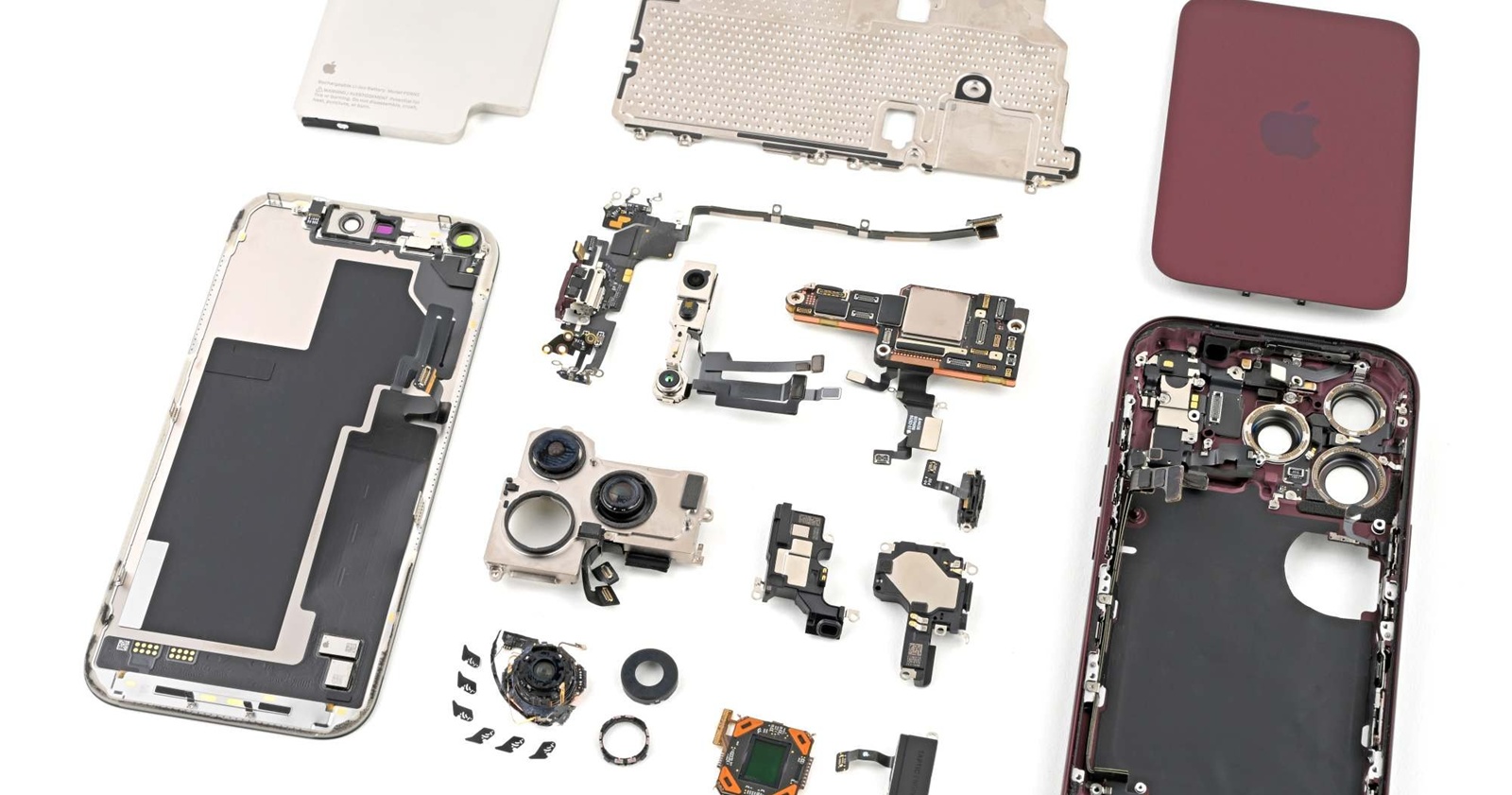
The highest-capacity iPhone 18 Pro and iPhone 18 Pro Max models may trade sustained storage performance for capacity. Tests from HOMOLAB indicate that the 1TB and 2TB versions use QLC NAND flash, while the 256GB and 512GB configurations use TLC NAND. Under an extreme sustained-write workload, the QLC storage reportedly fell as low as 1.1 MB/s after its caches were depleted.
TLC stores three bits per cell, whereas denser QLC stores four. QLC can enable higher capacities, but it is generally slower when data must be written directly to the flash rather than to a temporary cache.
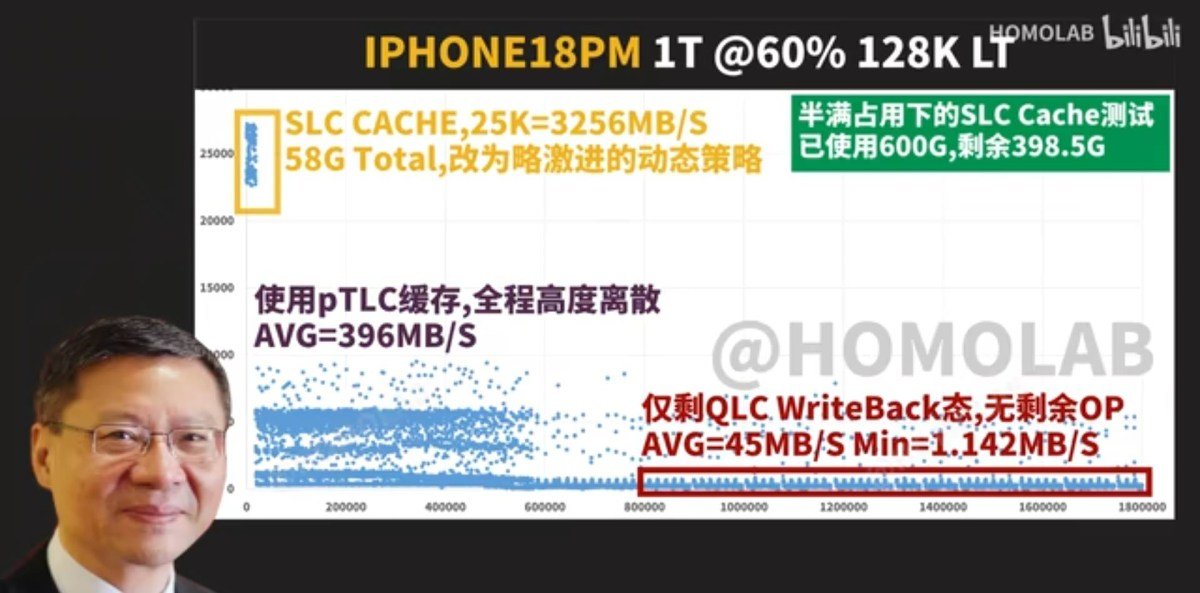
The tested phones use a multi-tier cache to conceal that limitation during shorter writes. The initial SLC-style cache exceeded 3,000 MB/s in the test, followed by a TLC-like cache measured at about 578 MB/s. Once both cache layers were exhausted, direct writes to QLC fell to roughly 79.4 MB/s, with occasional dips to 25.6 MB/s.
Cache capacity shrinks as storage fills
Available fast-cache capacity also appears to depend heavily on free space. HOMOLAB measured around 250GB of SLC cache on a nearly empty device, but only 58GB when the phone was 60% full. In that fuller-state test, the intermediate cache ran at approximately 396 MB/s and direct QLC writes dropped as low as 1.1 MB/s.
Those figures come from a synthetic stress scenario rather than typical everyday phone use. Web browsing, routine photography, apps and gaming should largely remain within the available cache. The distinction could matter more for users recording 4K or ProRes video, moving very large files, or repeatedly writing tens or hundreds of gigabytes of data.
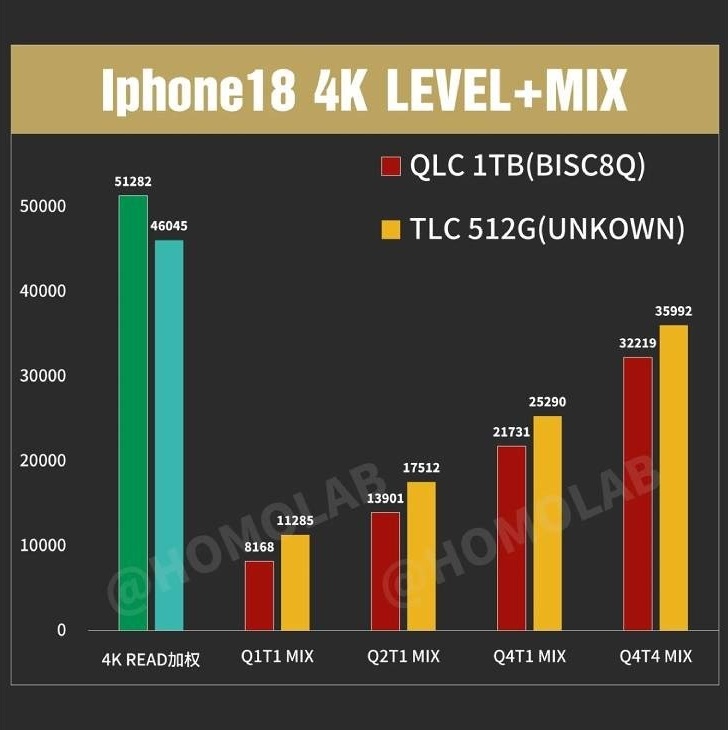
Random-access testing also showed a gap. The 1TB configuration was reportedly up to 38% behind the TLC-based model in 4K tests with low queue depths; the difference narrowed to about 12% with more simultaneous requests. The reported change would mark a departure from the iPhone 17 Pro Max generation, which used TLC NAND even in 1TB and 2TB configurations.
Apple does not identify NAND type in its technical specifications, so buyers cannot determine the underlying flash technology from the listed storage capacity alone. It remains unclear how often the severe post-cache slowdown can be reproduced in real-world workloads.