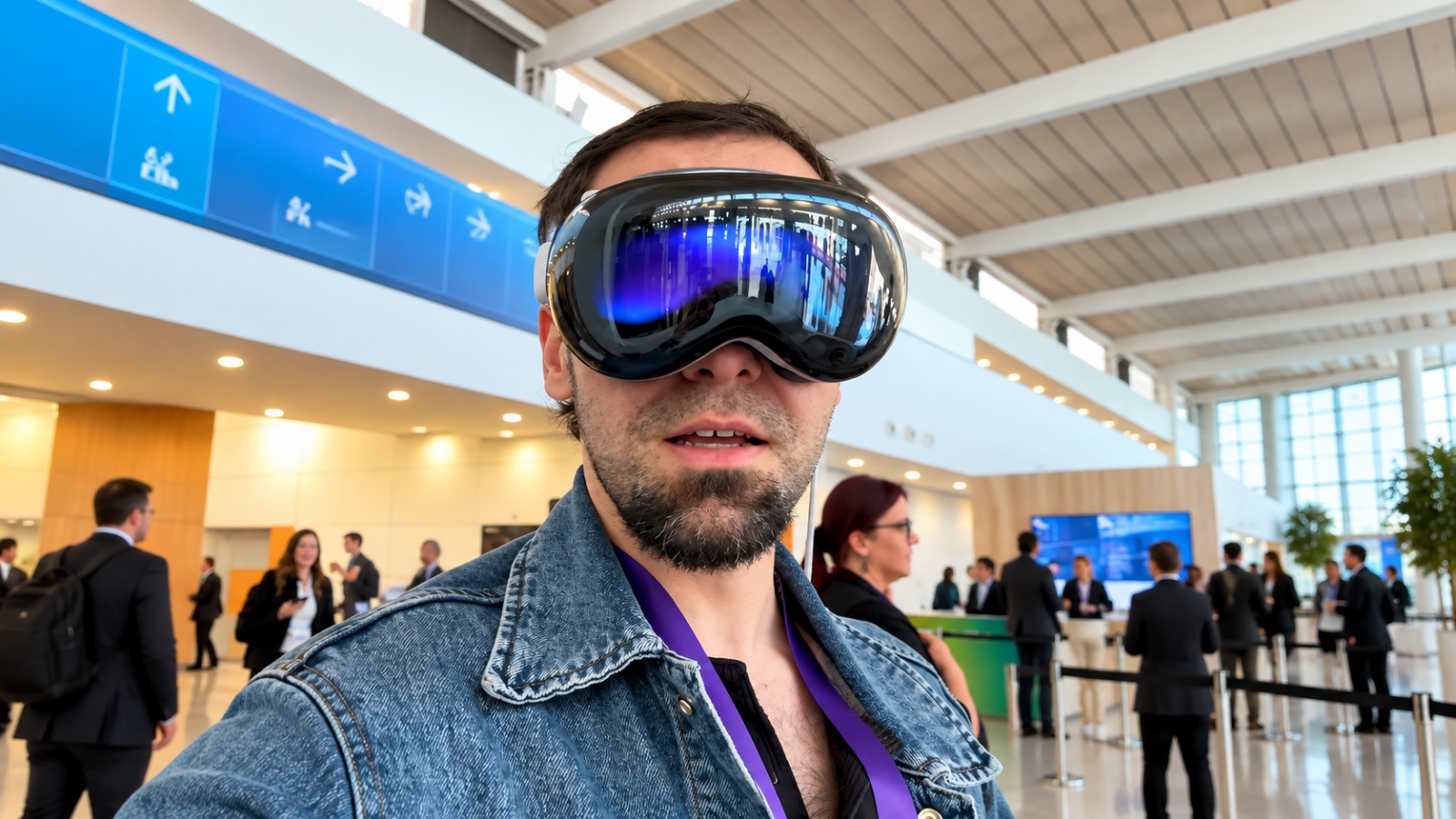
Apple is reportedly evaluating a redesigned Vision headset that could move the processor and battery out of the head-mounted unit, a change aimed at substantially reducing the weight carried on a user’s face. The device is known internally as N224 and is being considered as a future successor to the Vision Pro rather than the previously rumored lower-cost “Vision Air.”
According to Bloomberg’s Mark Gurman, Apple is testing four design concepts and is not expected to launch N224 before late 2028 or early 2029. One approach would retain the displays and sensors in the headset while relocating processing and power to a separate external module.
Apple is testing materials such as plastic, titanium and other metals to reduce weight and is continuing to explore an external module for processing and battery.
Mark Gurman, Bloomberg
That architecture would take Apple further from the Vision Pro’s largely integrated design. The current Vision Pro with M5 weighs roughly 750 to 800 grams, while its separate battery pack weighs about 353 grams. A compute-and-battery module could reduce front-loaded mass, although the company is reportedly divided over whether to pursue that route or retain a design closer to the existing all-in-one headset.
Apple is also testing alternative chassis materials, including greater use of plastic and titanium. One candidate may retain the Vision Pro’s rounded, visor-like form, but the broader goal is to make the headset less physically demanding to wear.
The external-module concept resembles Meta’s approach for its roughly 100-gram VR glasses, which connect by cable to a pocketable puck containing additional hardware. Vision Pro already uses an external battery, so N224 could extend that separation to part of the computing hardware as well.
The longer-term Vision project appears separate from Apple’s smart-glasses effort, which is reportedly being prioritized internally. First-generation Apple Glasses are associated with a late-2027 window and are expected to emphasize cameras, microphones, speakers and AI features, without an AR display at launch.
- Apple Glasses: lightweight smart glasses with cameras, audio and AI features, reportedly targeted for late 2027 and initially without an AR display.
- N224: a full XR headset positioned as a potential Vision Pro successor, reportedly targeted for late 2028 or early 2029.
- N224 concepts: four designs under test, including an option with external processing and battery hardware.
Whether Apple ultimately accepts the cable-and-pocket-module compromise remains unresolved, but the tests indicate that lowering headset weight has become a central issue for the next Vision hardware generation.