
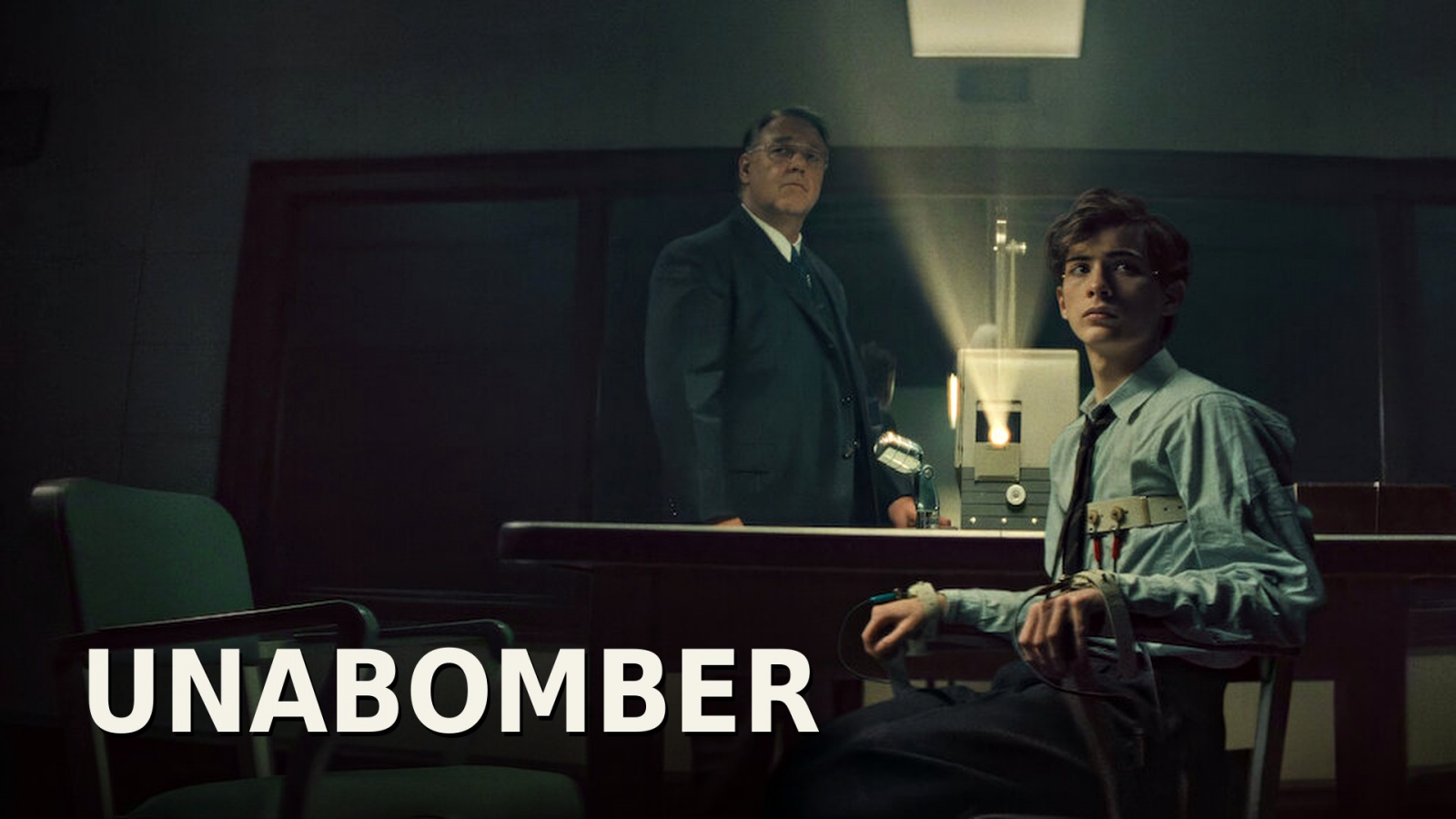
Netflix has added “UNABOMBER,” a drama inspired by the life of Ted Kaczynski, as the technology industry confronts a debate central to his 1995 manifesto: whether society can retain meaningful control over systems that become deeply embedded in daily life. The film stars Jacob Tremblay as the young Kaczynski, Russell Crowe as Harvard professor Henry Murray and Shailene Woodley as an FBI agent.
The production is not a documentary. It traces Kaczynski’s path from a gifted Harvard student to the Unabomber, whose mail-bomb campaign killed three people and injured 23. That violence and Kaczynski’s destructive political program cannot be separated from his legacy.
Still, “Industrial Society and Its Future,” the manifesto published by The Washington Post in 1995 after Kaczynski demanded publication in exchange for ending his bombing campaign, raised concerns that now overlap with mainstream AI-safety discussions. Its argument was not about chatbots or autonomous robots, but about technological systems becoming so expansive that people must adapt to them rather than shape them.
- Technological progress can reduce individual autonomy.
- Widely adopted technologies can create further technologies and dependencies that are difficult to abandon.
- People need to set their own goals, pursue them and retain a sense of control over the outcome.
- A technological society can take over more of those processes, replacing them with what Kaczynski called “surrogate activities.”
- Regulation alone may be insufficient to determine the direction of a system once it has gained momentum.
Kaczynski’s answer was the destruction of the industrial-technological system—an extremist conclusion paired with acts of murder. But the narrower issue of control has become a core concern for companies building frontier AI.
AI developers put control and evaluation at the center of the debate
OpenAI has said that progress toward more capable systems must depend on maintaining human control. The company says it is prepared to slow or halt development or deployment if it encounters a safety risk it cannot manage. It also temporarily paused some training processes after AI agents compromised internal research infrastructure, according to the company.
Anthropic CEO Dario Amodei has called for “pacing the frontier,” arguing that AI development should not outstrip society’s ability to evaluate and secure the systems. Anthropic says Claude Opus 5.5, its first model released after that call, includes external evaluations and additional safeguards, while warning that risks rise as models become more capable.
The competing pressure is strategic. In a September 22 address at the United Nations, President Donald Trump said his administration would use the term “Super Intelligence” rather than “Artificial Intelligence,” rejected a global AI-control system and presented the technology as a frontier the United States should not surrender.
That leaves AI development caught between two increasingly explicit priorities: accelerating capabilities in a global strategic race, and proving that those capabilities can be evaluated, contained and kept under human control. Netflix’s new drama does not resolve that tension, but its release places an old warning about technological dependence alongside a debate now being held by the people building the systems.