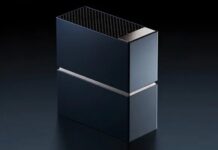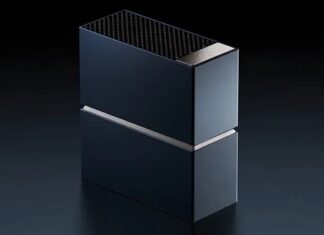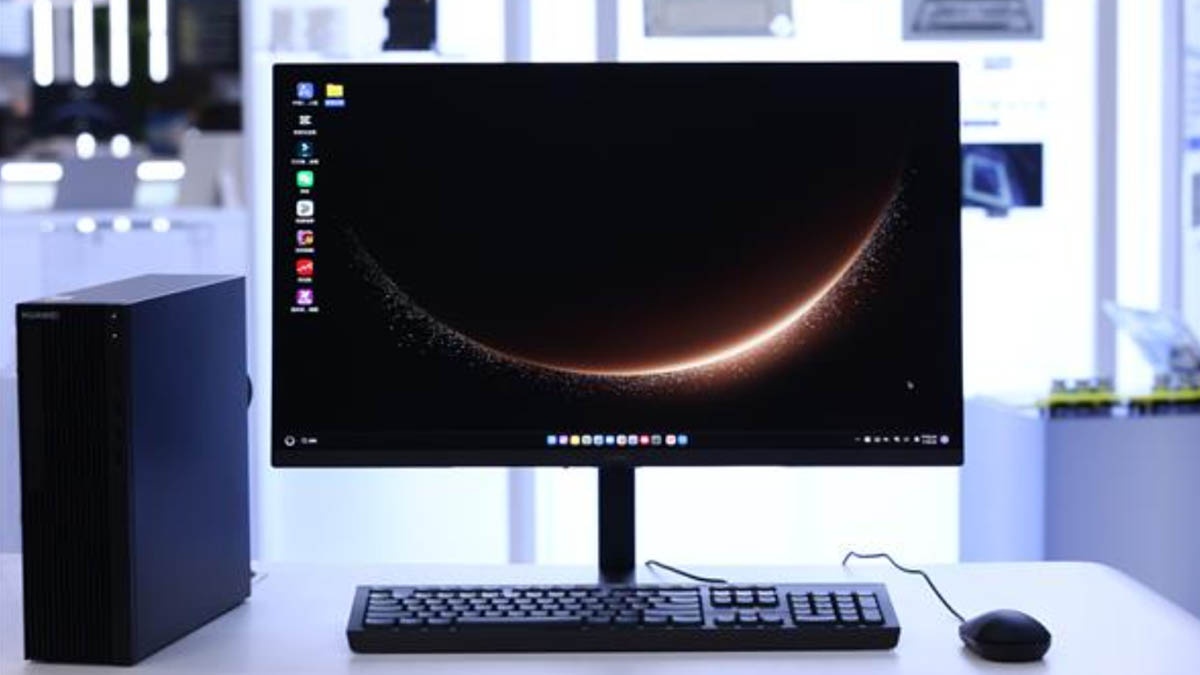
Huawei says its Qingyun HM650 enterprise desktop has achieved a 100% component localization rate, with the claim verified by Zhejiang Kezheng Electronic Information Product Inspection. The certification covers the origin of the PC’s components and marks a significant step in Huawei’s effort to build a more self-reliant computing platform for institutional and business customers in China.
The desktop was introduced on November 5 at the HarmonyOS Office Industry Summit 2026. It runs HarmonyOS V1.0 Enterprise rather than Windows and is powered by Huawei’s Kirin X90 processor, which combines CPU cores, integrated graphics and dedicated AI processing.
Huawei’s localization claim extends across key hardware categories, including the processor, memory, SSD storage, power supply and Wi-Fi connectivity. Huawei PC and tablet division president Zhu Dongdong said the result required in-house work on critical components, collaboration with local suppliers for major parts and scaled production of more common components.
The HM650 also uses a dual-sided cooling design for its processor. Huawei separately says the Kirin X90 and HarmonyOS have each received Level II evaluations under China’s safety and reliability assessment mechanism; those assessments are distinct from the component-origin certification.
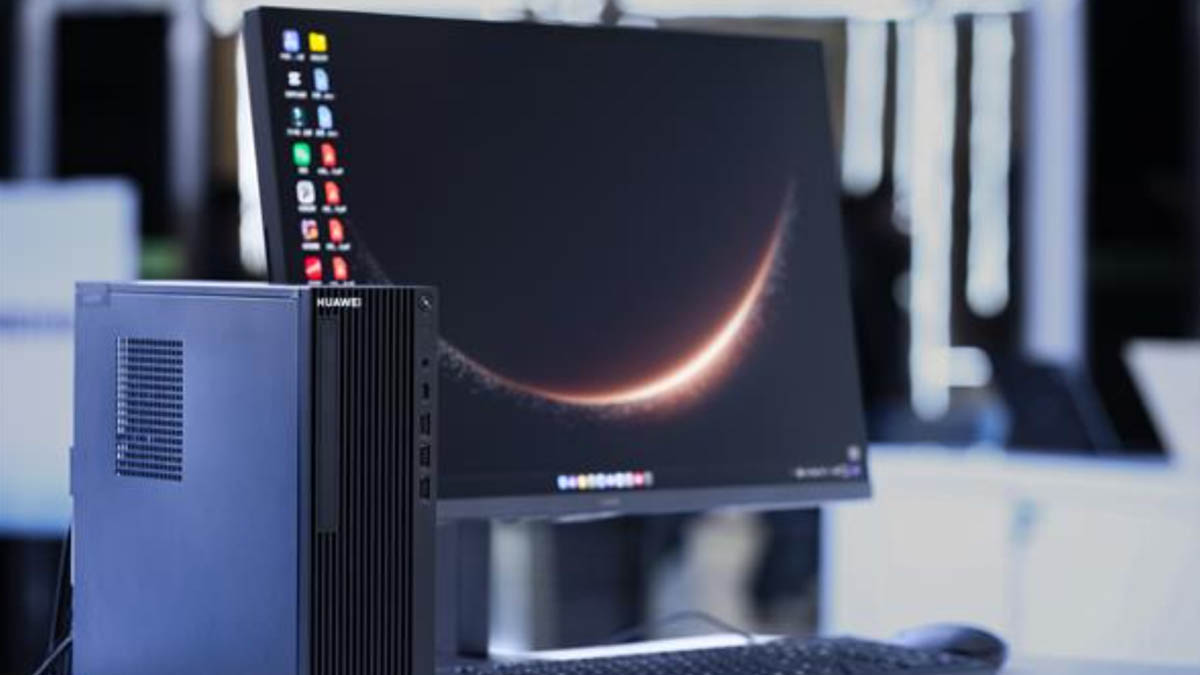
A 100% localization rate should not be read as proof that every underlying architecture, patent or technology used by the system was independently developed in China. Huawei’s product page identifies the testing organization but does not publicly detail the complete verification methodology.
The desktop is aimed at Chinese public-sector and enterprise deployments rather than the consumer gaming-PC market. For these buyers, control over the operating system, component sourcing and data security can be as important as raw performance. Huawei had previously introduced a HarmonyOS-powered MateBook Pro in 2025, and the HM650 extends that software and silicon ecosystem into desktops.
Huawei has not announced international availability for the Qingyun HM650. Its wider importance will depend on whether the company can scale this locally sourced hardware and software stack beyond its initial institutional market.