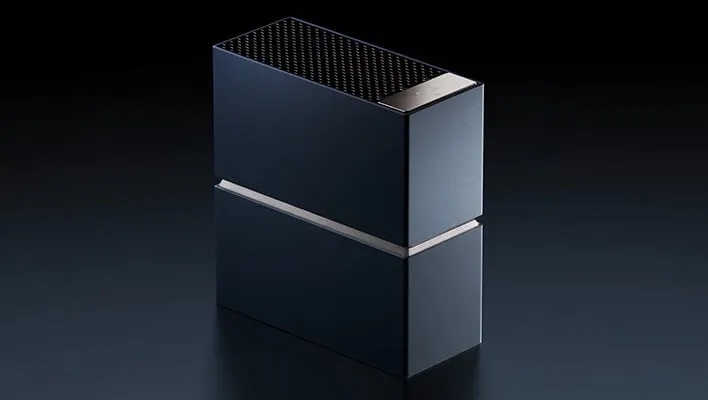
TP-Link’s Archer 8 Ultra, one of the first Wi-Fi 8 routers to reach the market, has shown an early sign of what the emerging standard could prioritize: maintaining a connection in difficult coverage conditions. In a TechRadar test using a Wi-Fi 7 laptop, the router sustained 150Mbps at 9 meters away and behind three walls, including on the 6GHz band.
That result is not a measure of the router’s peak throughput, since the internet connection used for the test was limited to 150Mbps. It does, however, indicate stable signal retention in an area where wireless coverage can be problematic. Native Wi-Fi 8 client hardware remains scarce, so the router was not tested with a Wi-Fi 8 device.
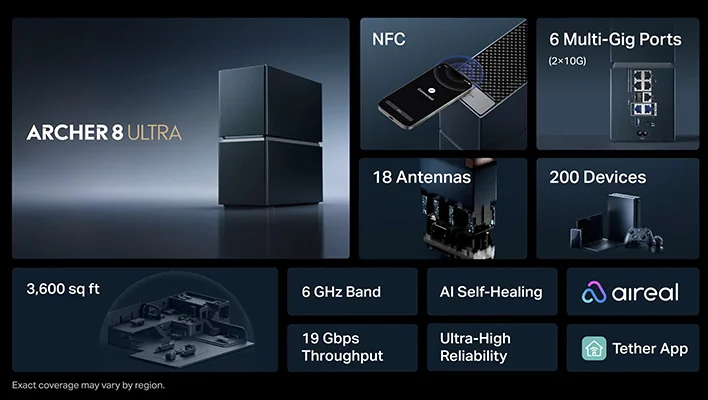
| Specification | TP-Link Archer 8 Ultra details | Standard | Wi-Fi 8 (802.11bn), not yet finalized |
|---|---|---|---|
| Theoretical combined speed | 19Gbps, tri-band | Internal antennas | 18 |
| Wired ports | 2 × 10Gbps, 4 × 2.5Gbps, 1 × Gigabit | Claimed coverage | Up to 279m² in the EU |
| Claimed connected devices | Up to 200, according to TP-Link | Signal feature | Multi-Floor mode for distributing signal between floors |
Wi-Fi 8 is not expected to focus solely on surpassing Wi-Fi 7 throughput records. The new generation is intended to improve stability, latency and coverage, particularly in larger homes or environments with many connected devices. The Archer 8 Ultra’s 19Gbps theoretical aggregate speed and its 10Gbps networking ports place it at the high end of that transition.
TP-Link has scheduled commercial availability in announced markets for November 15, 2026, but market-by-market availability has not been confirmed. With the Wi-Fi 8 standard expected to be finalized only in 2028, broader client-device testing will be needed to establish the practical benefits of 802.11bn.