
Anker is positioning its Soundcore sleep lineup around two approaches to disrupted nights: earbuds that reduce or mask sound, and a bedside device that tracks sleep without requiring anything to be worn. The company’s newer Sleep Earbuds 4 and Sleep Earbuds 4 Pro are listed in a pre-launch reservation campaign, with wider availability expected in the coming weeks.
The existing Soundcore Sleep A30 combines passive ear-tip isolation, active noise cancellation and snore masking. Those last two features address noise differently: ANC works by counteracting external sound, while Anker’s snore-masking system detects snoring through the charging case and plays adaptive audio intended to make it less intrusive. It does not stop the source of the snoring.
Sleep hardware spans earbuds and a bedside tracker

- Soundcore Sleep A30: sleep-focused earbuds with passive isolation, active noise cancellation and snore masking.
- Soundcore Sleep Earbuds 4: a new sleep-earbud model currently appearing in a pre-launch reservation campaign.
- Soundcore Sleep Earbuds 4 Pro: adds heart-rate sensors, sleep tracking and an AMOLED display on its charging case.
- Soundcore SleepLab Pro: a bedside speaker and radar-based sleep tracker designed for users who do not want to wear earbuds.
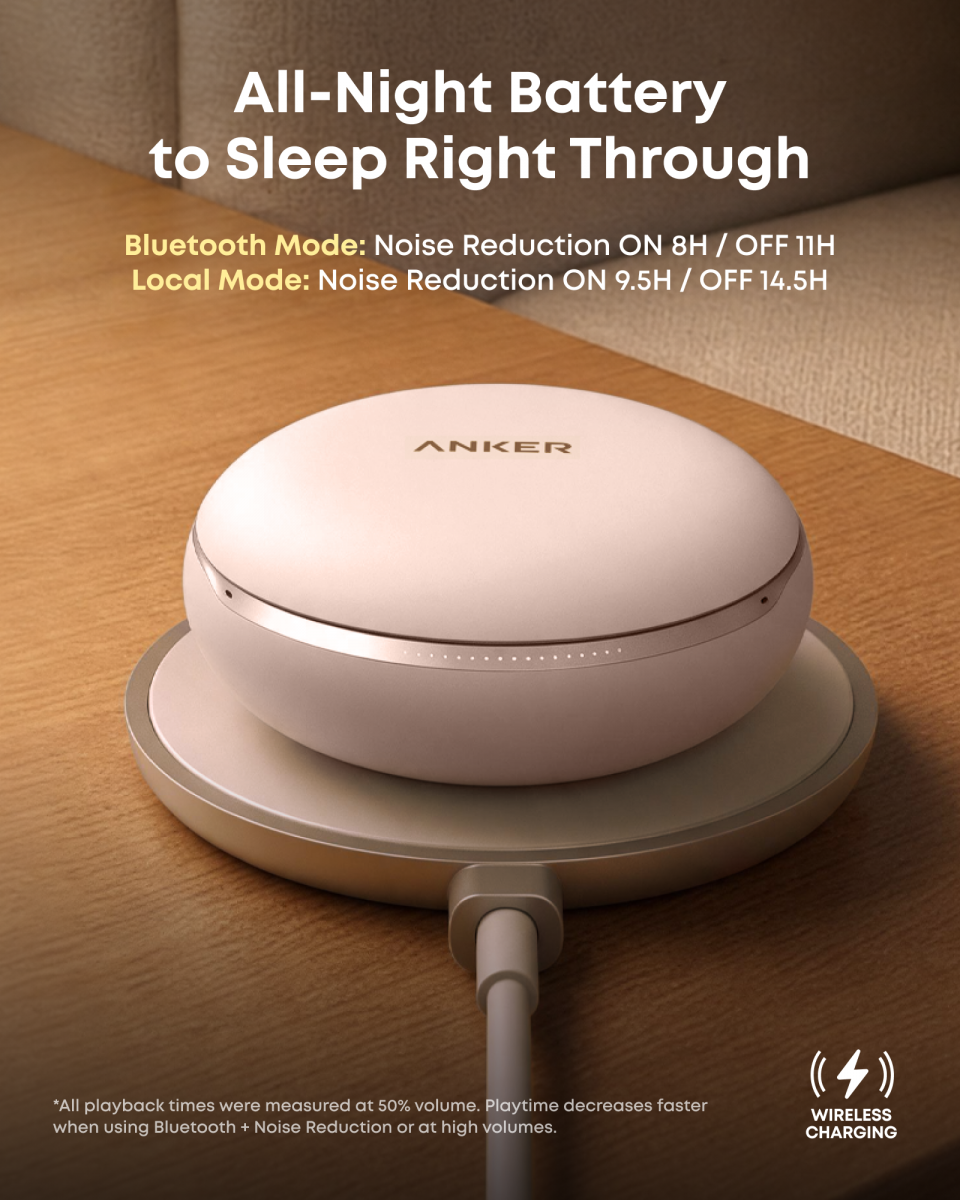
Sleep Earbuds 4 Pro can control audio and alarms without requiring a phone, potentially avoiding a late-night return to distracting apps. Its BioSync feature, which adapts sound based on heart rate, is described by Anker as experimental. Comfort and battery life in the selected listening mode remain central considerations for sleep earbuds, particularly for side sleepers.
SleepLab Pro takes a different route, using radar from a bedside position to monitor sleep. The trade-off is that its relaxation audio plays into the room and may also be heard by another person nearby. Anker says the Sleep Earbuds 4 Pro are not medical devices and are not intended to diagnose or treat insomnia or sleep apnea.
The company also points to non-device habits that can affect sleep, including consistent bed and wake times, less bright light in the evening, physical activity, and a cool, quiet bedroom. The National Heart, Lung, and Blood Institute notes that caffeine’s effects can last for up to eight hours, making late-day intake another factor to consider.
Pricing and full market-by-market availability for the new Sleep Earbuds 4 range have not been confirmed in the available information. Their launch will test whether users see enough value in dedicated sleep hardware beyond the company’s existing Soundcore sleep products.