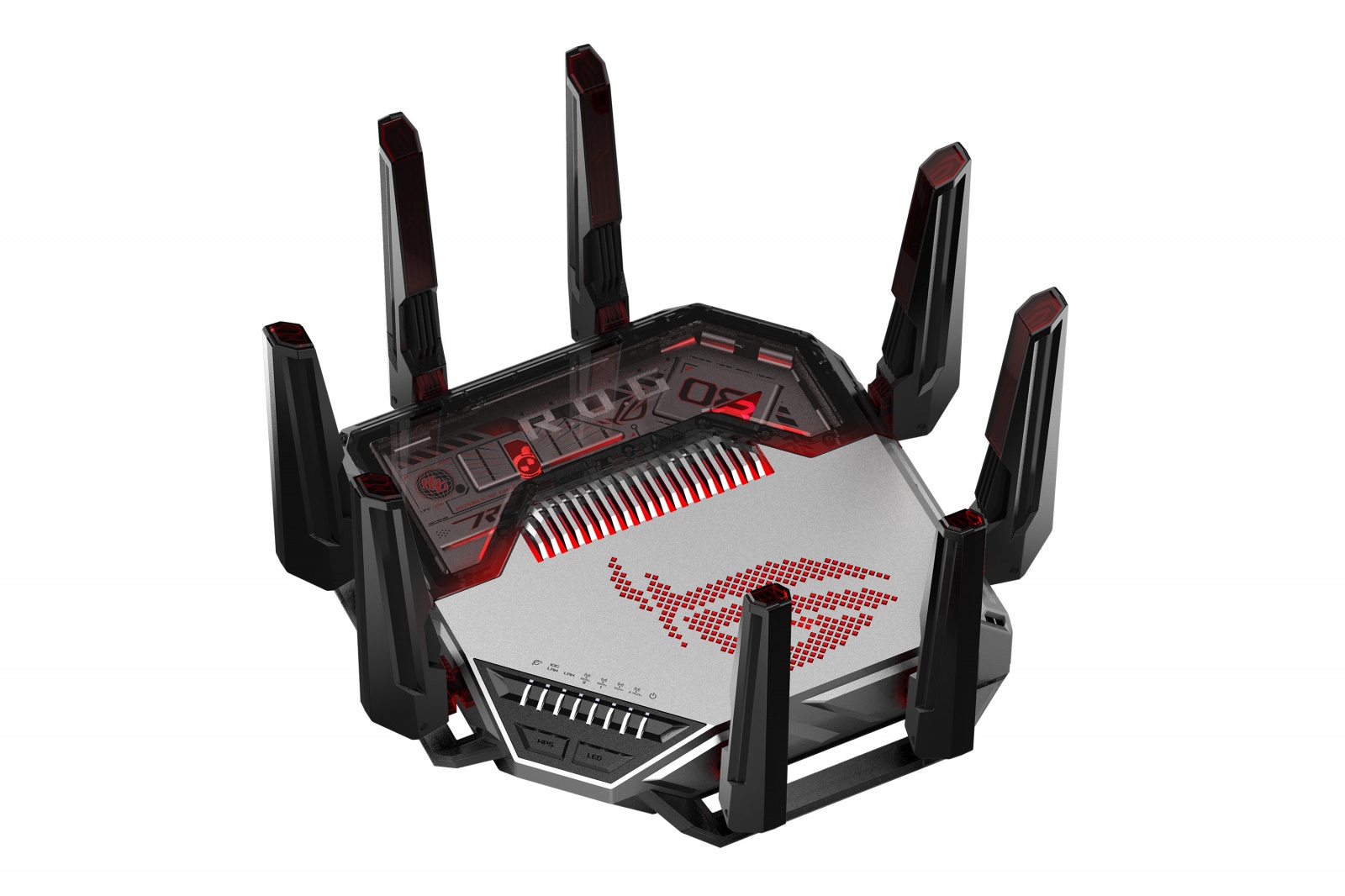
ASUS’s ROG Rapture GT-BN98 is a quad-band gaming router built around the still-draft WiFi 8 specification, combining 2.4GHz, two 5GHz bands and a 6GHz band with two 10Gbps Ethernet ports. Its headline 25,000Mbps class rating reflects aggregate theoretical throughput across all four radios, rather than the speed available to one device or an internet connection.
The router supports draft IEEE 802.11bn, commonly referred to as WiFi 8. The standard has not been finalized, with IEEE approval currently expected in 2028. ASUS also notes that full WiFi 8 functionality requires compatible client hardware, while some capabilities may arrive through later firmware updates. Installing the router alone will not add WiFi 8 support to existing phones or PCs.
WiFi 8 is positioned less as a raw-speed upgrade than as an effort to maintain performance in more difficult network conditions, including fluctuating signal levels and heavily shared networks. ASUS cites UEQM, which adapts transmission for individual data streams, and NPCA, which can use secondary subchannels when the primary channel is busy.
Wired connectivity and network controls
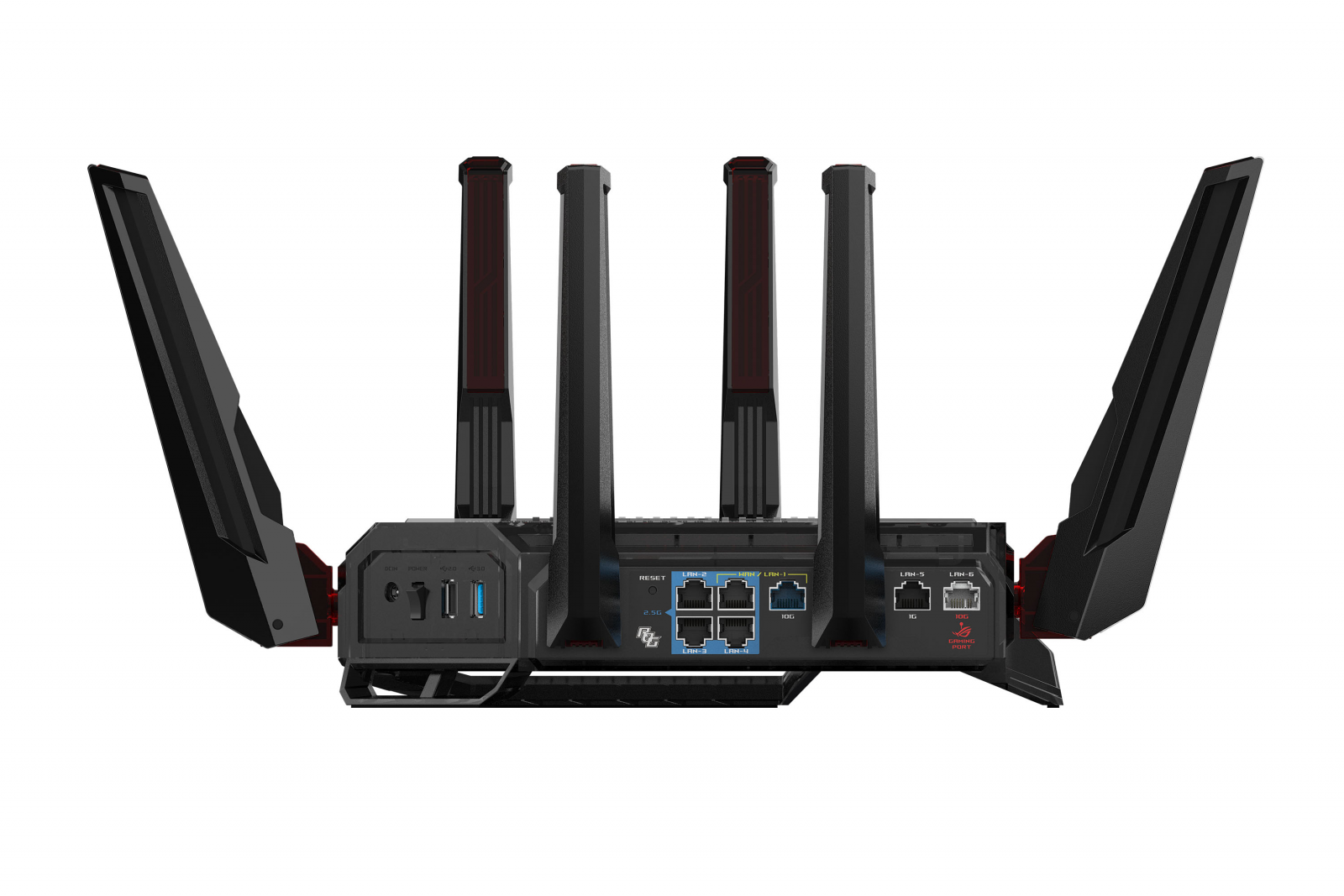
The wired configuration gives the GT-BN98 a more immediate high-speed-networking role. One 10Gbps port can be used for WAN or LAN duties, while the second is a 10Gbps LAN gaming port. It also includes one 2.5Gbps WAN/LAN port, three 2.5Gbps LAN ports and a Gigabit LAN port.
For traffic management, Adaptive QoE dynamically allocates bandwidth based on applications and network load. ASUS also offers GTNet, a third-party service intended to find lower-latency routes to gaming servers. These are separate functions: one prioritizes traffic within the home network, while the other concerns the route beyond it.
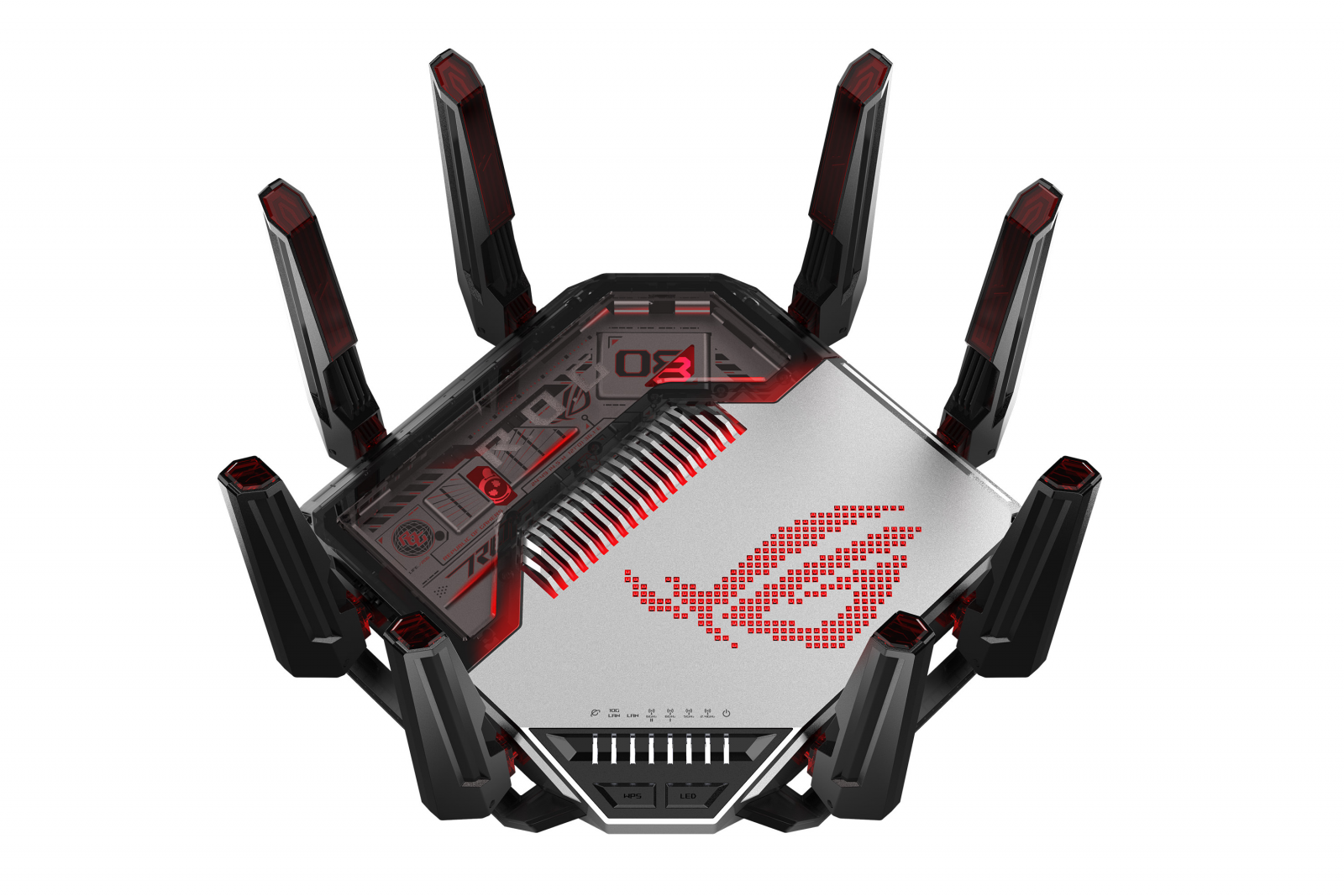
WiFi Insight monitors interference from WiFi networks and other radio sources, retaining a 24-hour history in the router’s web interface. The GT-BN98 also includes AiProtection features for malicious-site filtering, infected-device blocking, and ad and tracker filters.
The router’s long-term WiFi 8 value will depend on the arrival of compatible client devices and the final 802.11bn specification; for now, its dual 10Gbps networking and extensive 2.5Gbps port selection are its most concrete hardware advantages.