Global smartphone chipset shipments dropped 21% year over year in the third quarter of 2026, with Apple narrowing the gap with Qualcomm to a single percentage point, according to Counterpoint Research. Apple accounted for 21% of shipments, while Qualcomm held 22%; MediaTek remained the largest supplier with a 28% share.
Higher memory prices, longer phone replacement cycles and cautious ordering by handset makers contributed to the decline. OEMs are reducing inventory and placing greater emphasis on profit per device rather than shipment volume.
| Chipset supplier | Q3 2025 share | Q3 2026 share |
|---|---|---|
| MediaTek | 34% | 28% |
| Qualcomm | 25% | 22% |
| Apple | 17% | 21% |
| Samsung | 6% | 8% |
| Unisoc | 14% | 13% |
| Other suppliers | 4% | 8% |
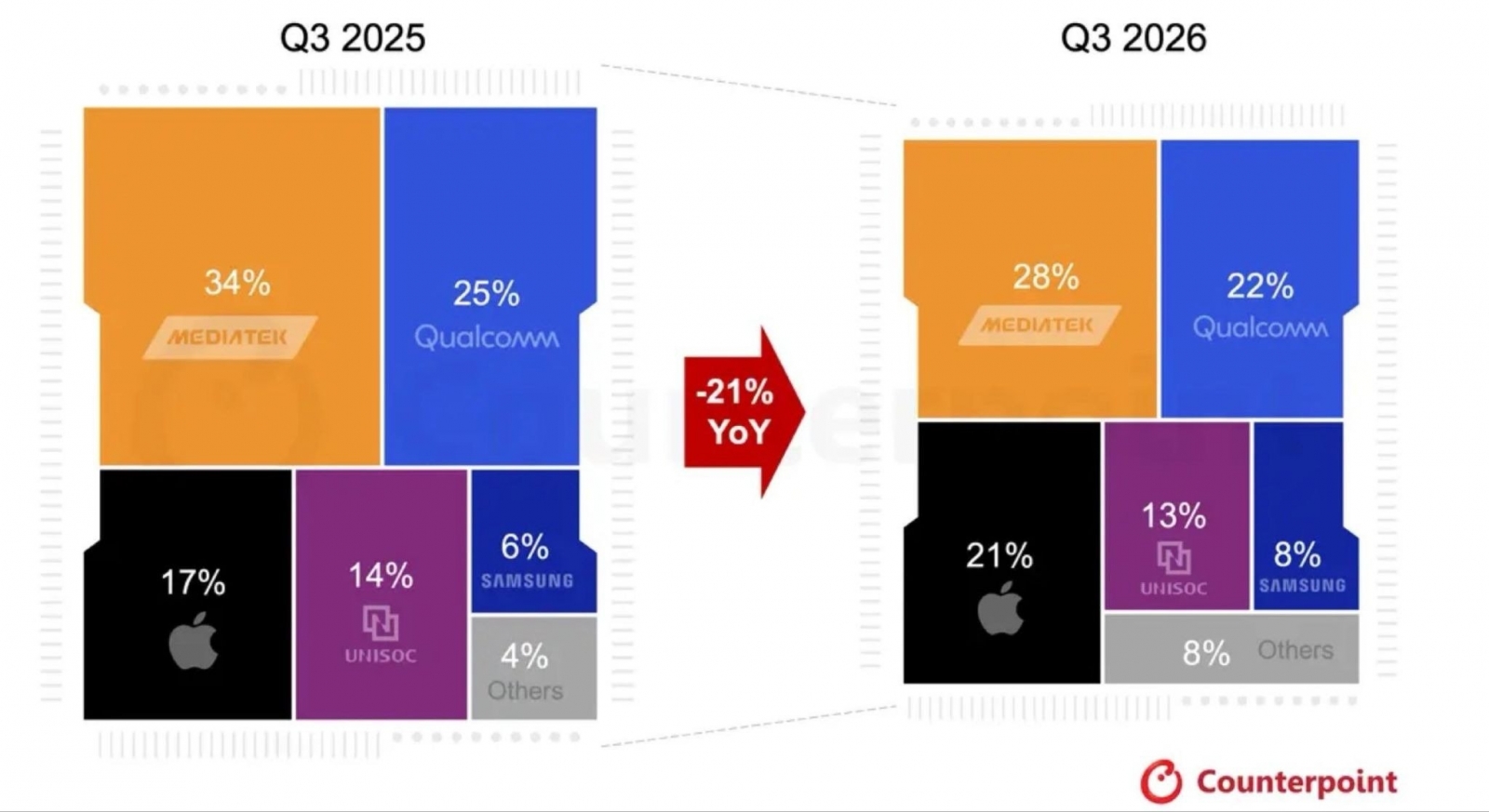
MediaTek recorded the largest share decline in the group, while Apple’s four-point gain brought it close to Qualcomm’s position. Samsung also gained share, helped by the return of Exynos processors in part of the Galaxy S26 lineup. Qualcomm is facing weaker demand from Chinese handset makers, while MediaTek and Unisoc are more exposed to pressure in lower-cost phones, where memory costs account for a larger portion of the total device bill.
Counterpoint expects memory prices to rise another 5% sequentially in the final quarter of 2026. Premium chipset launches may support orders, but shipment volumes are still expected to remain below late-2025 levels. The firm forecasts a 20% decline in smartphone chipset shipments for full-year 2026, followed by a further 3% to 4% contraction in 2027 as manufacturers scale back entry-level portfolios and prioritize higher-margin models.