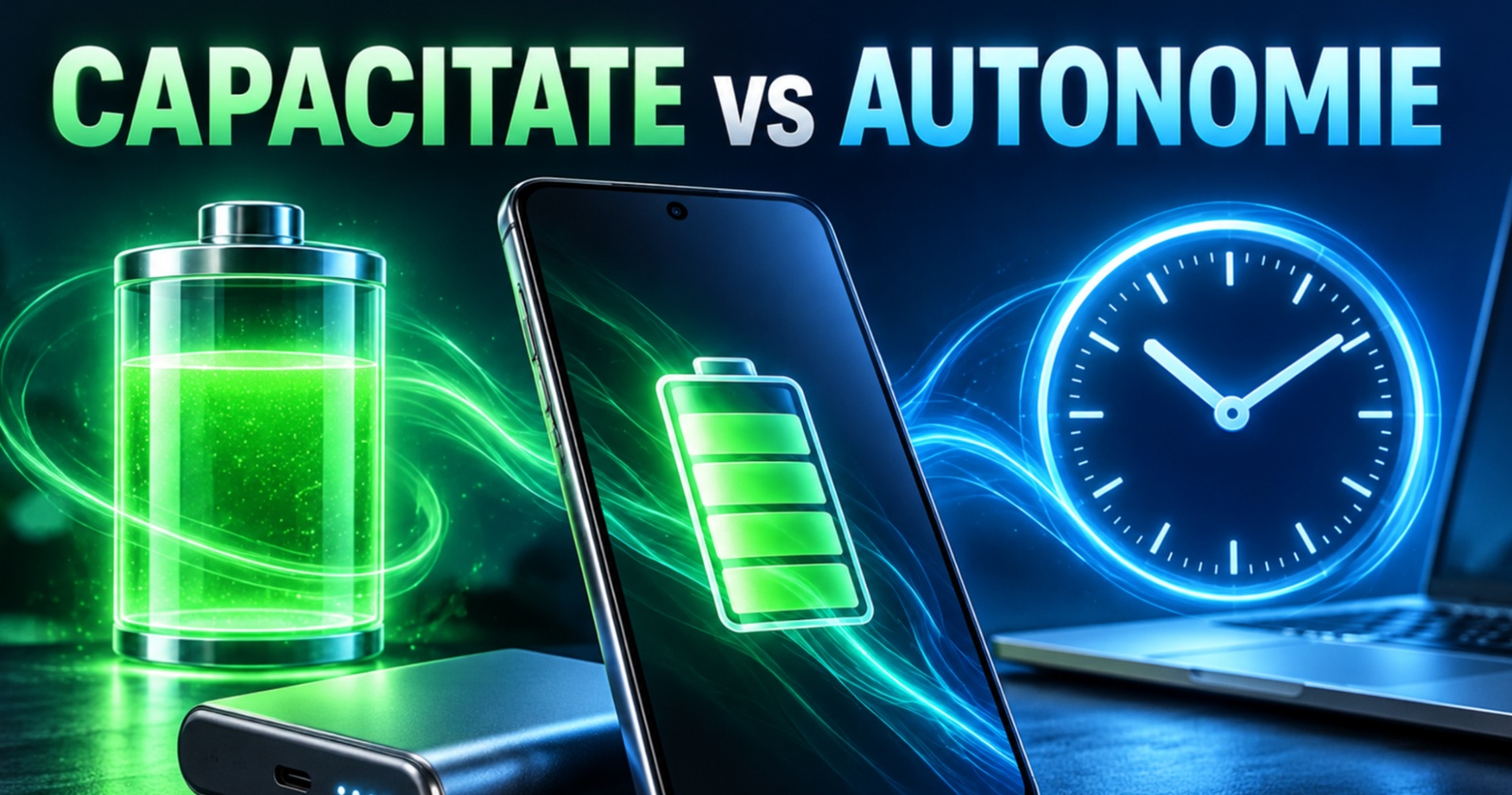
A 6,000mAh phone does not automatically outlast a 5,000mAh rival. The rating indicates how much electrical charge a battery can hold, but real-world runtime also depends on how efficiently the device uses that energy. Battery capacity, battery life and battery health are separate measurements, and treating them as interchangeable can lead to misleading comparisons between phones, laptops and power banks.
Milliampere-hours, or mAh, are commonly used for phone batteries and describe electrical charge capacity. Watt-hours (Wh), more often seen on laptops, measure stored energy. Voltage matters: two batteries with the same mAh rating can hold different amounts of energy when their voltages differ.
- Display brightness and screen technology
- Processor workload and efficiency
- Modem and wireless connectivity activity
- Apps running in the background
- Software optimization and power management
Those factors determine how quickly a device drains its battery. A laptop with a larger battery can still run down quickly during gaming, for example, while a smaller-battery system may last for hours when handling light document work. Manufacturer endurance claims also reflect controlled test conditions, which may differ sharply from GPS navigation, camera recording or demanding games.
The same distinction applies to power banks. A 10,000mAh model should not be expected to provide exactly two full charges for a phone with a 5,000mAh battery. Its quoted capacity is generally based on the voltage of its internal cells, while energy is lost during voltage conversion and charging. Circuit efficiency, the charging method and using the phone while it is connected can further reduce the energy delivered.
Battery health, meanwhile, describes the maximum capacity that remains compared with when the battery was new. At 80% health, a phone showing 100% charge has less stored energy available than it did at launch. A battery cycle is the cumulative use of energy equivalent to one full charge, not every time a charging cable is connected. Aging cannot be avoided entirely, although limiting excessive heat and using optimized charging features can help preserve capacity.
An 80% health reading is not, by itself, an automatic signal to replace a battery. The practical question is whether the remaining runtime, device behavior and any service warnings make the battery a limitation. For immediate endurance gains, lowering screen brightness and identifying power-hungry apps can matter more than the mAh number alone.