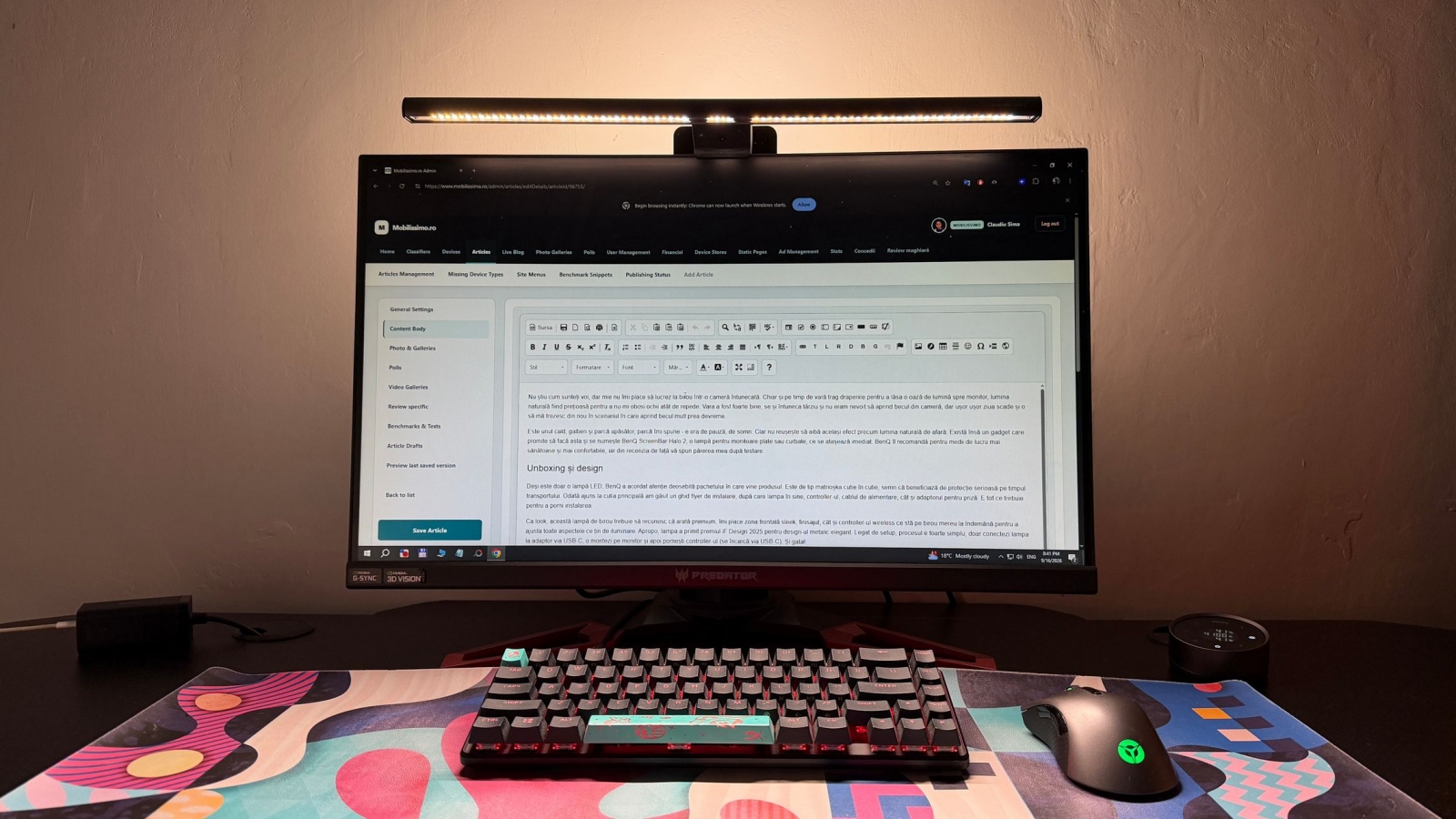
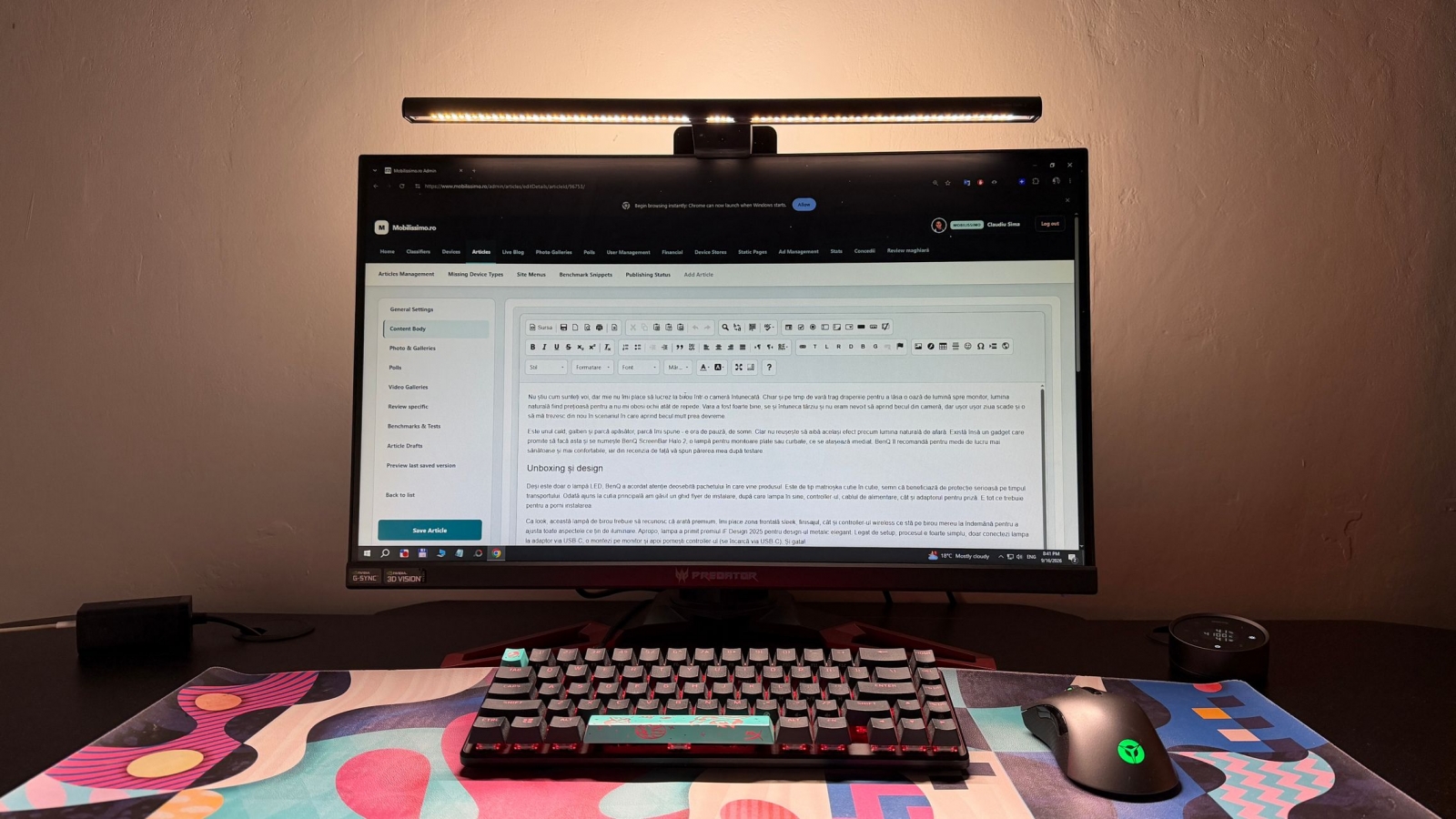
The BenQ ScreenBar Halo 2 is designed to light both the desk and the area behind a monitor without placing a conventional lamp beside the display. Its front LED bar uses an asymmetric beam intended to avoid reflections on the screen, while rear lighting is designed to reduce the perceived contrast between the display and its surroundings. During testing, the combination created a more evenly lit workspace than relying on a standard room light alone.
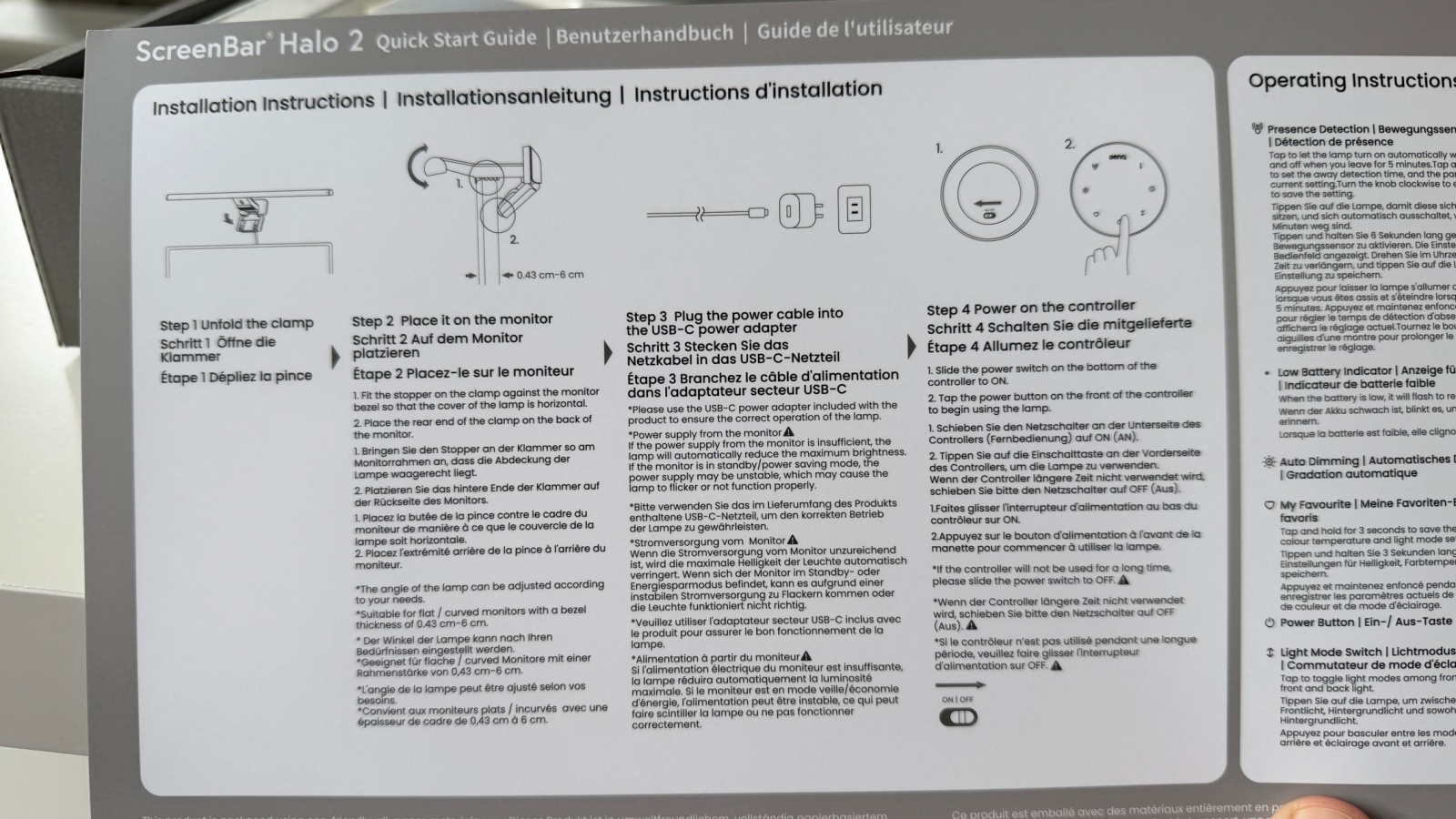
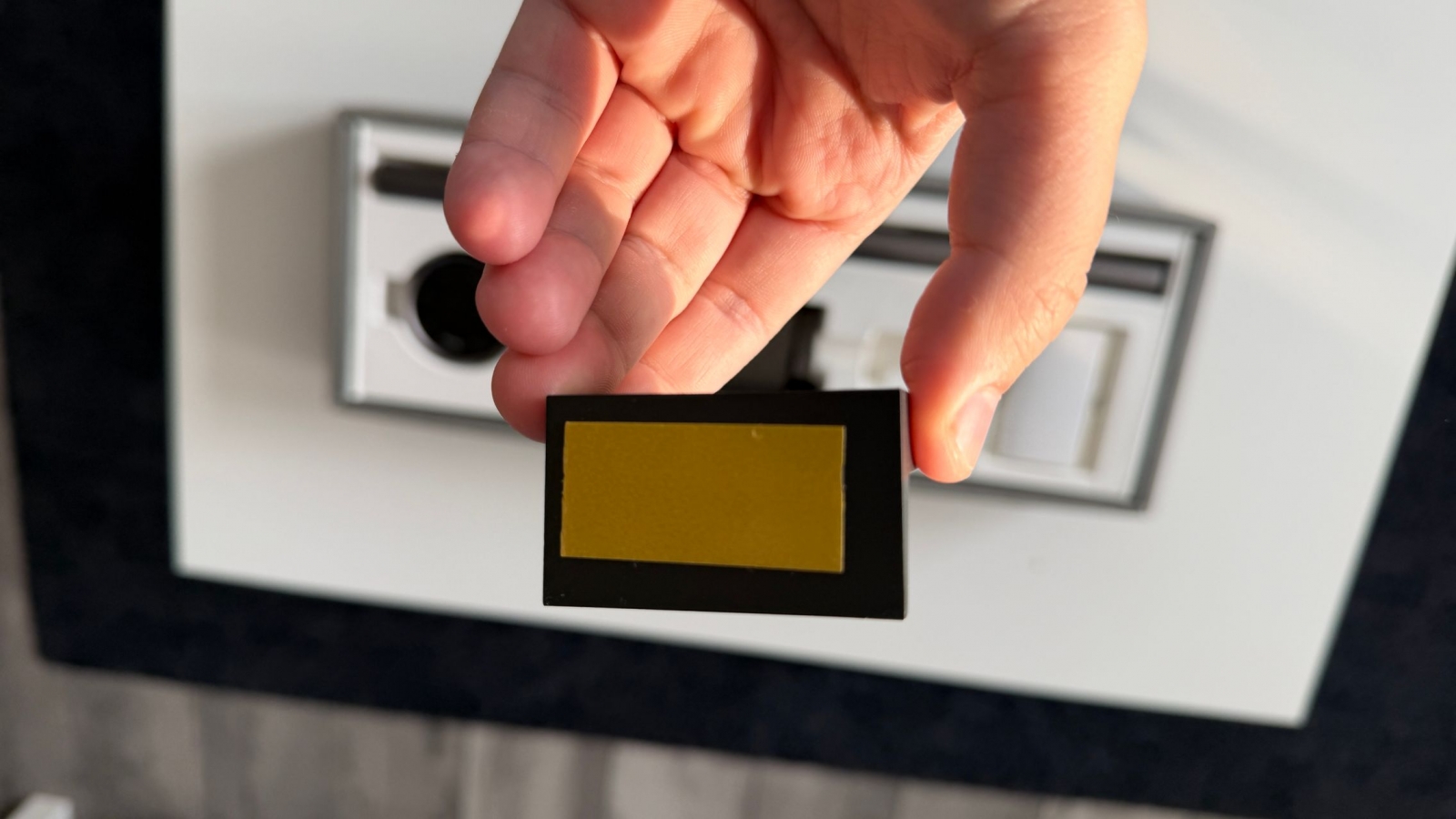
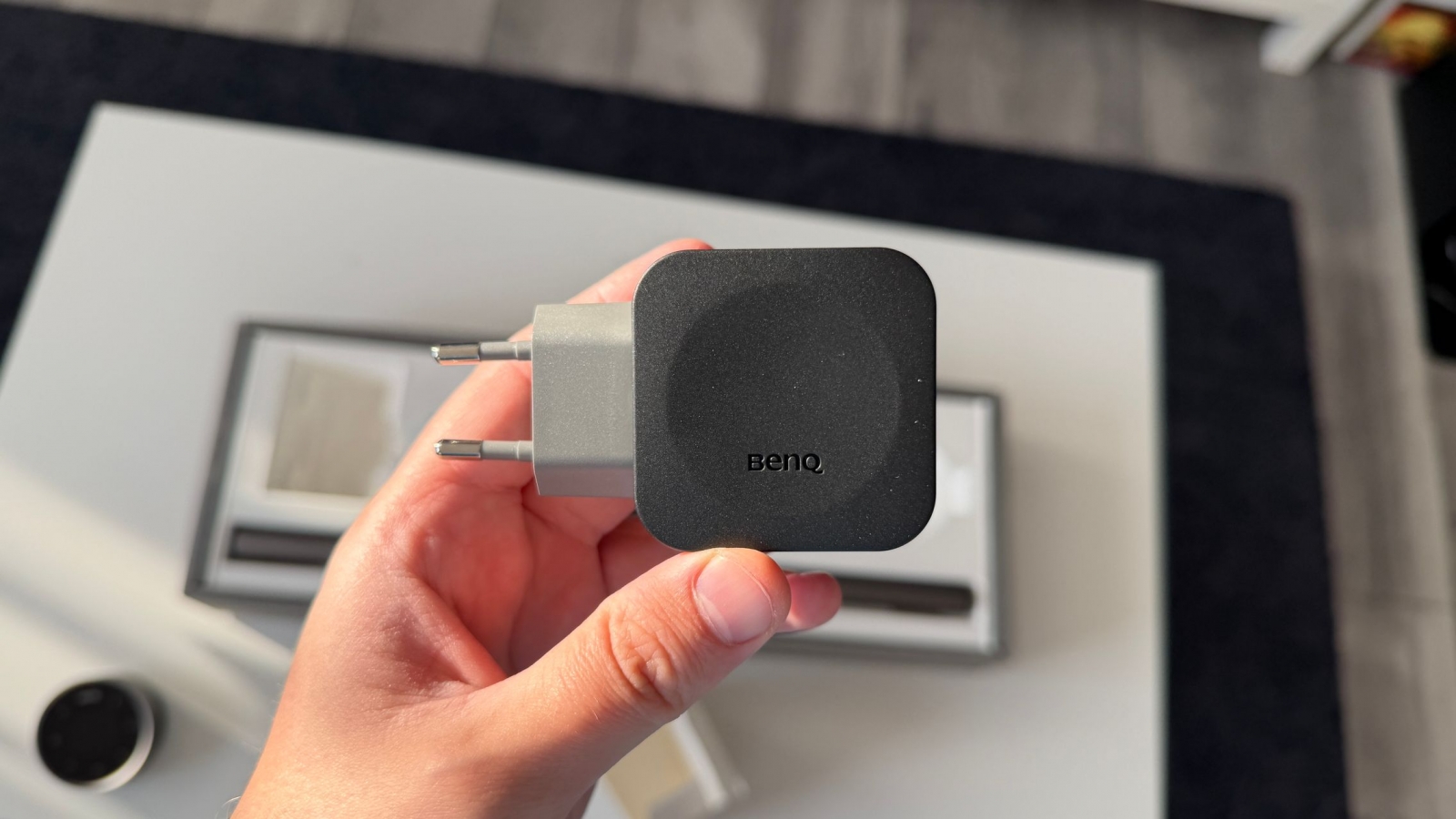
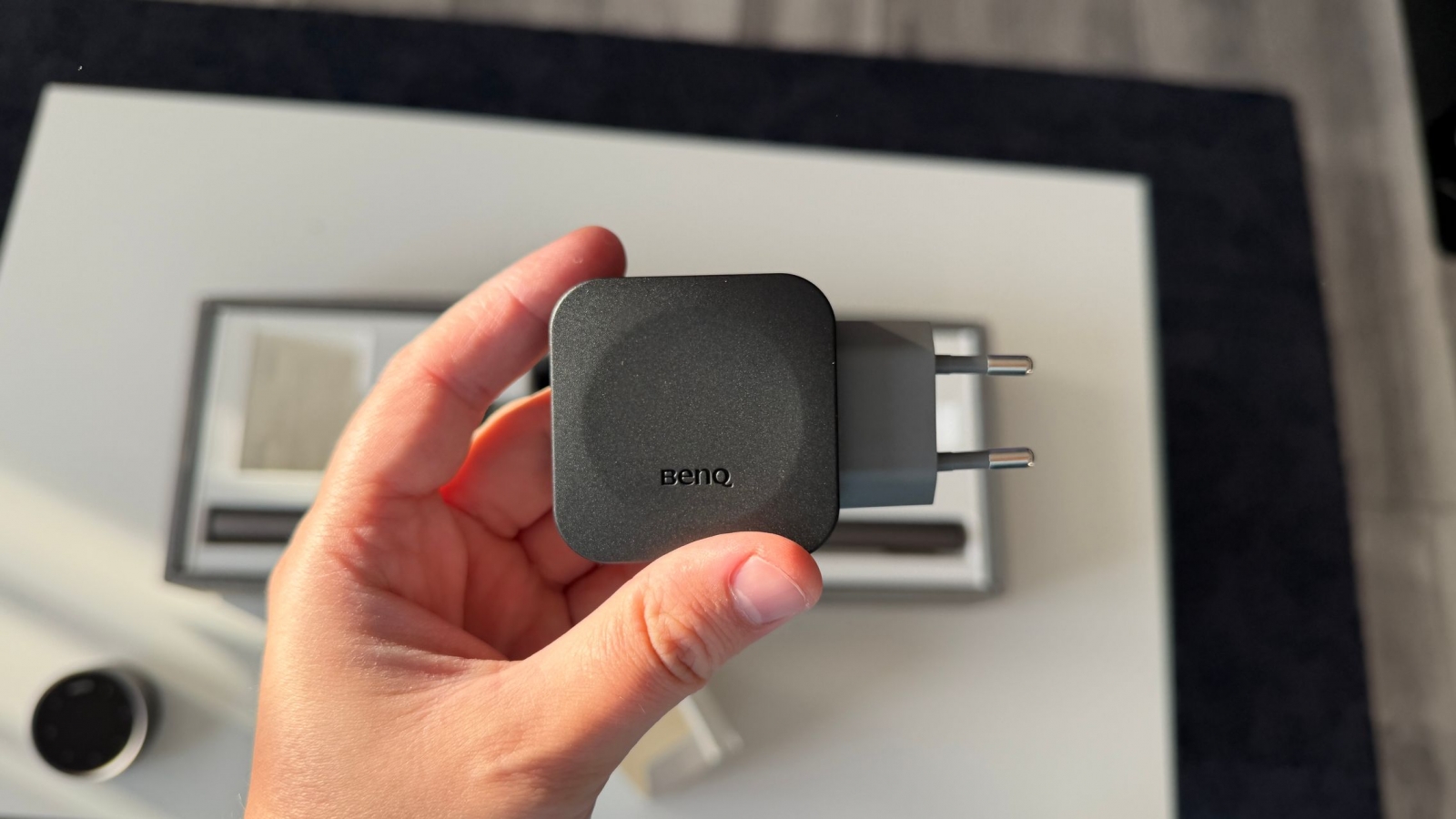
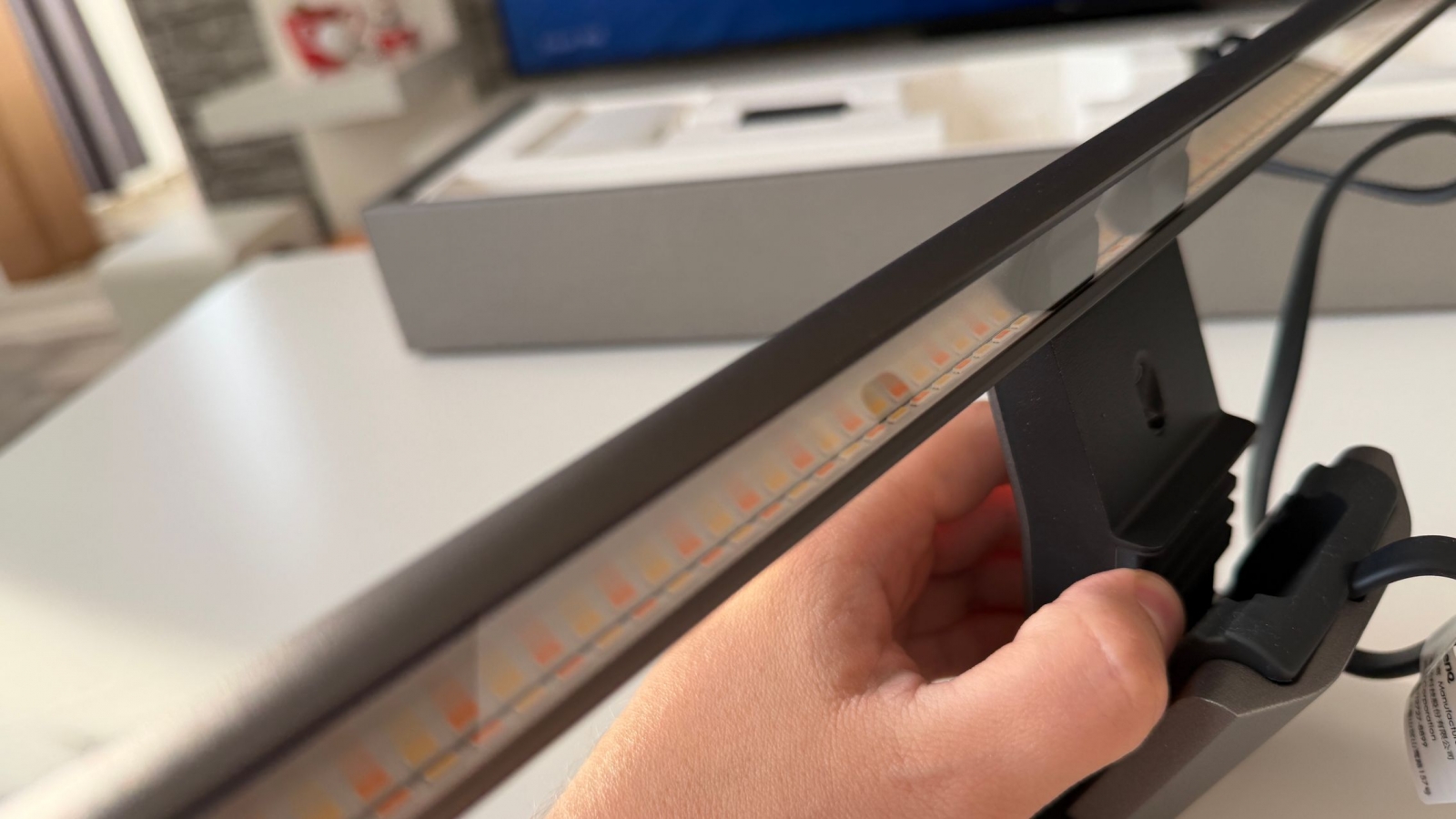
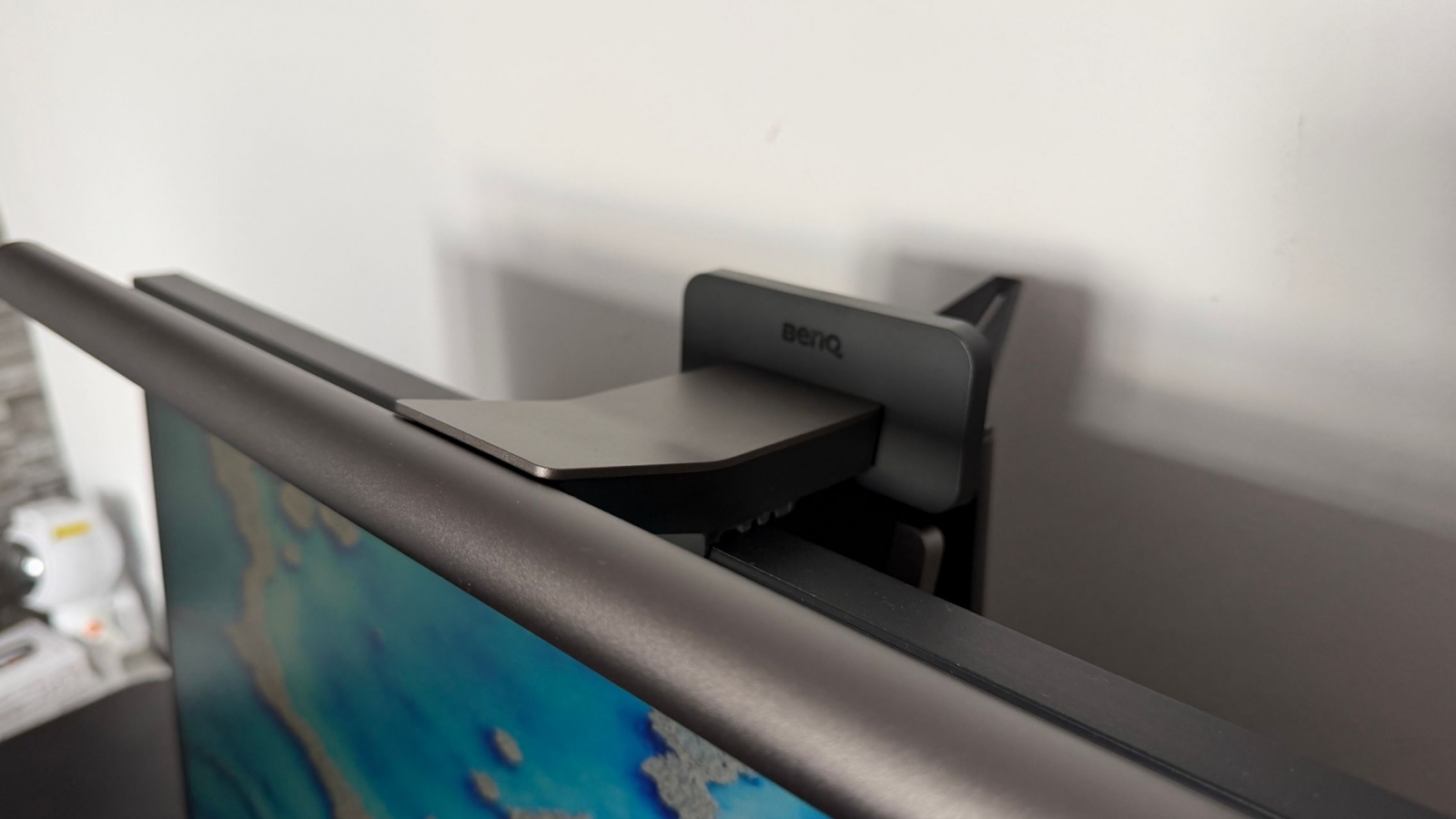
The light clips onto flat or curved monitors between 0.43 cm and 6 cm thick, with support for 1000R to 1800R display curvature. BenQ says the bar can tilt by up to 24 degrees. Installation consists of connecting the bar to its USB-C power adapter, attaching it to the monitor, and pairing the rechargeable wireless controller.

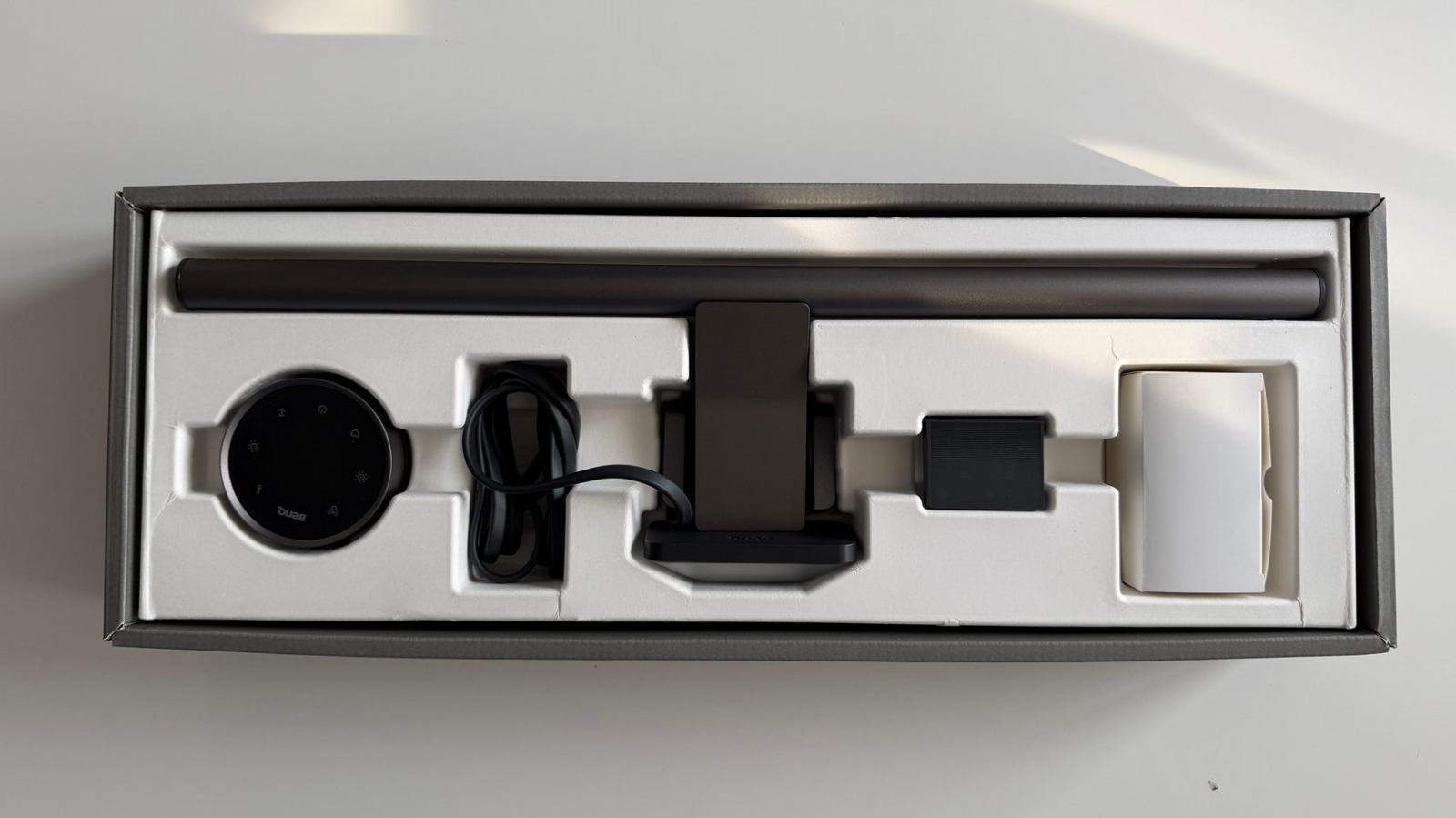
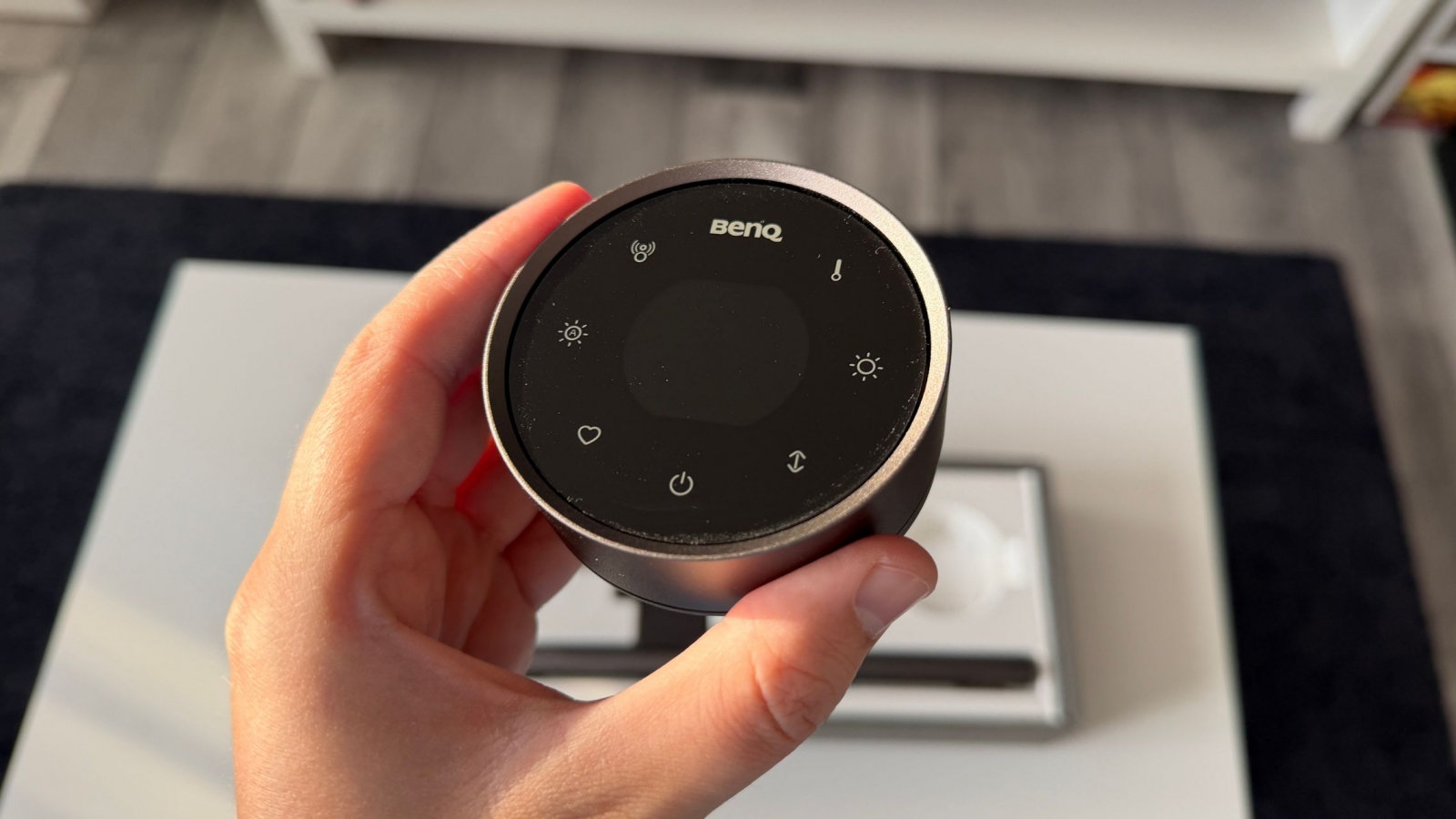

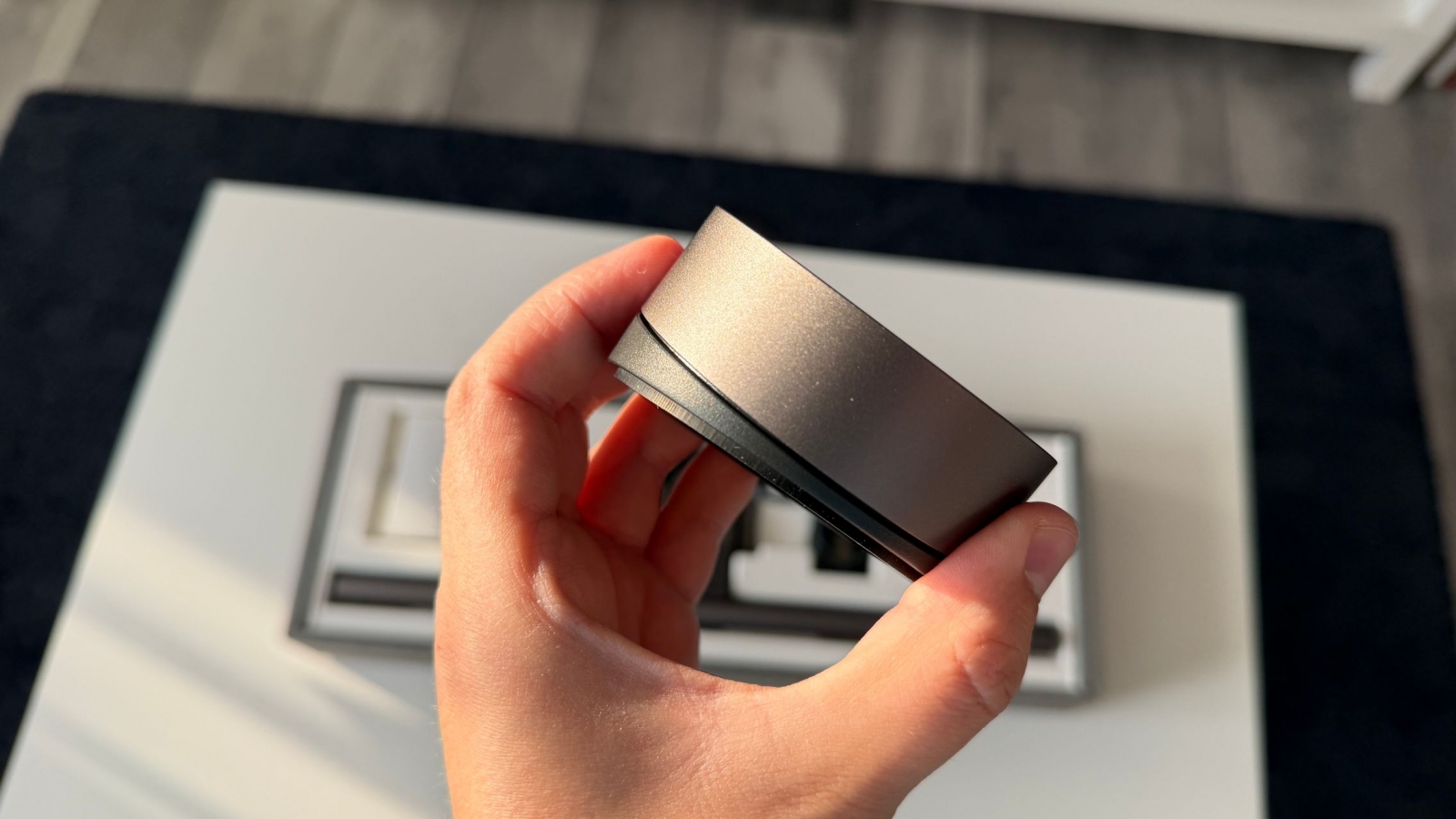
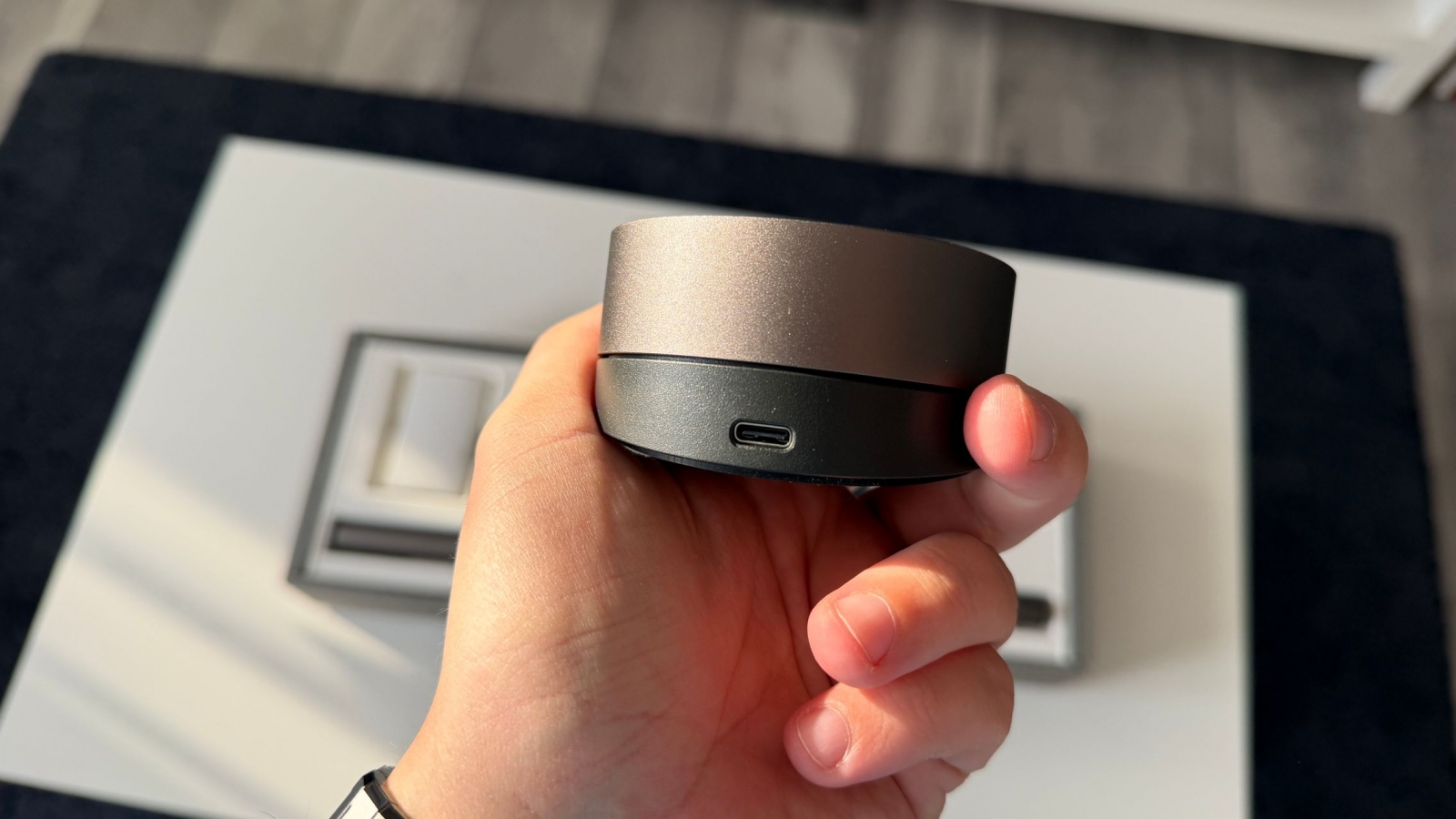

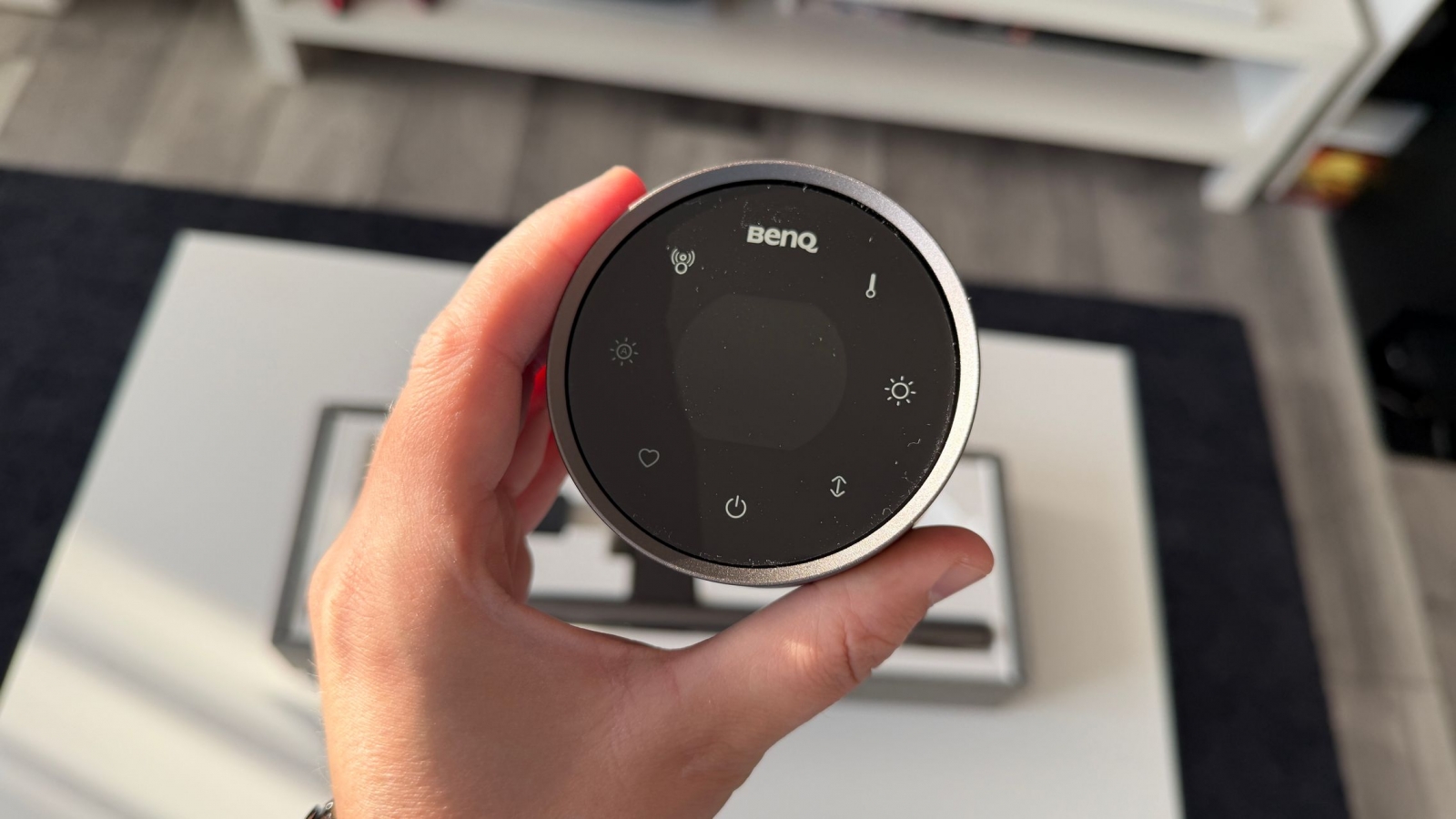

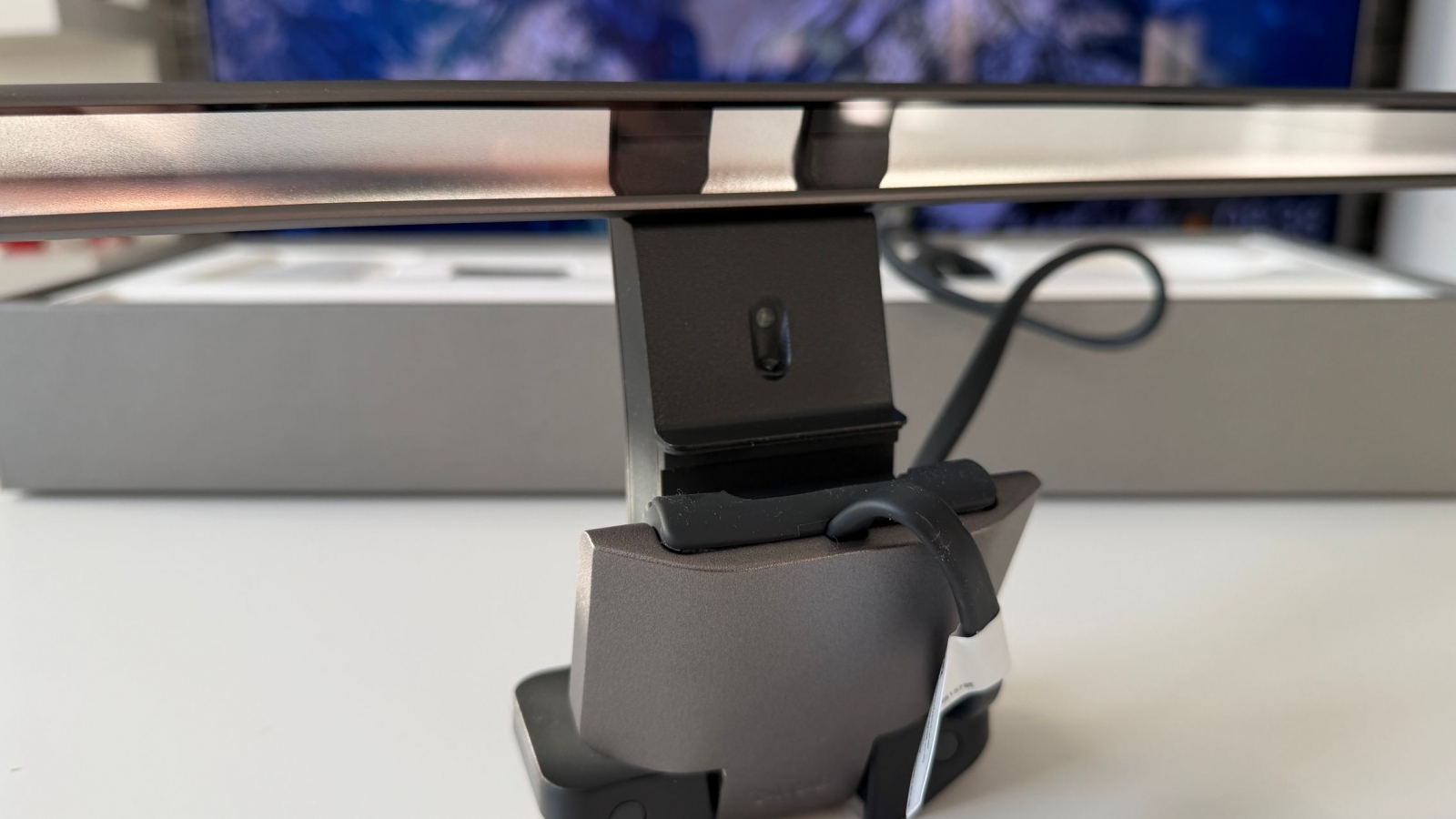
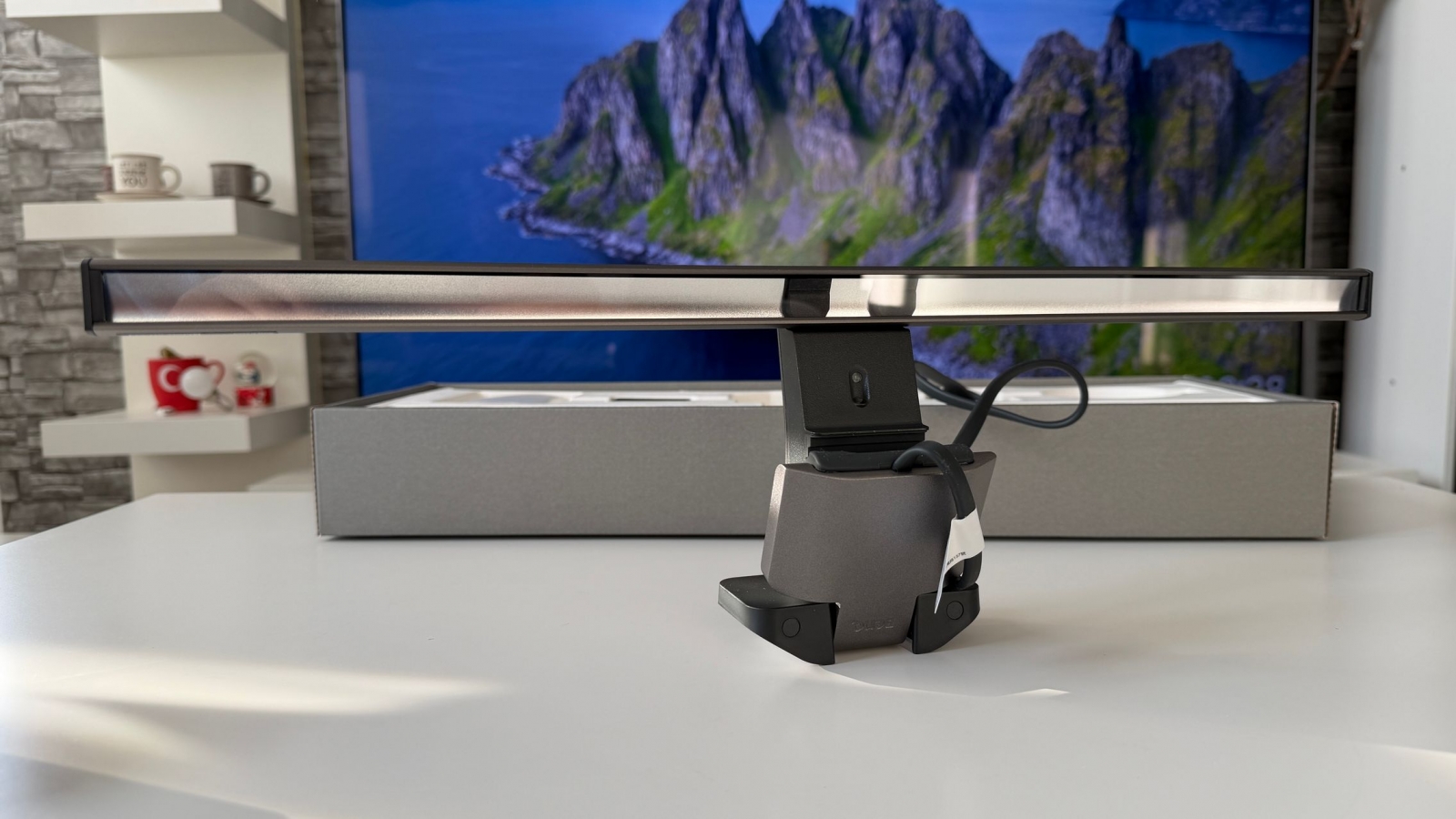
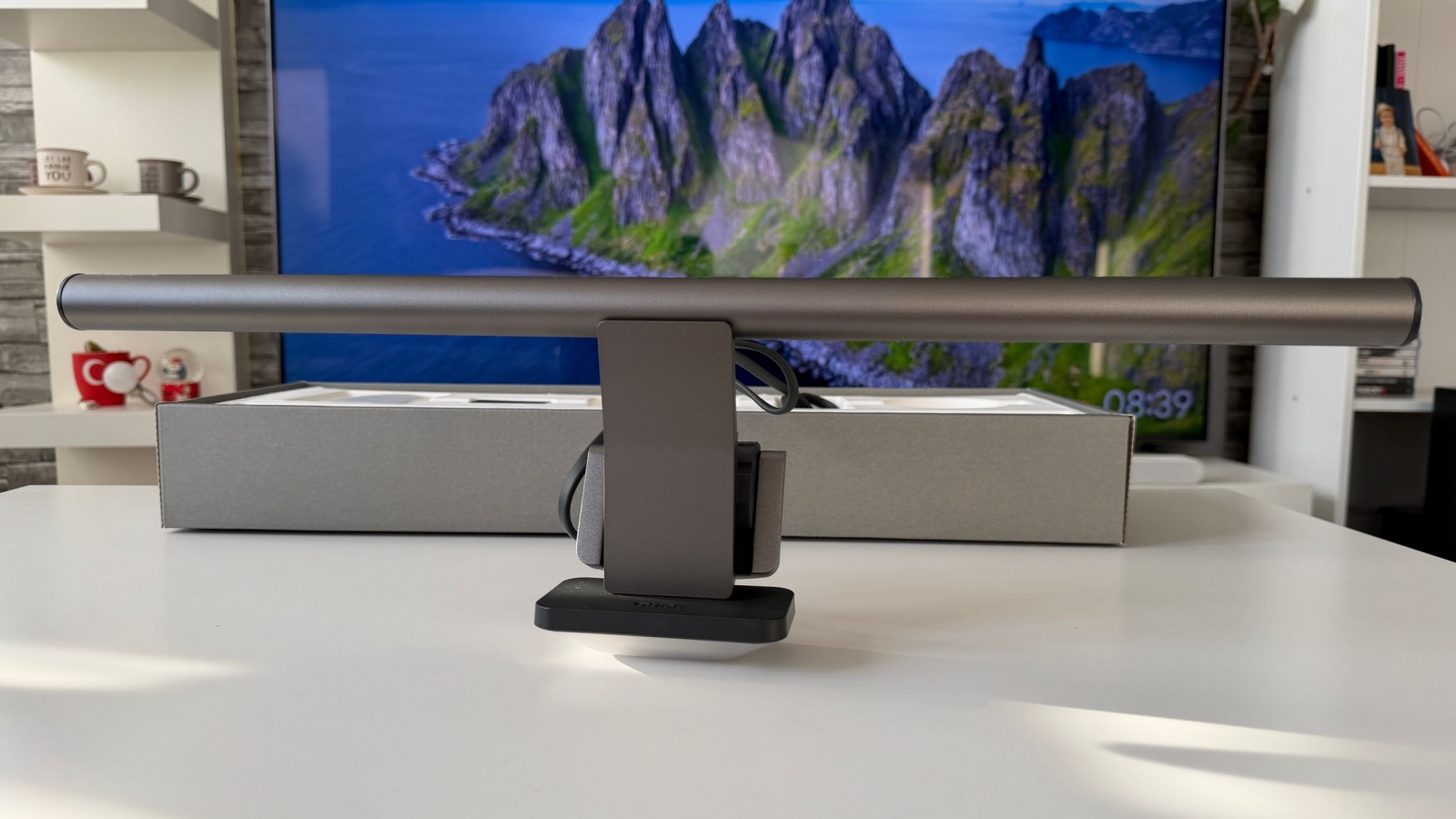
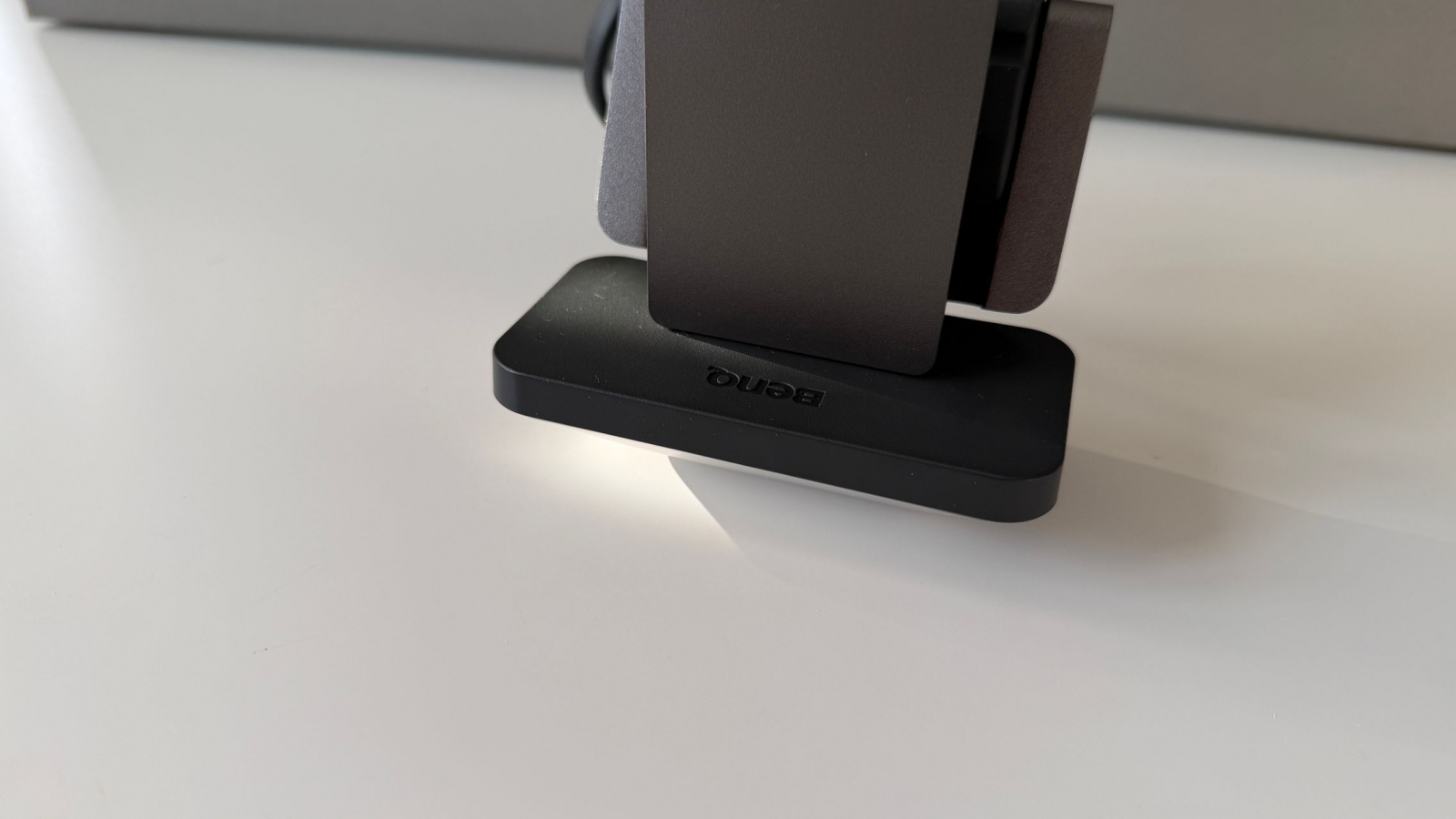

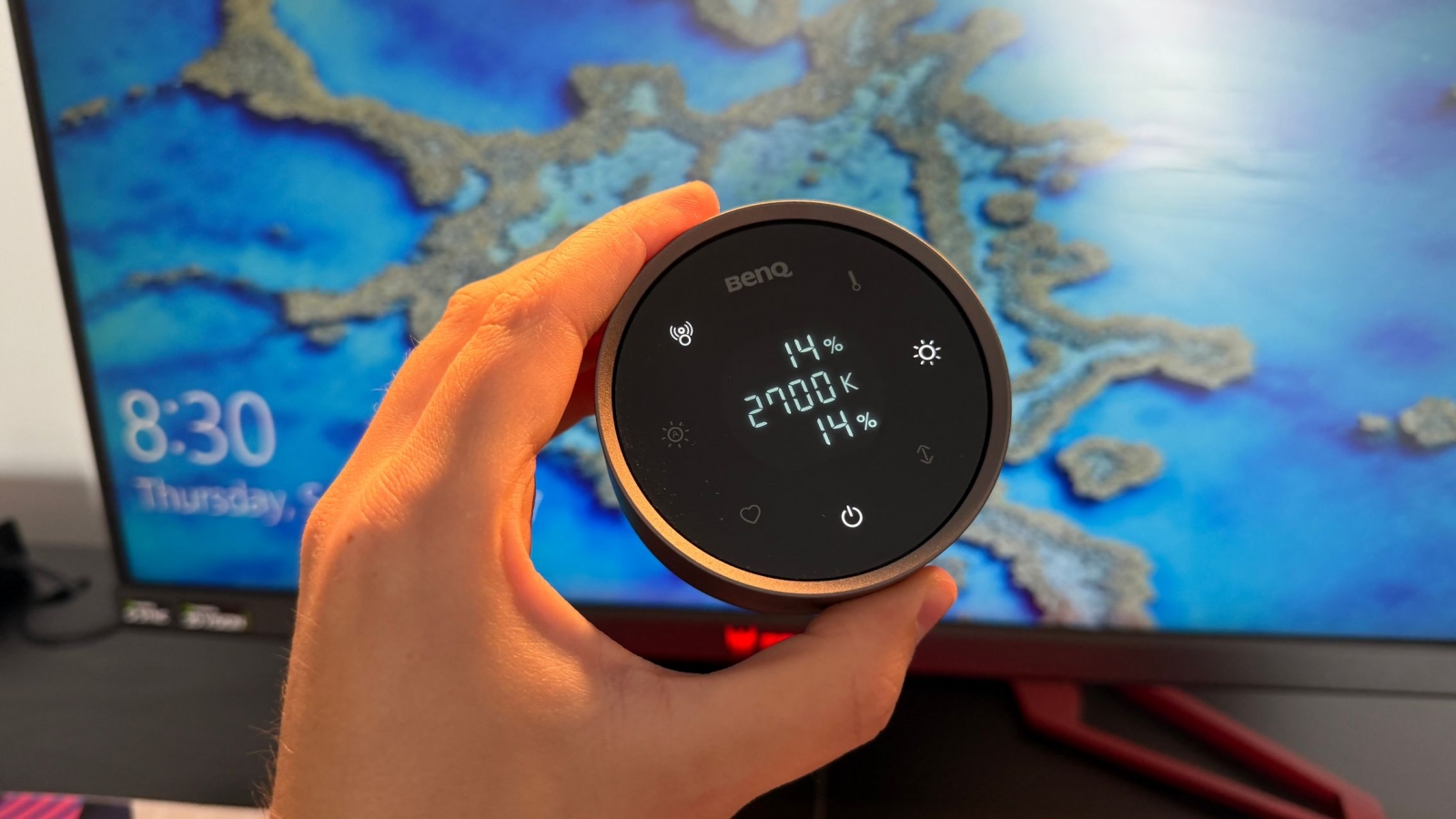
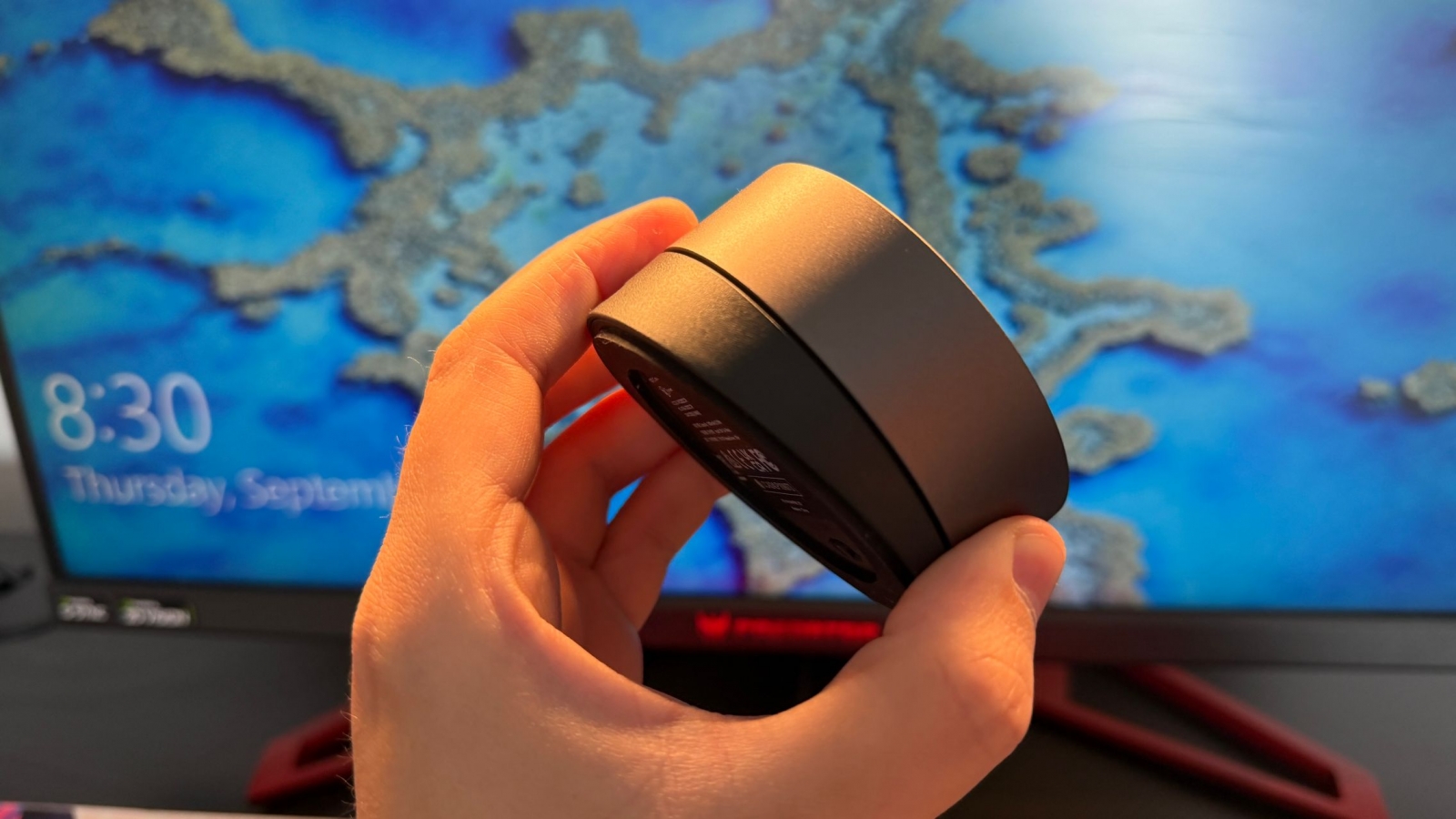
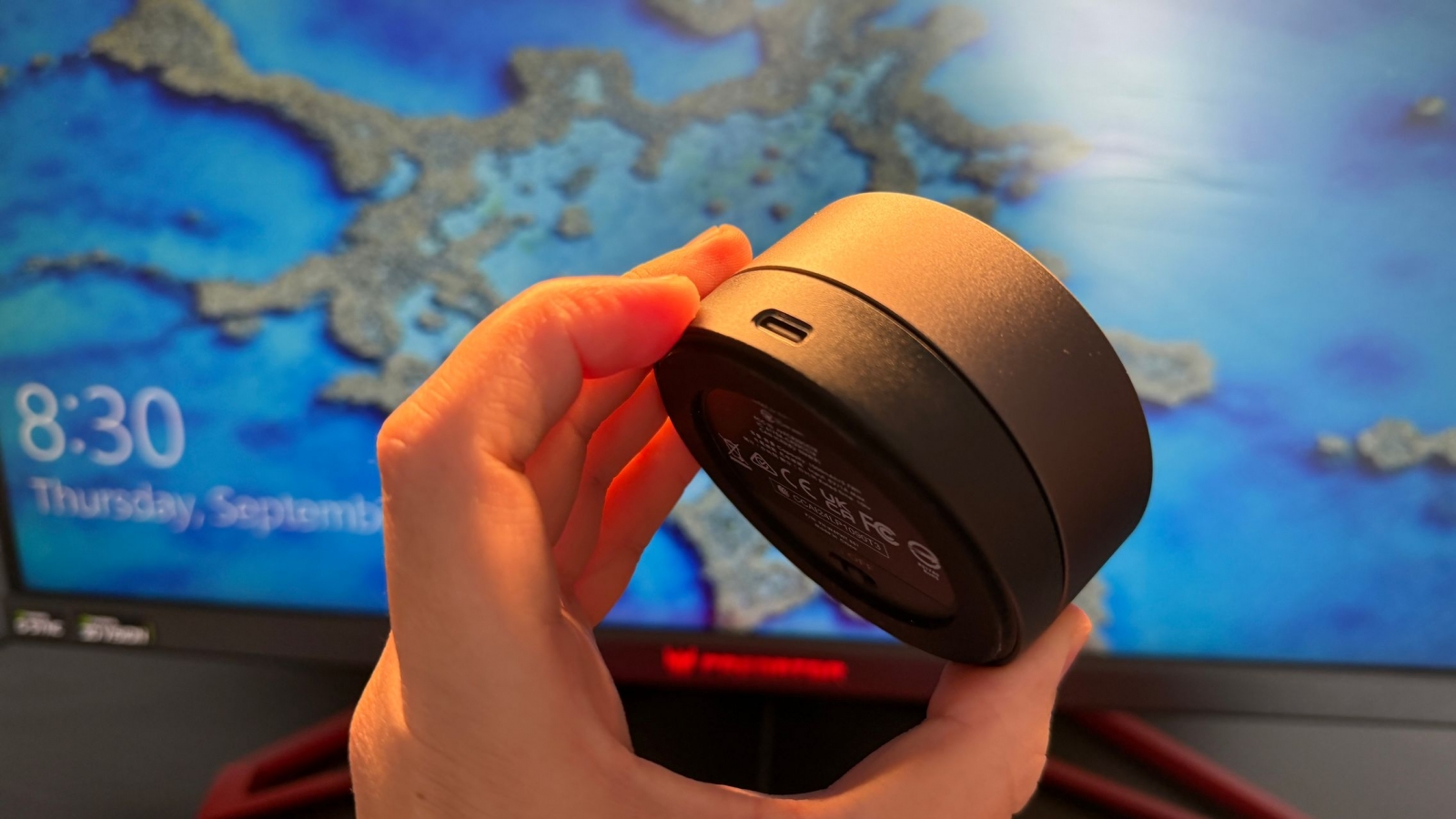
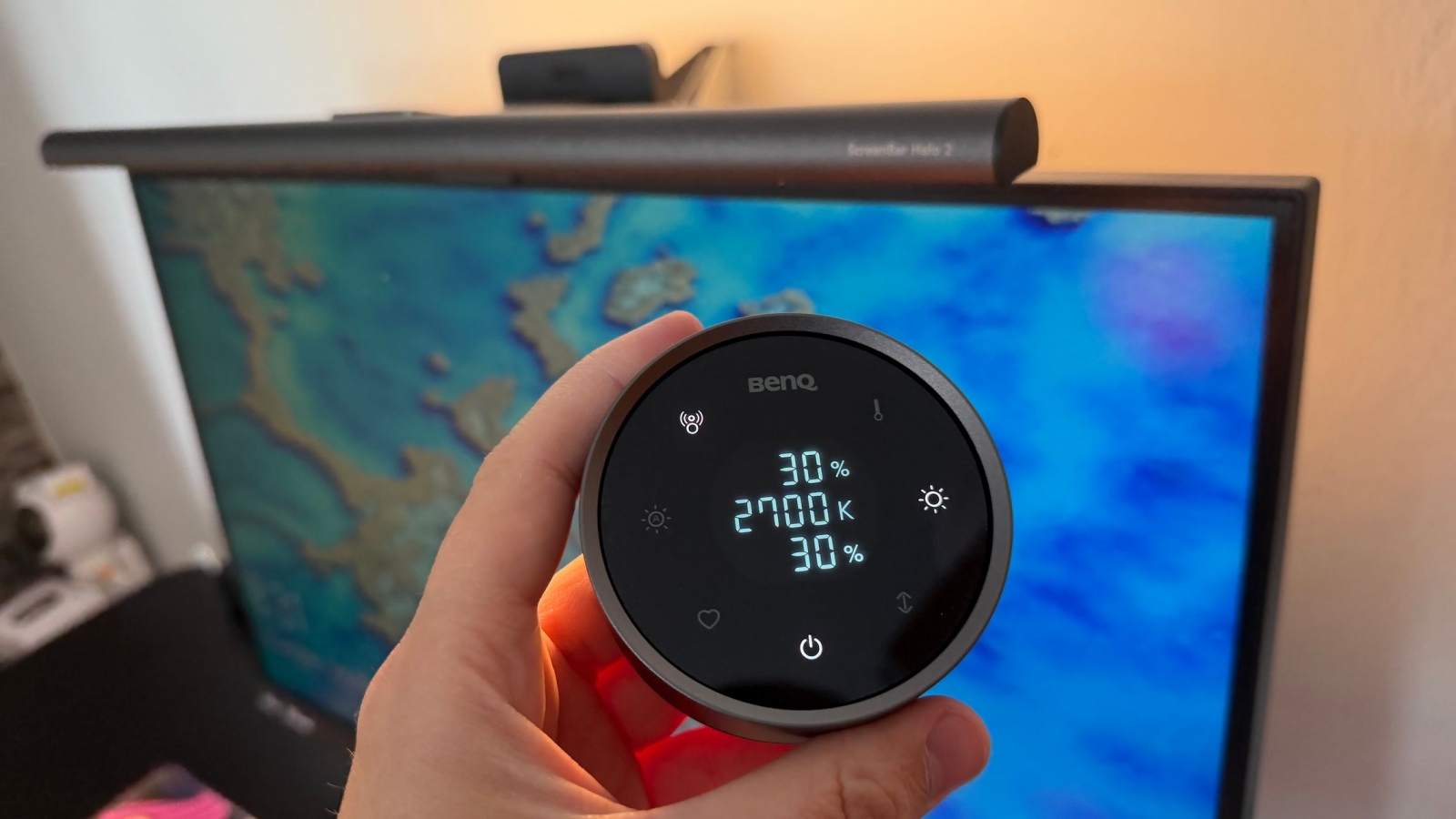
That controller is the central interface for the Halo 2. It provides touch controls for brightness, color temperature and the balance of front and rear illumination, keeping adjustments off the monitor itself and preserving desk space. BenQ rates its battery life at up to three months per charge and says one controller can connect to multiple Halo 2 units.
- Front-light brightness: 0% to 100%
- Color temperature: 2700K to 6500K
- Front and rear lighting balance: 0% to 100%
- Lighting control: front, rear or combined illumination
- Multi-device pairing: one controller can connect to multiple Halo 2 lights
Lighting hardware and coverage
BenQ specifies a dual-color LED source with a color rendering index of Ra 95 or higher. The company rates central illumination at 1,000 lux from a height of 50 cm, while the stated 500-lux coverage area measures 85 cm by 50 cm. The front light is intended to provide even illumination across a keyboard and work area; BenQ says the full setup maintains an illumination contrast ratio below 1:3 in line with ANSI recommendations.
The rear light uses a three-part curved distribution pattern. According to BenQ, its upper curve limits light above the display, the lower curve joins the upper and lower illuminated zones behind it, and the side curves extend lighting outward from both edges of the monitor.
- Light source: dual-color LED
- Color rendering index: Ra 95 or higher
- 500-lux illuminated area: 85 cm × 50 cm
- Power input: USB-C, 5V/maximum 3A
- Maximum power consumption: 15W
- Monitor light dimensions: 50 cm × 14.3 cm × 10.9 cm
- Controller dimensions: 7.4 cm × 7.4 cm × 3.95 cm
- Net weight: 0.8 kg
- USB cable length: 150 cm
- Materials: aluminum alloy and PC/ABS
The ScreenBar Halo 2 also includes an ambient-light sensor for real-time automatic adjustment toward a recommended 500-lux work-light level, according to BenQ, and it can switch off when no movement is detected. The company also cites durability tests covering 10,000 light-head rotations, 10,000 clamp cycles, a 50 cm light-bar drop, humidity exposure, cable movement and operation between -20°C and 60°C.
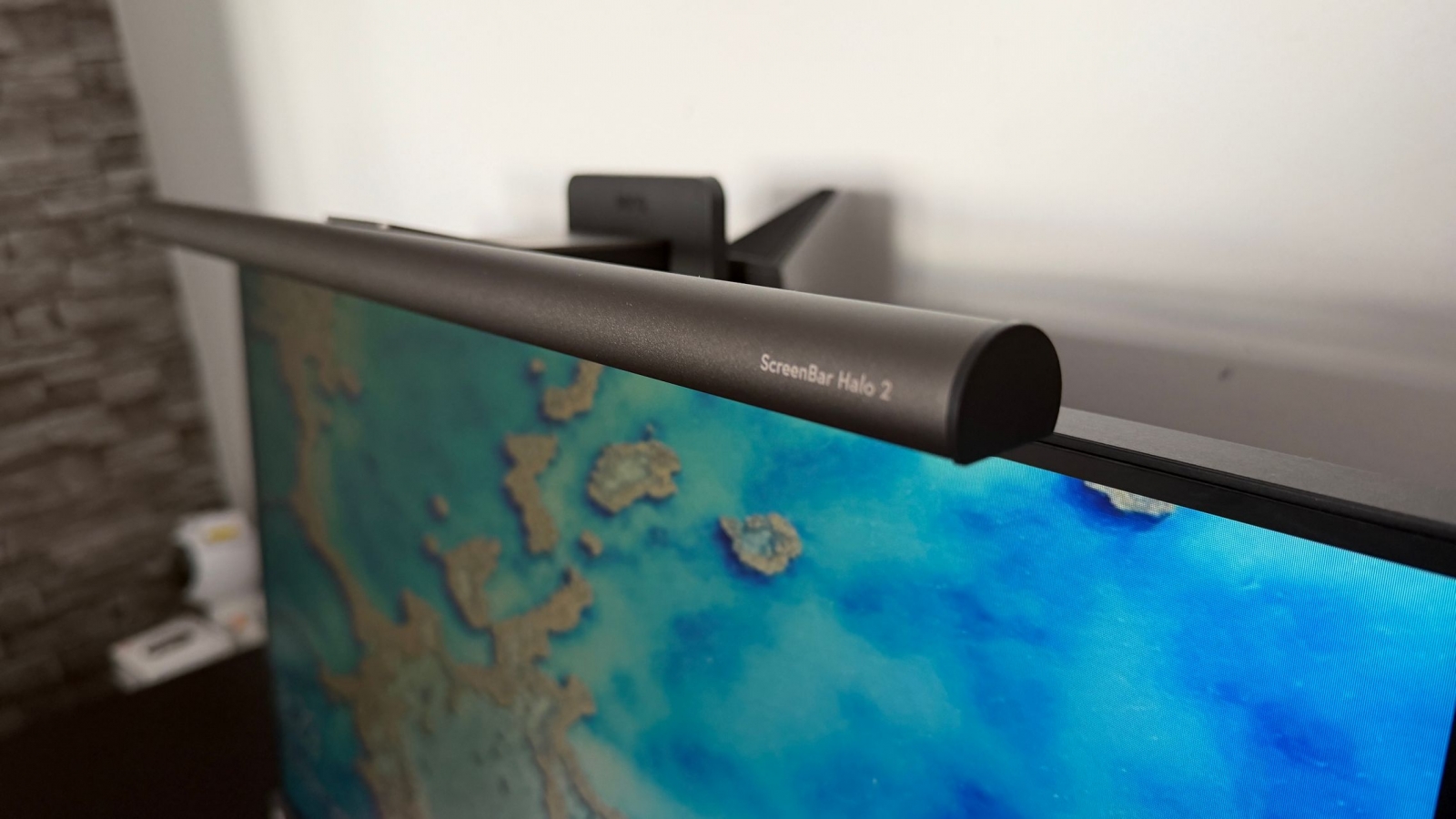
Build quality is a clear focus. The dark-gray aluminum design looks more like a permanent part of a monitor setup than a typical clip-on accessory, and the ScreenBar Halo 2 received an iF Design Award in 2025. A webcam accessory is listed as optional.
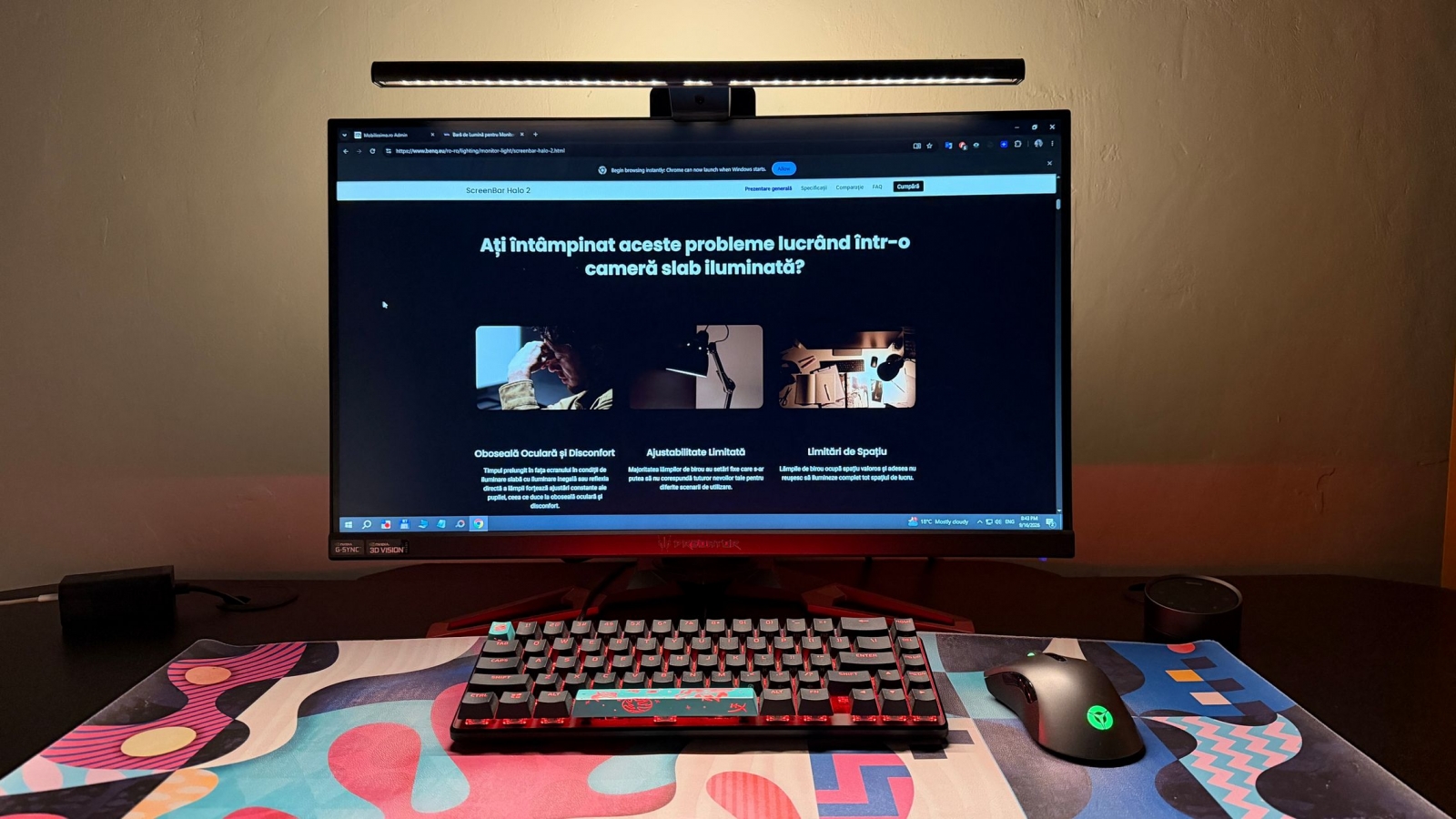
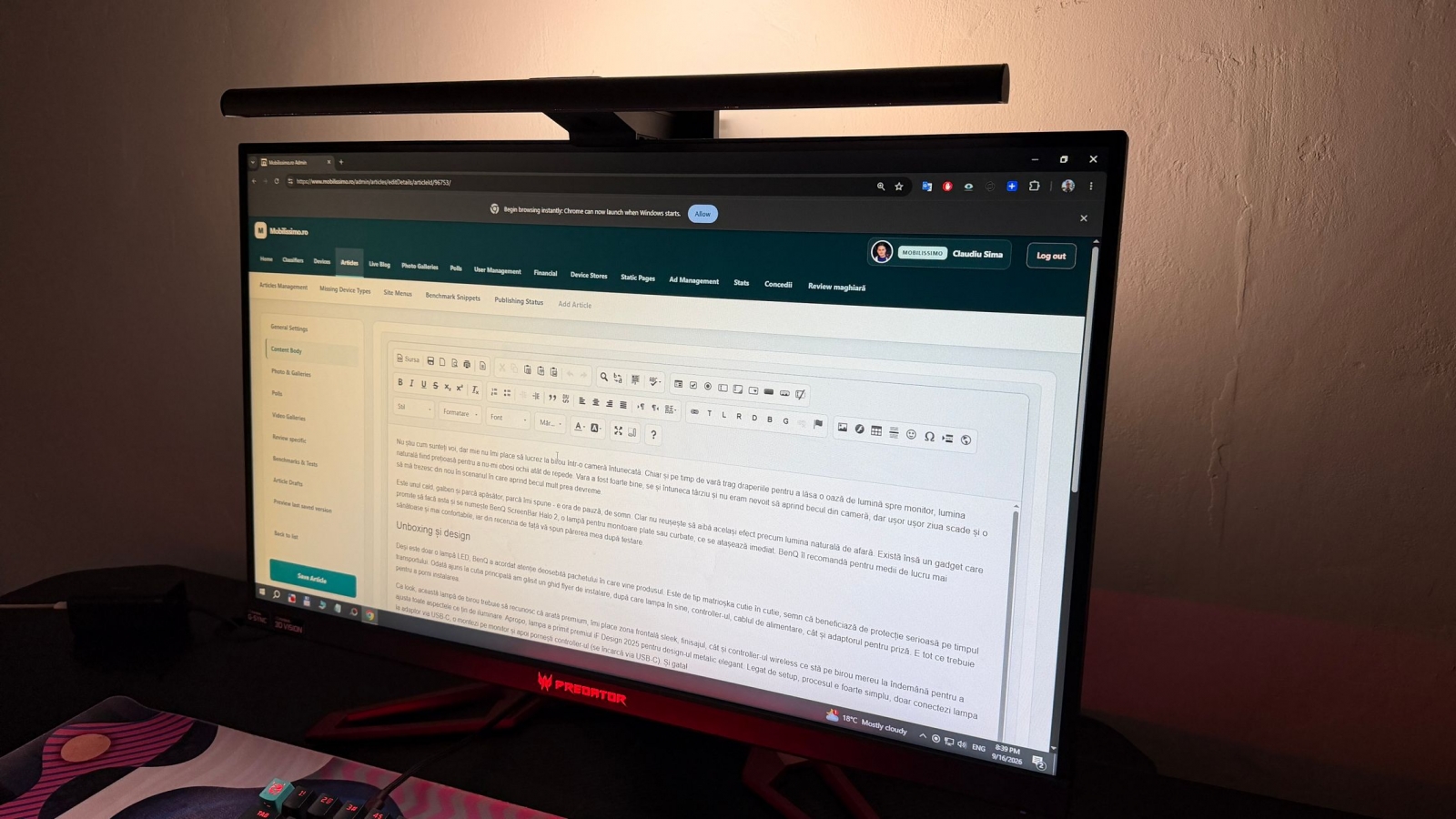

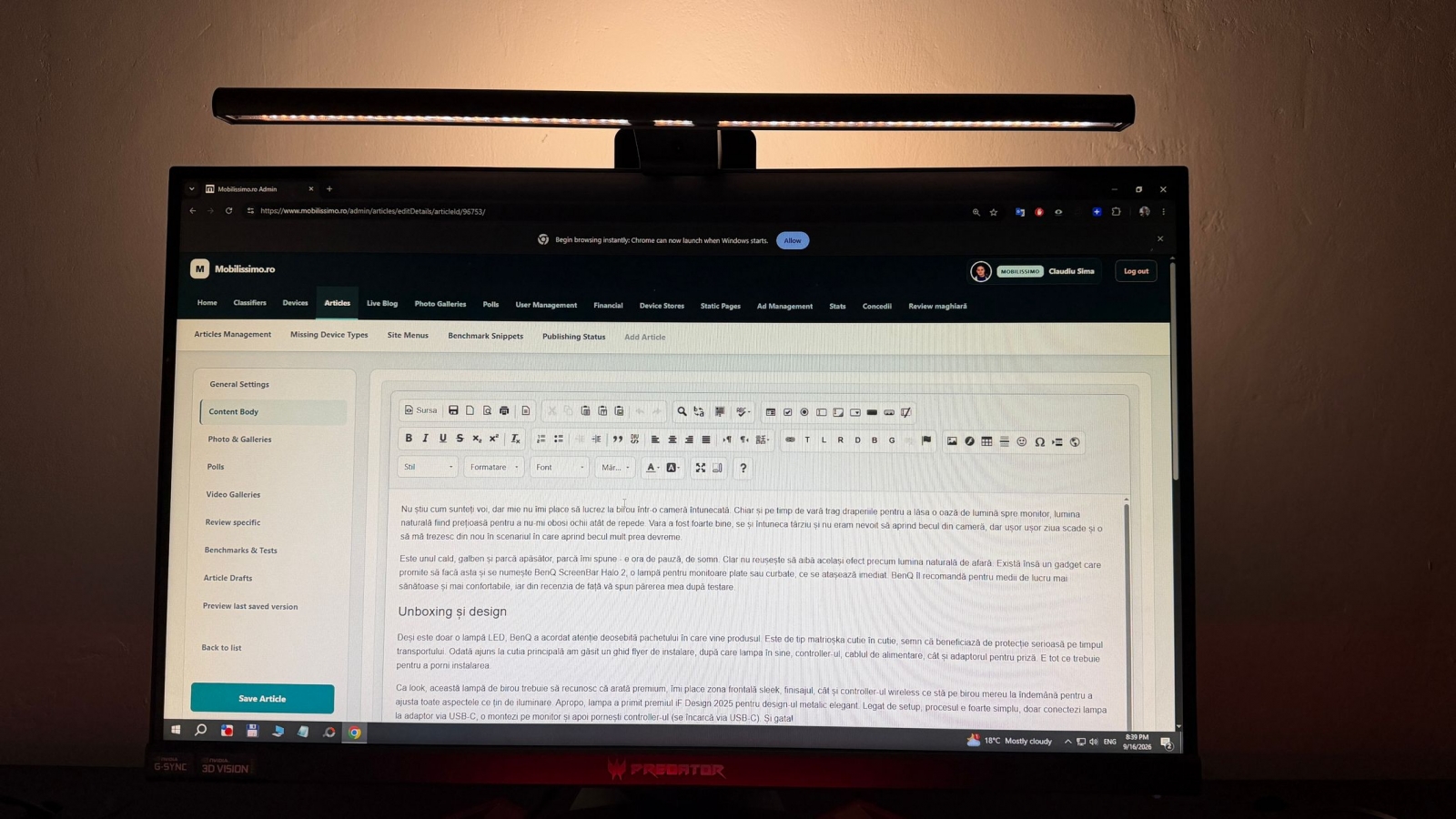
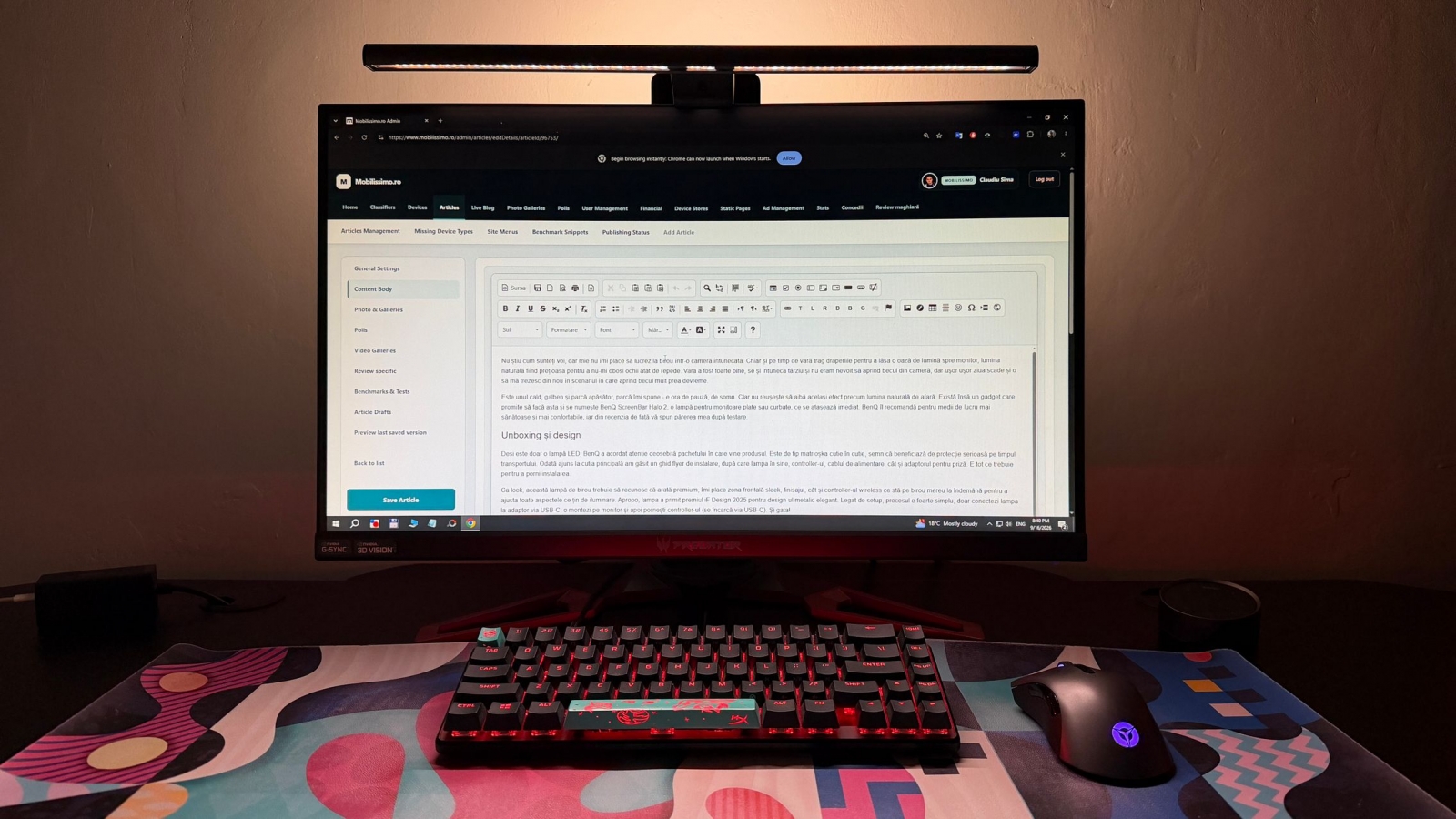

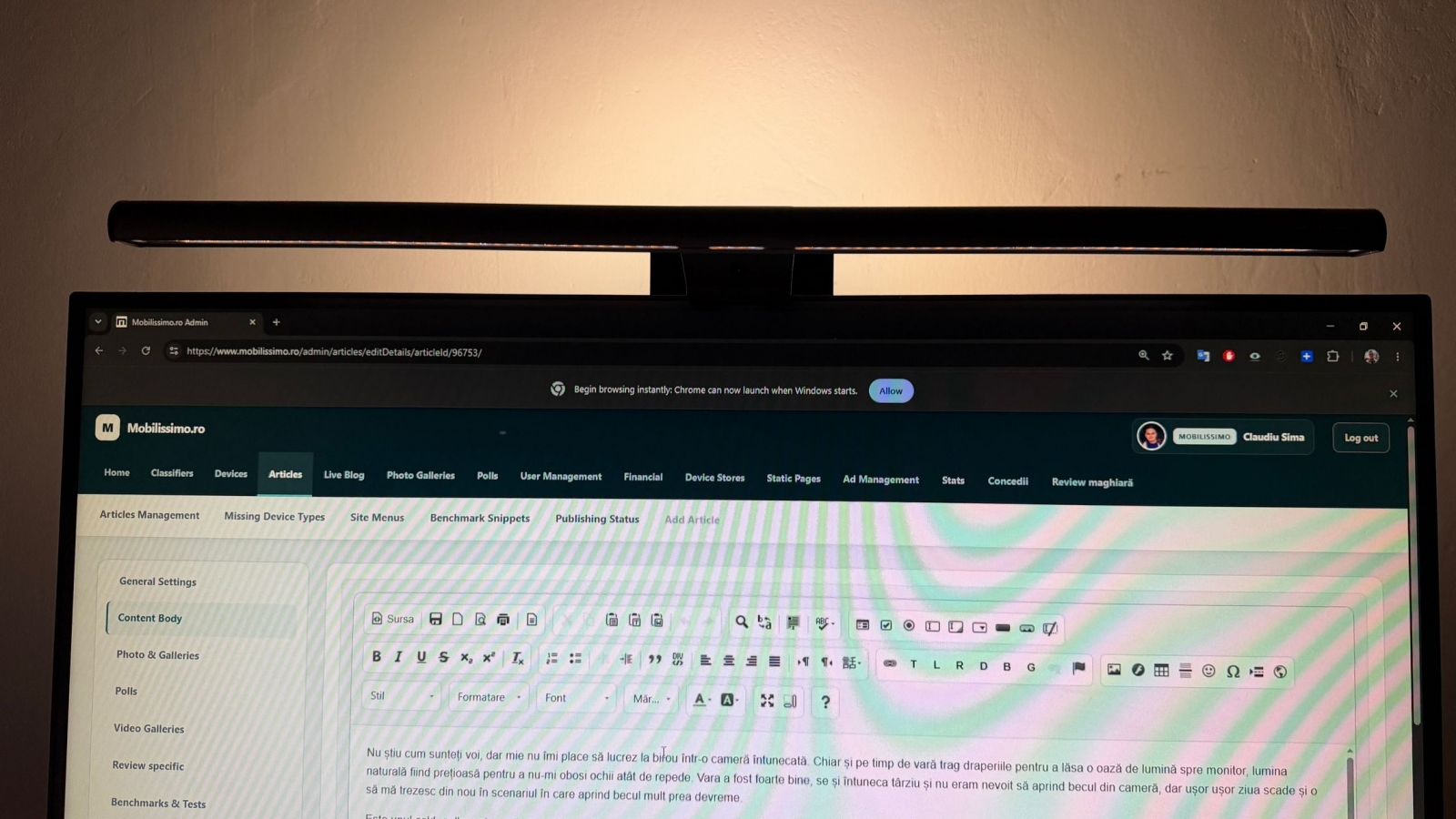
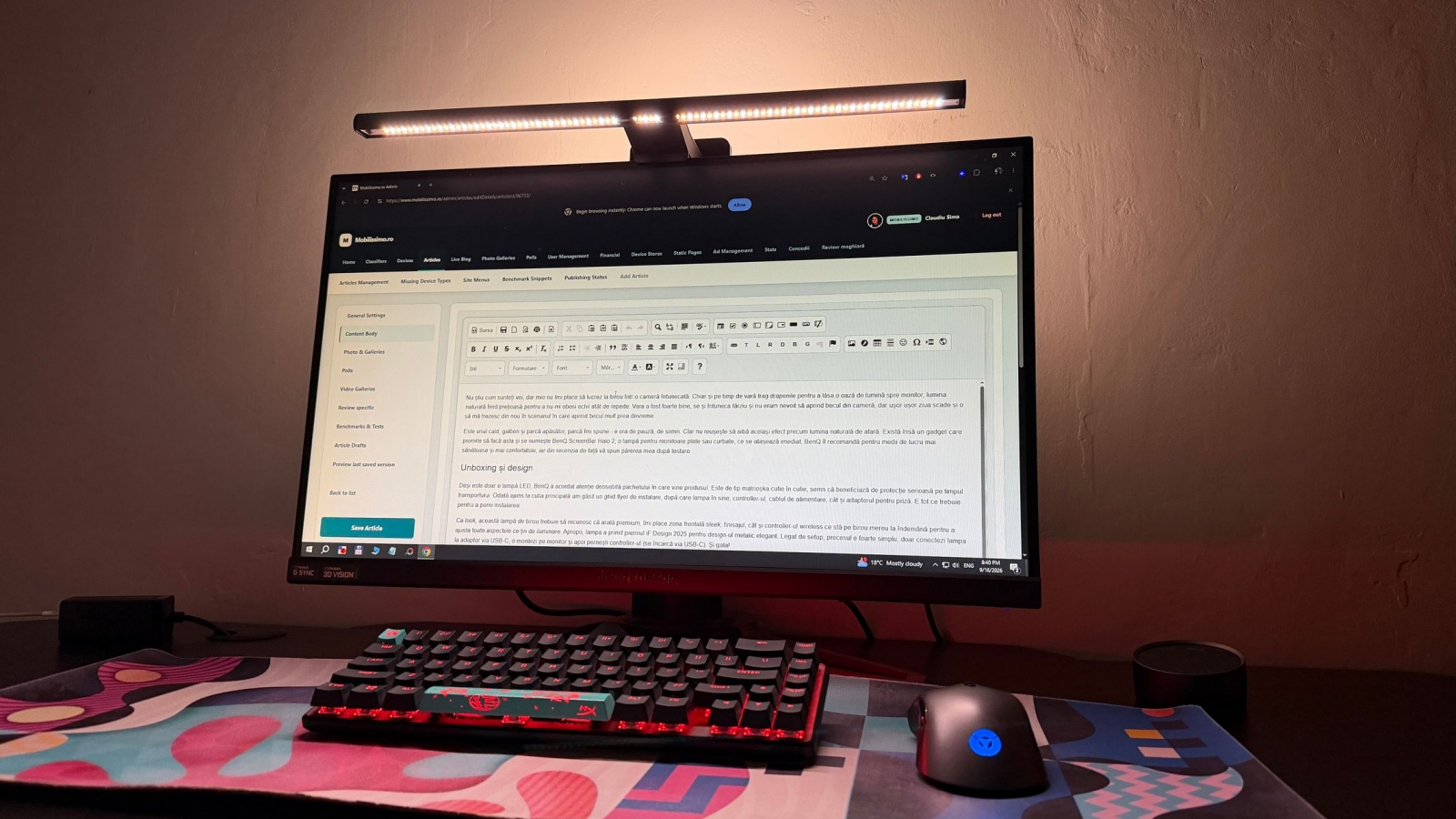

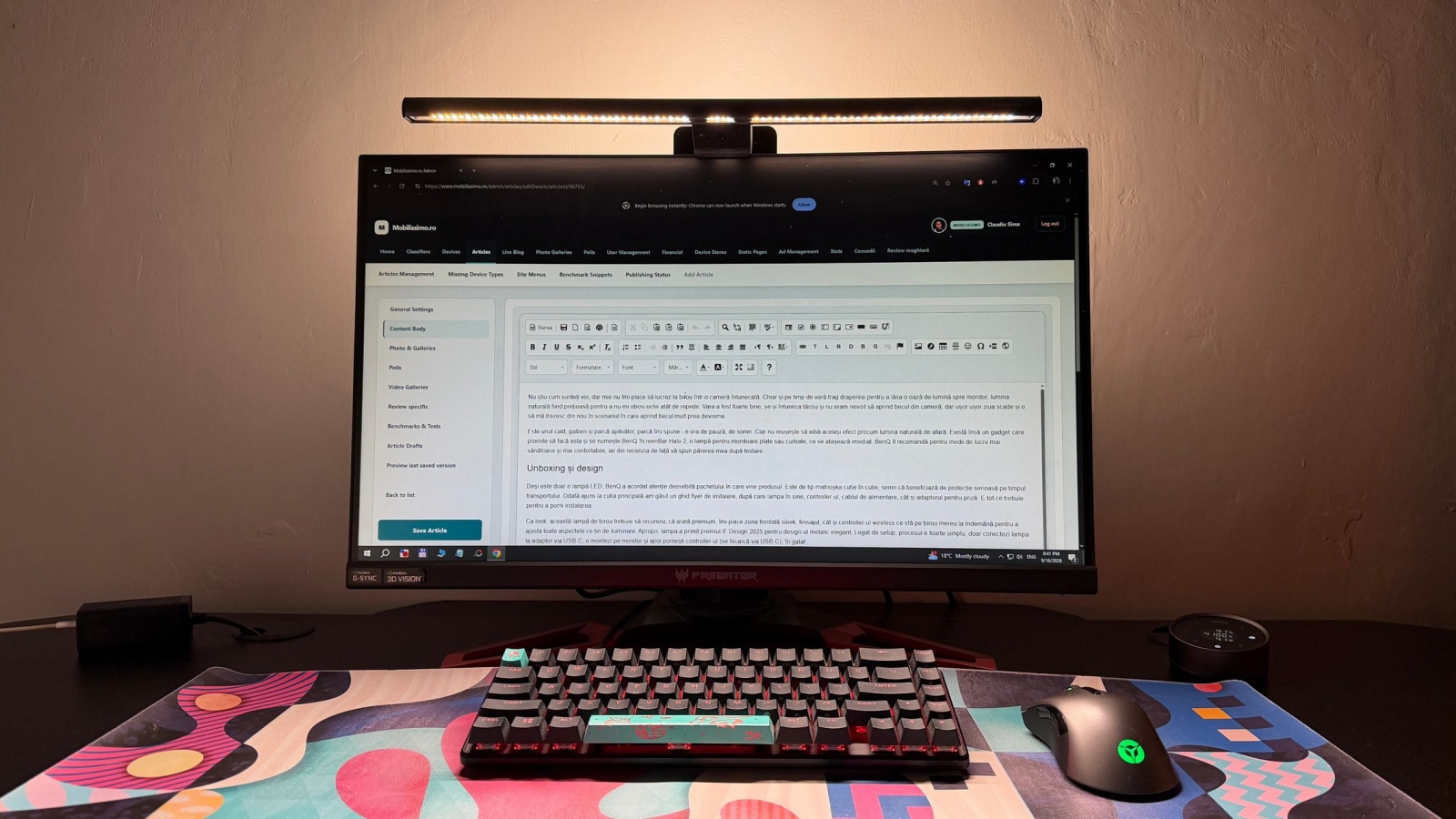

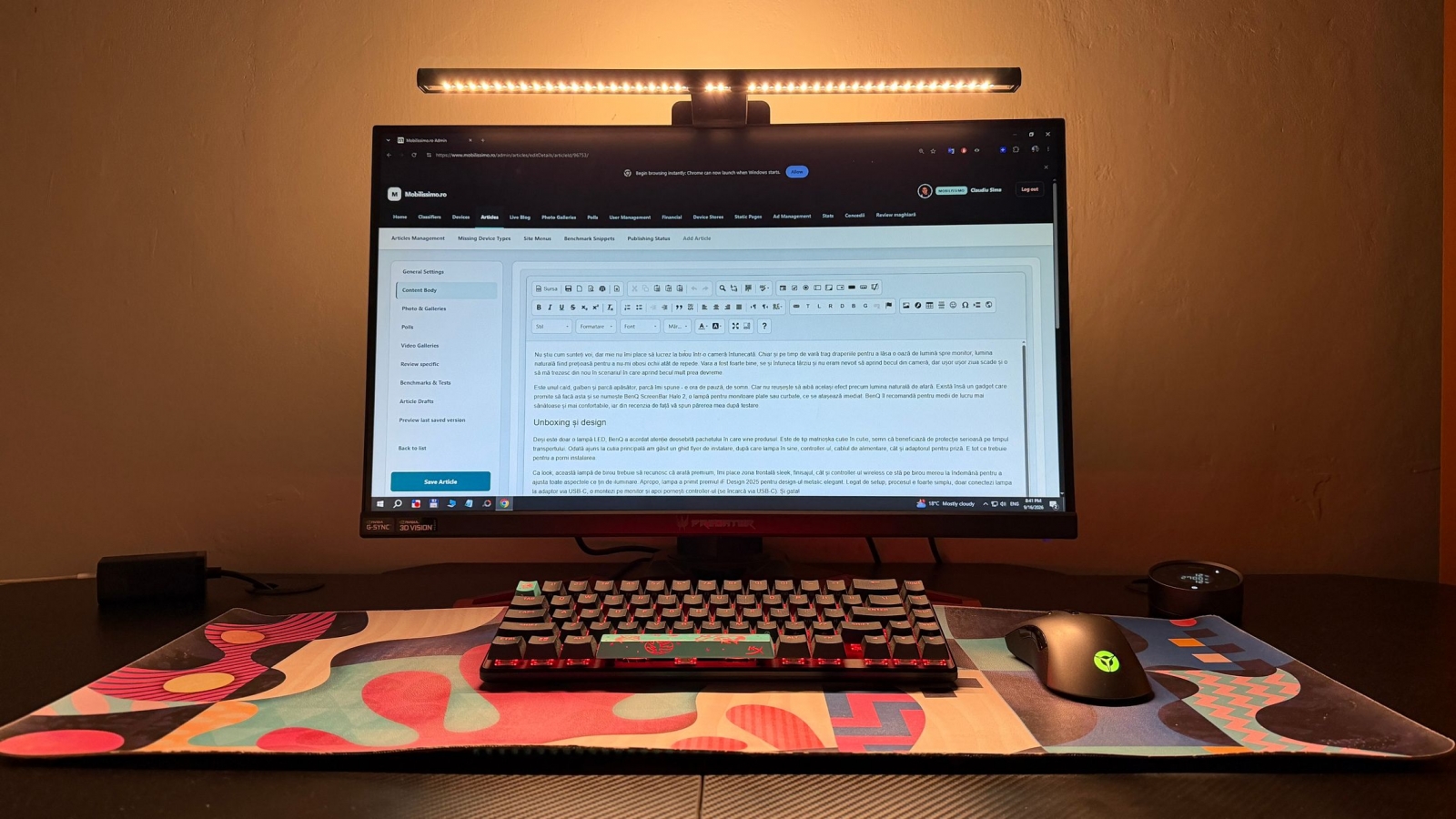


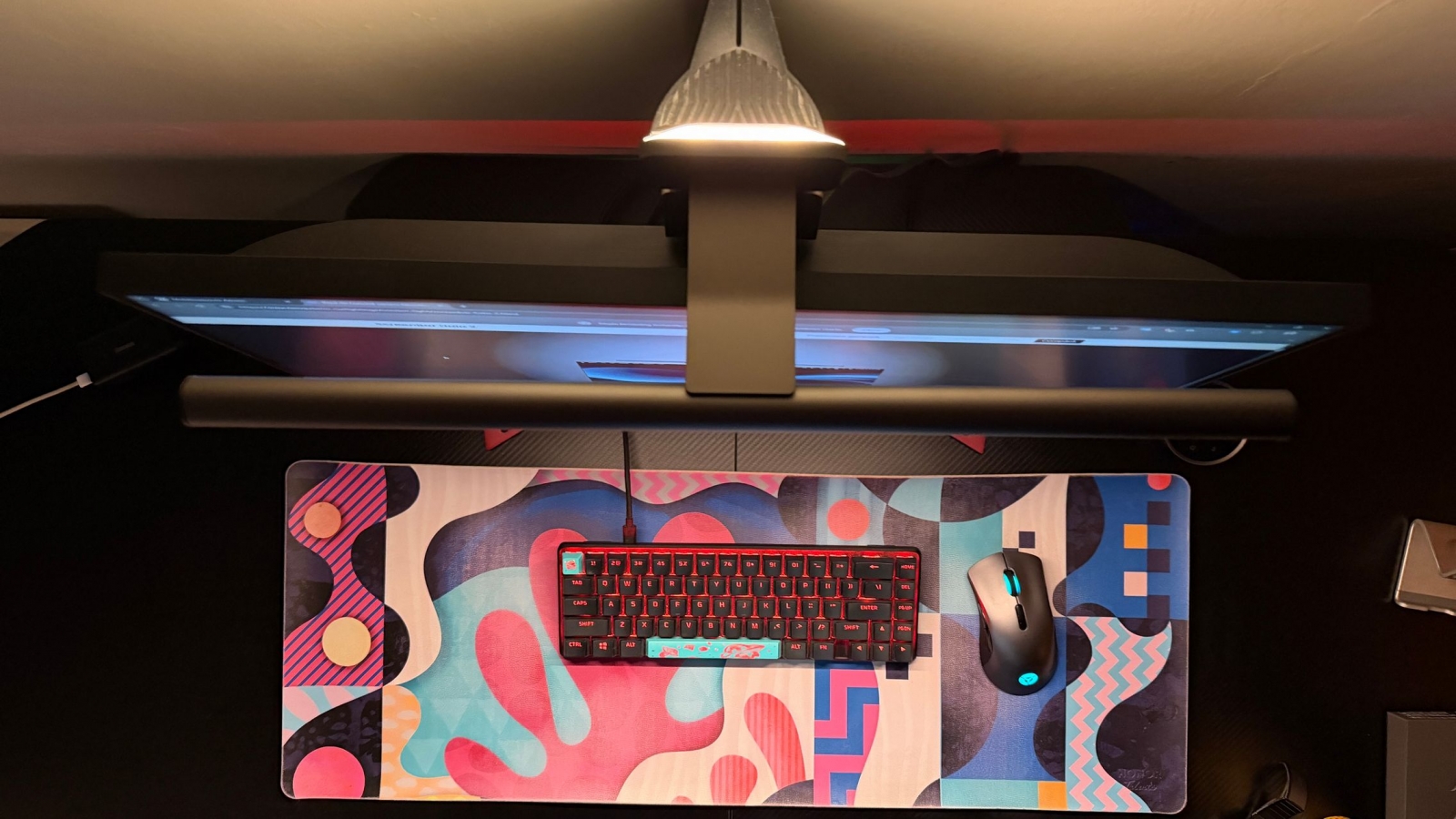
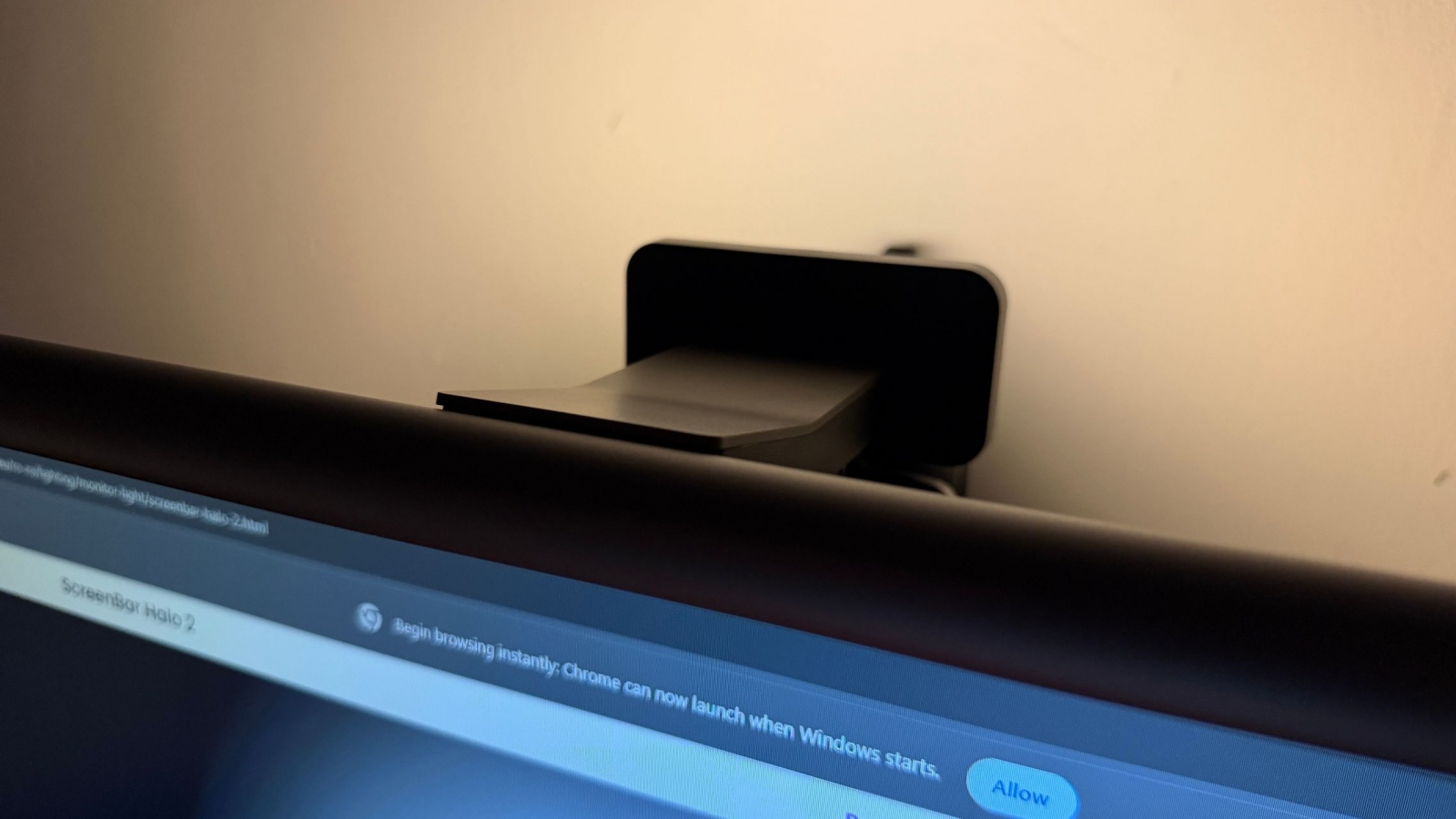
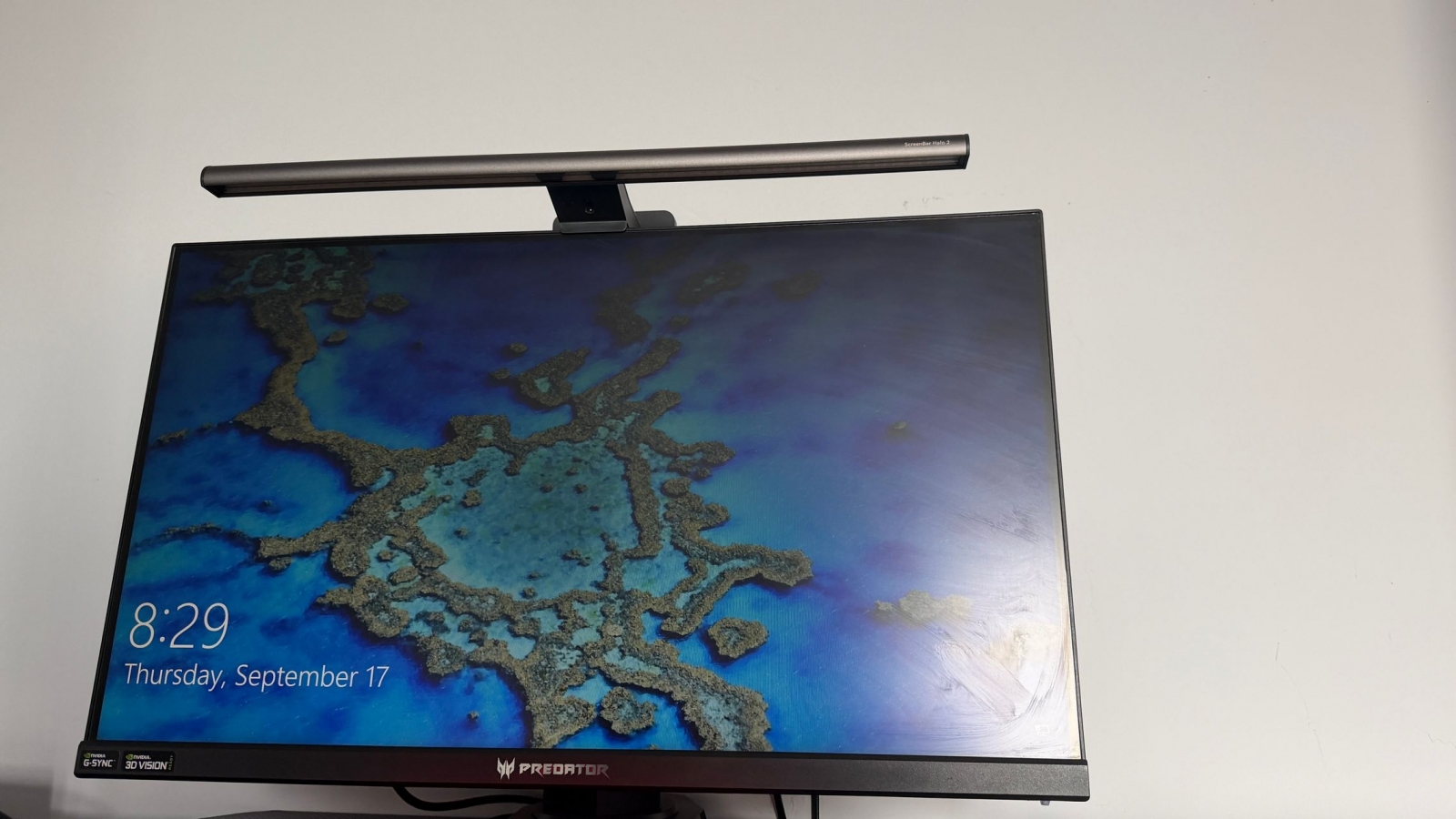


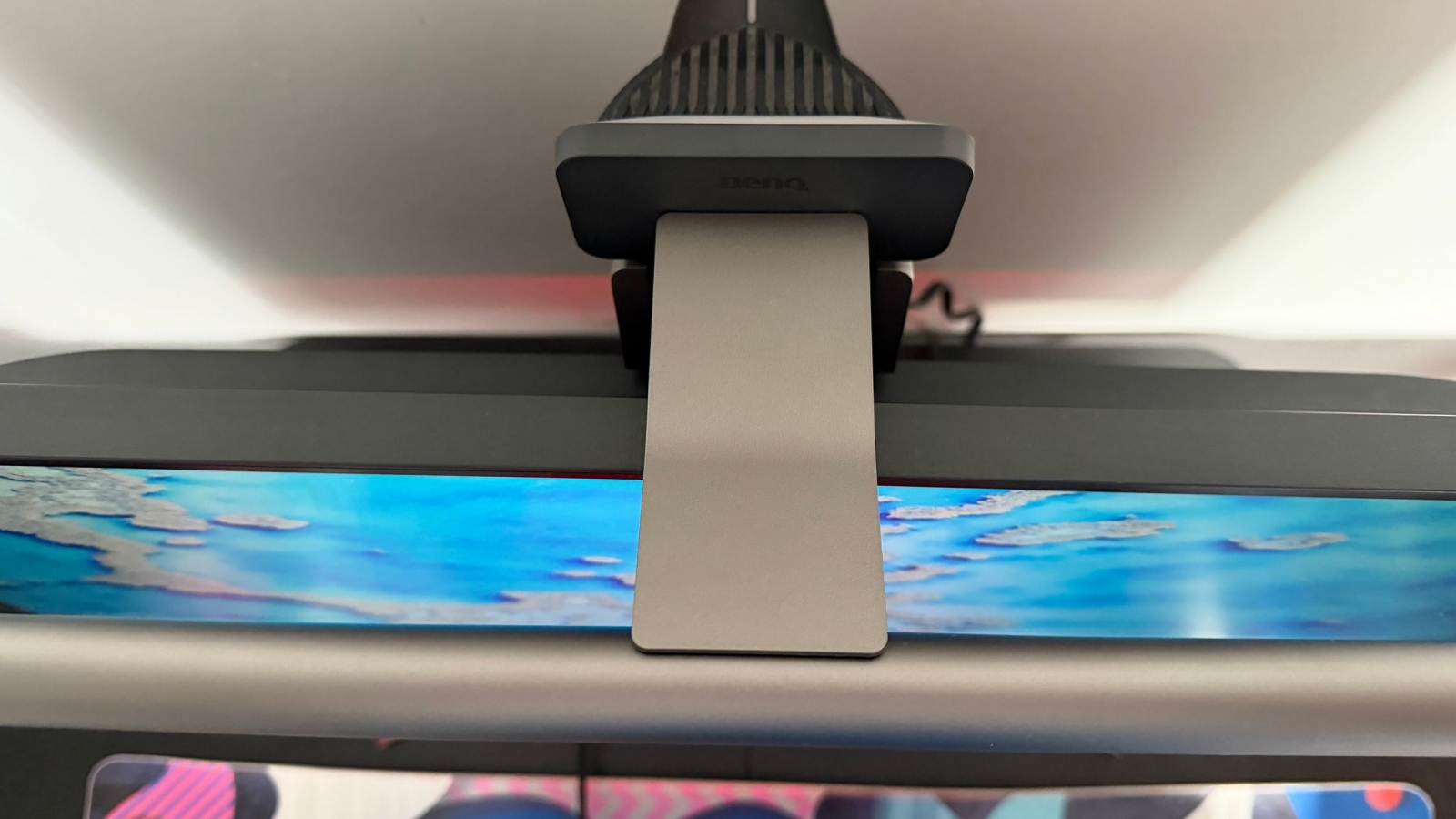



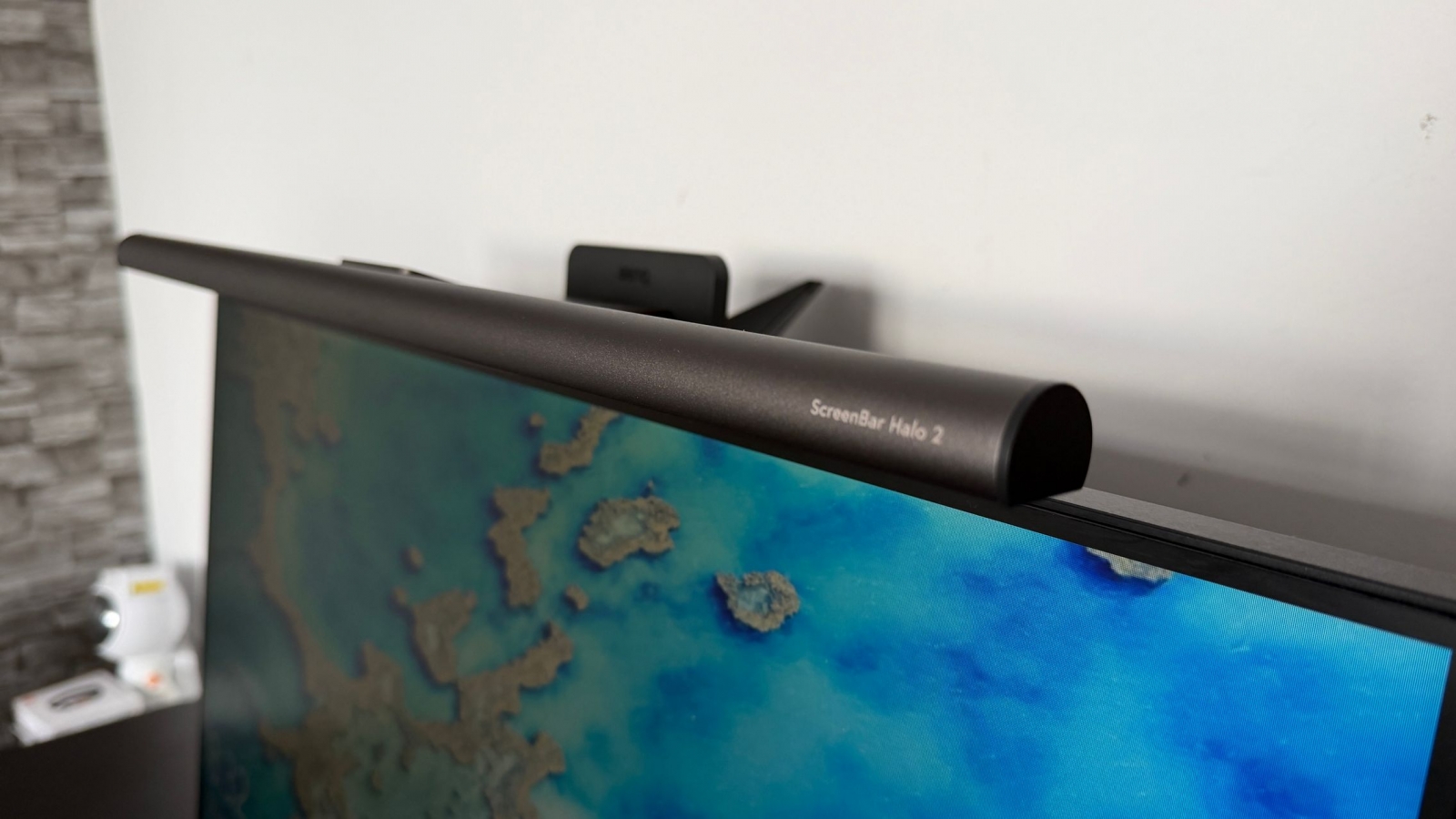
For extended desktop work, the Halo 2’s practical advantage is its split lighting approach: it can illuminate the immediate desk area without putting a lamp in the field of view, then add rear bias lighting from the same control dial. Its premium positioning is the main trade-off, and international pricing and availability were not confirmed in the reviewed material.
Affiliate link: Check availability on Amazon.de