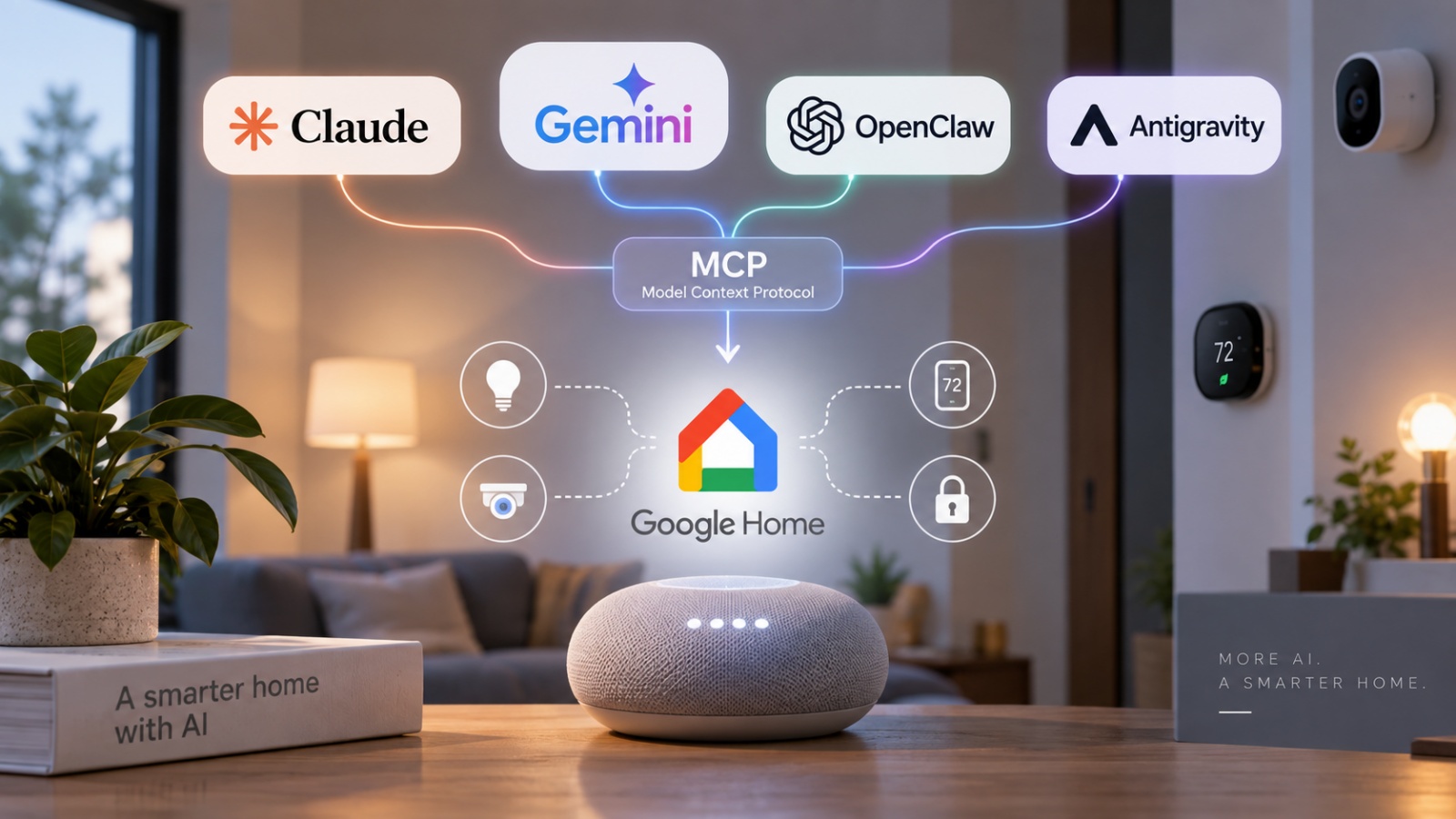
Google is opening its smart-home platform to third-party AI agents with Home MCP, a new integration based on the Model Context Protocol. The system can give supported agents access to a home’s structure and connected Google Home devices, allowing them to check device states, run commands and review event history.
That means an agent could examine activity captured by cameras, determine how long lights were left on, or assemble a custom dashboard using connected-home information. The integration covers Nest products as well as Matter-compatible devices linked to Google Home.
Google lists the following compatible clients for the Early Access implementation:
- Antigravity
- Claude Cowork
- OpenClaw
MCP, short for Model Context Protocol, is a standardized way for AI systems to connect with external data and tools. In this case, it creates an alternative route into Google Home alongside Gemini for Home, Google’s built-in assistant experience. The company is therefore allowing users to connect their preferred AI agent rather than limiting smart-home interaction to Gemini alone.
Home MCP is aimed at advanced setups rather than a simple in-app toggle. Access requires a Google Cloud project, Home API activation and OAuth authentication.
Google has placed boundaries around what connected agents can do. Home MCP does not permit sensitive operations such as unlocking doors, and Google warns that agents connected to a real home can still produce unintended behavior. Access can later be revoked from Google Home.
Automations cannot yet be created or managed through MCP, with that capability listed as coming soon. The service also has rate limits.
Home MCP is currently in Early Access for Google Home Premium Advanced users in the United States. Google has not confirmed wider availability, while automation support remains the next major missing piece of the integration.