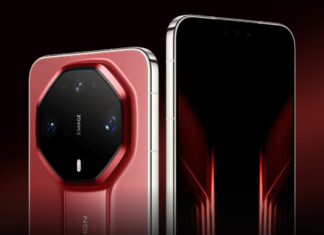
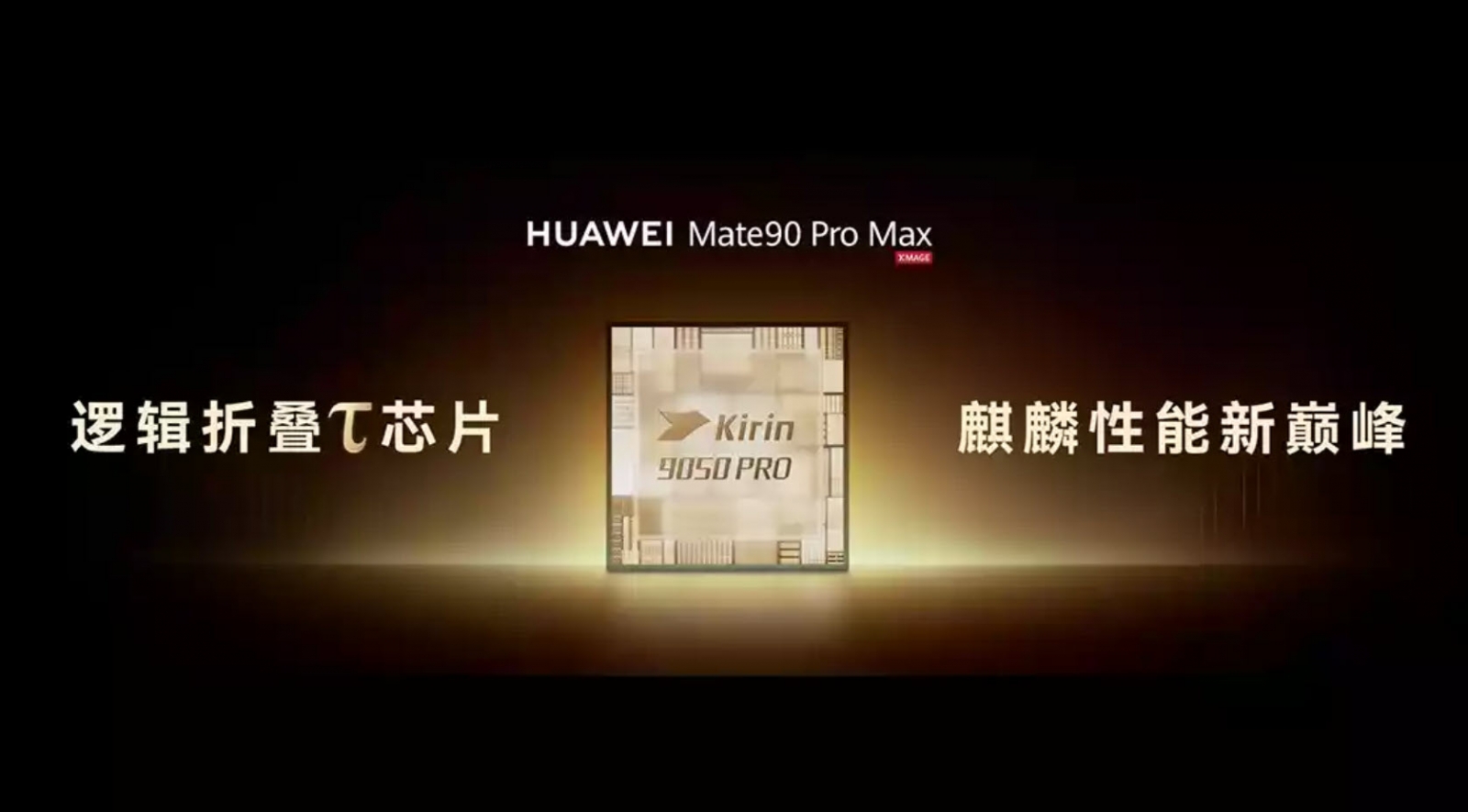
Huawei has detailed a four-chip Kirin lineup for its Mate 90 phones, spanning the Kirin 9030, Kirin 9035, Kirin 9050 and Kirin 9050 Pro. The headline change is the 9050 family’s LogicFolding architecture, which stacks selected circuitry vertically to raise transistor density and shorten signal paths. Huawei positions the approach around lower latency, rather than relying solely on further transistor miniaturization.
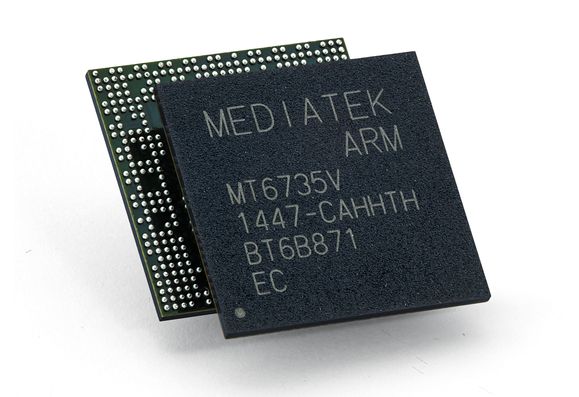
These are system-on-chips combining the CPU, graphics processor, AI-focused NPU and other specialized components. Huawei has disclosed selected performance figures, but has not published full specifications including every core frequency and cache size, limiting direct comparisons across the range.
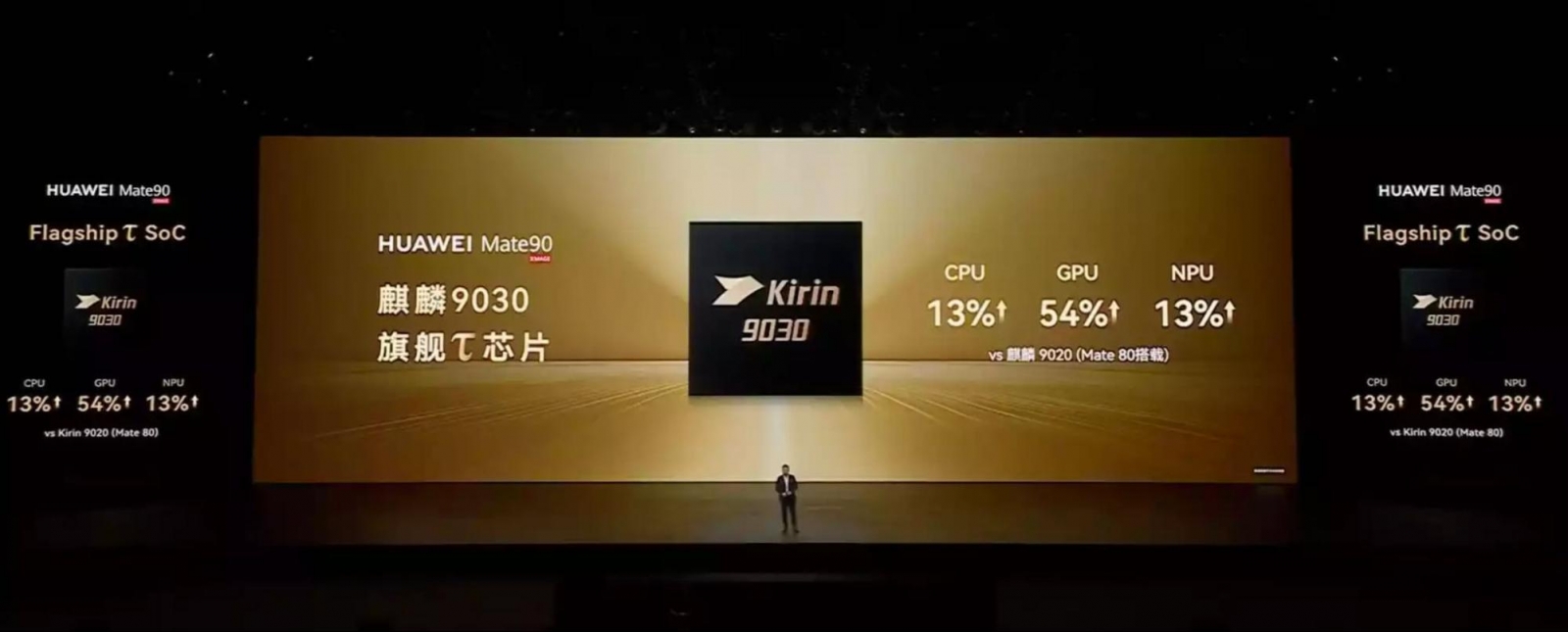
- Kirin 9030 powers the Mate 90 alongside HarmonyOS 7. Huawei claims gains of 13% for CPU performance, 54% for GPU performance, 13% for NPU performance and 27% overall versus the Kirin 9020.
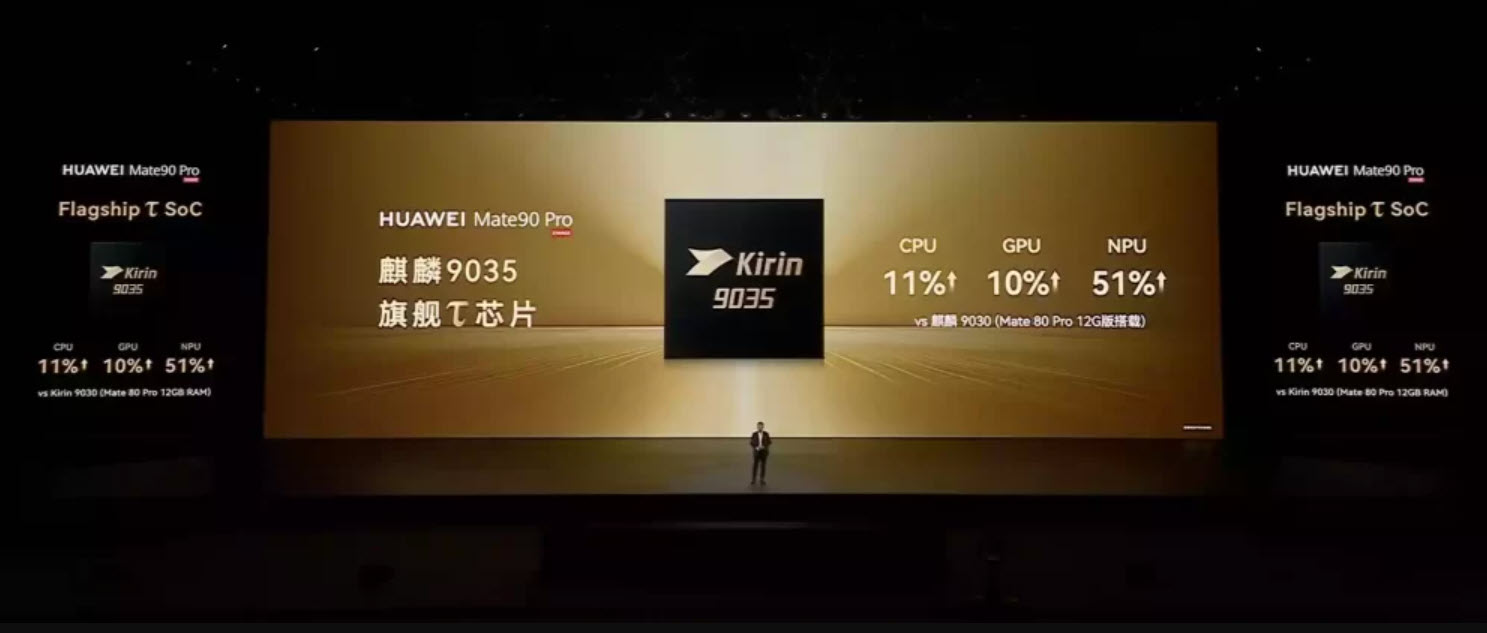
- Kirin 9035 is used in the Mate 90 Pro. Huawei cites 11% CPU, 10% GPU and 51% NPU improvements, although the comparison baseline is not fully specified. It also supports hardware-accelerated ray tracing at up to 31 million rays per second.
- Kirin 9050 is used in the 12GB Mate 90 Pro Max configuration. Huawei identifies it as part of the LogicFolding-equipped Kirin 9050 family, but has not fully detailed how its clocks, GPU, cache or NPU differ from the Pro model.
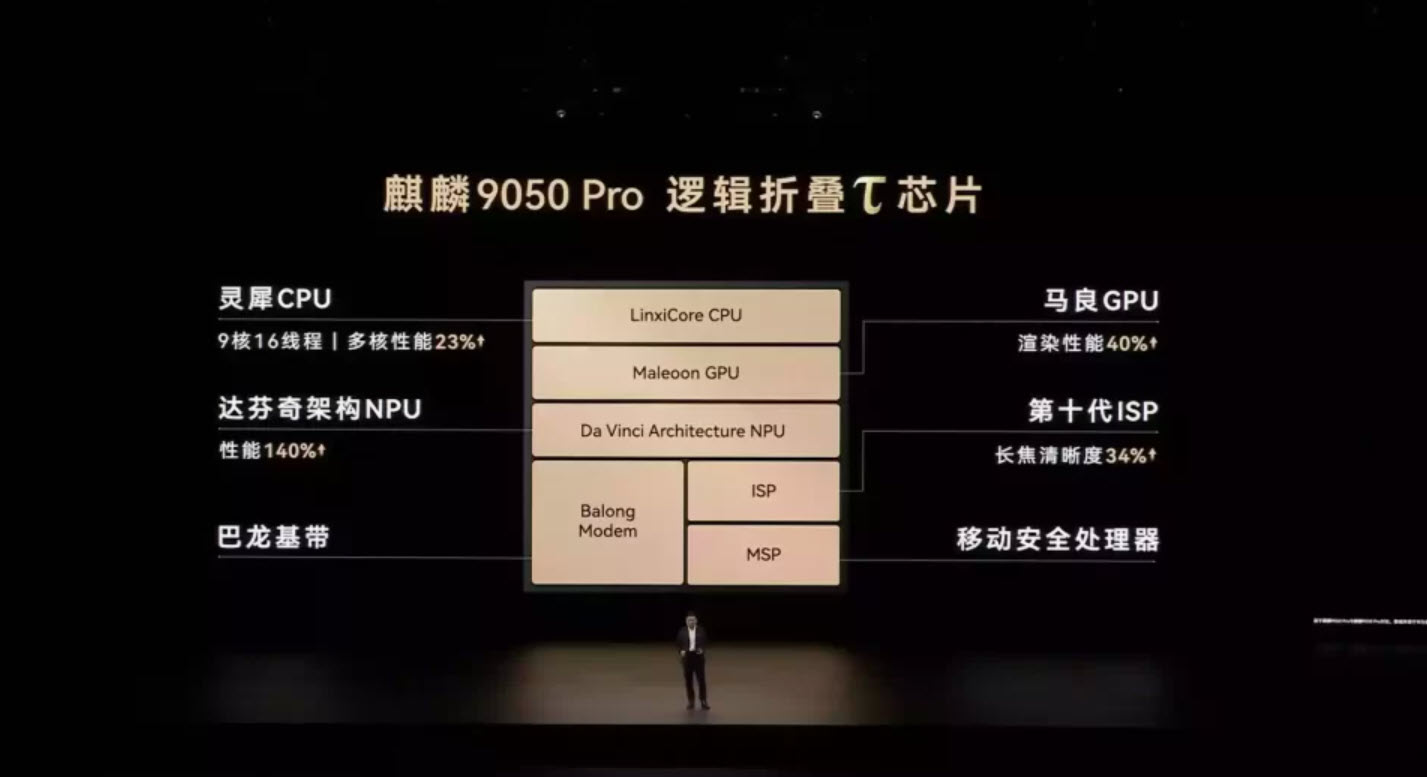
- Kirin 9050 Pro is fitted to 16GB Mate 90 Pro Max variants. It previously debuted in the Mate XT 2 and adds hardware ray tracing alongside a nine-core, 16-thread CPU configuration and a Maleoon 955 GPU.
Kirin 9050 Pro leads the disclosed specifications
The Kirin 9050 Pro CPU comprises one 3.1GHz prime core, two 2.7GHz cores, four 2.2GHz cores and two 1.75GHz efficiency cores. Its 16 threads do not mean the chip has 16 physical CPU cores; rather, additional threads allow certain cores to handle two instruction streams. The benefit will vary according to how effectively an app can distribute work in parallel.
For the Mate 90 implementation, Huawei reports a 23% multi-core CPU increase, 40% faster graphics rendering and a 140% NPU increase for the 9050 Pro. Those figures should not be conflated with the company’s separate LogicFolding density claim: Huawei says the design reaches 238 million transistors per square millimeter, compared with about 155 million transistors per square millimeter for the planar predecessor used in that comparison.
LogicFolding is Huawei’s practical expression of what it calls the Tau principle: reducing delays by bringing frequently communicating circuitry closer together, including through short vertical interconnects between layers. It can complement conventional scaling, but density comparable to a more advanced manufacturing process does not establish that the chip was made on that process.
The 9030’s largest claimed uplift is in graphics, while the 9035 places its largest stated gain in NPU performance. Neither figure translates directly into a matching increase in game frame rates or AI response times, since software, AI models, power limits and cooling also affect real-world results. Sustained testing on Mate 90 hardware will be needed to determine how much of Huawei’s claimed potential carries over to demanding workloads.