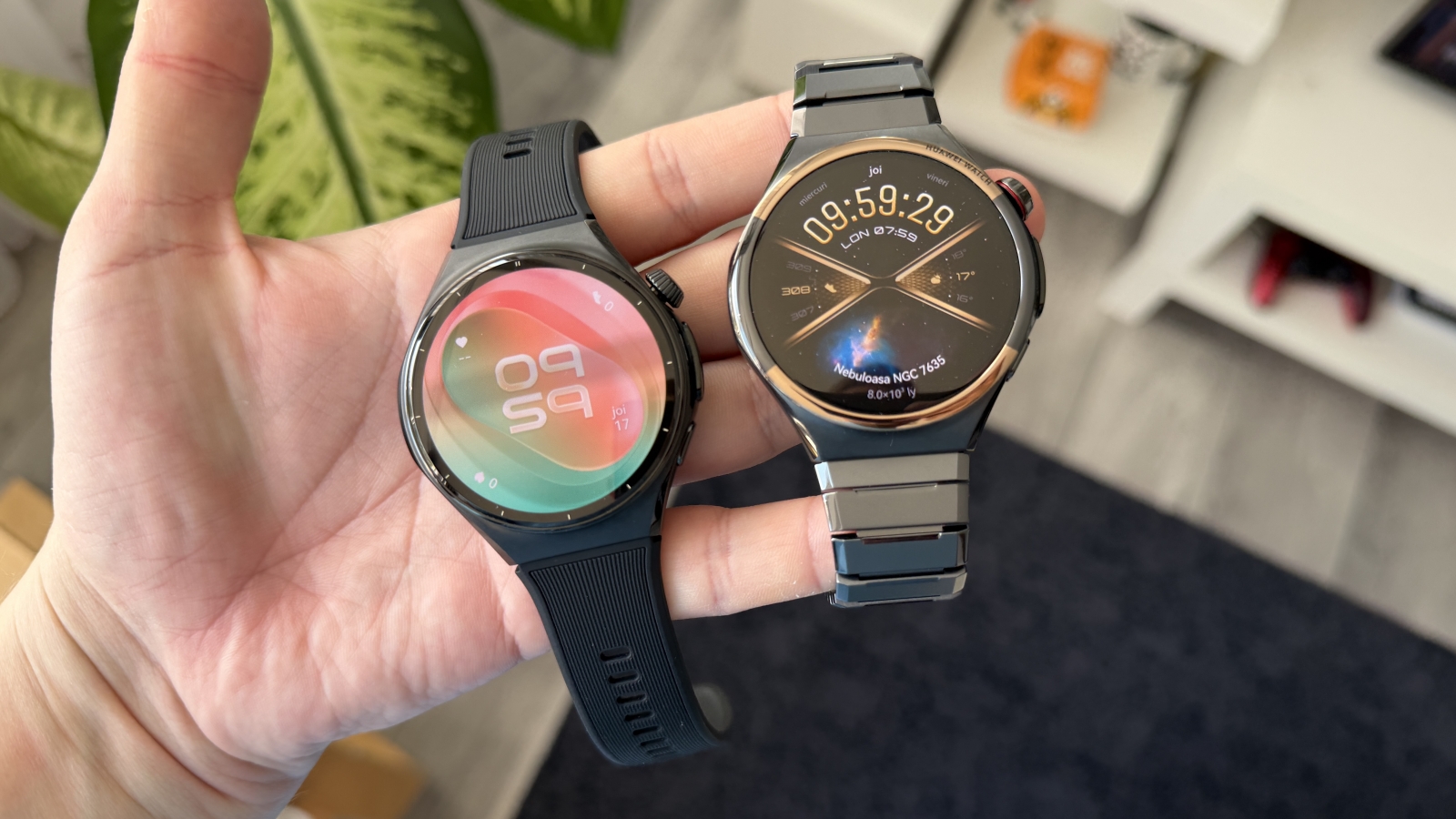
Huawei retained the top position in the global wrist-worn wearables market in the second quarter of 2026, shipping 9.7 million devices for a 20.3% share. The lead came in a contracting market: total shipments of smartwatches and wristbands fell 4.3% year over year to 48.0 million units, according to IDC's second-quarter data.
Huawei's shipments declined 1.9% from 9.9 million a year earlier, but its share rose by 0.5 percentage points as Xiaomi and Apple saw steeper drops. Xiaomi shipped 8.5 million units, down 10.4%, while Apple shipped 6.4 million, down 13.6%.
| Vendor | Q2 2026 shipments | Q2 2026 share | Q2 2025 shipments | Year-over-year change |
|---|---|---|---|---|
| Huawei | 9.7 million | 20.3% | 9.9 million | -1.9% |
| Xiaomi | 8.5 million | 17.7% | 9.5 million | -10.4% |
| Apple | 6.4 million | 13.3% | 7.4 million | -13.6% |
| Garmin | 3.3 million | 6.9% | 2.8 million | +19.8% |
| BBK | 2.9 million | 6.0% | 3.0 million | -2.6% |
| Others | 17.2 million | 35.8% | 17.6 million | -2.6% |
| Total | 48.0 million | 100% | 50.2 million | -4.3% |
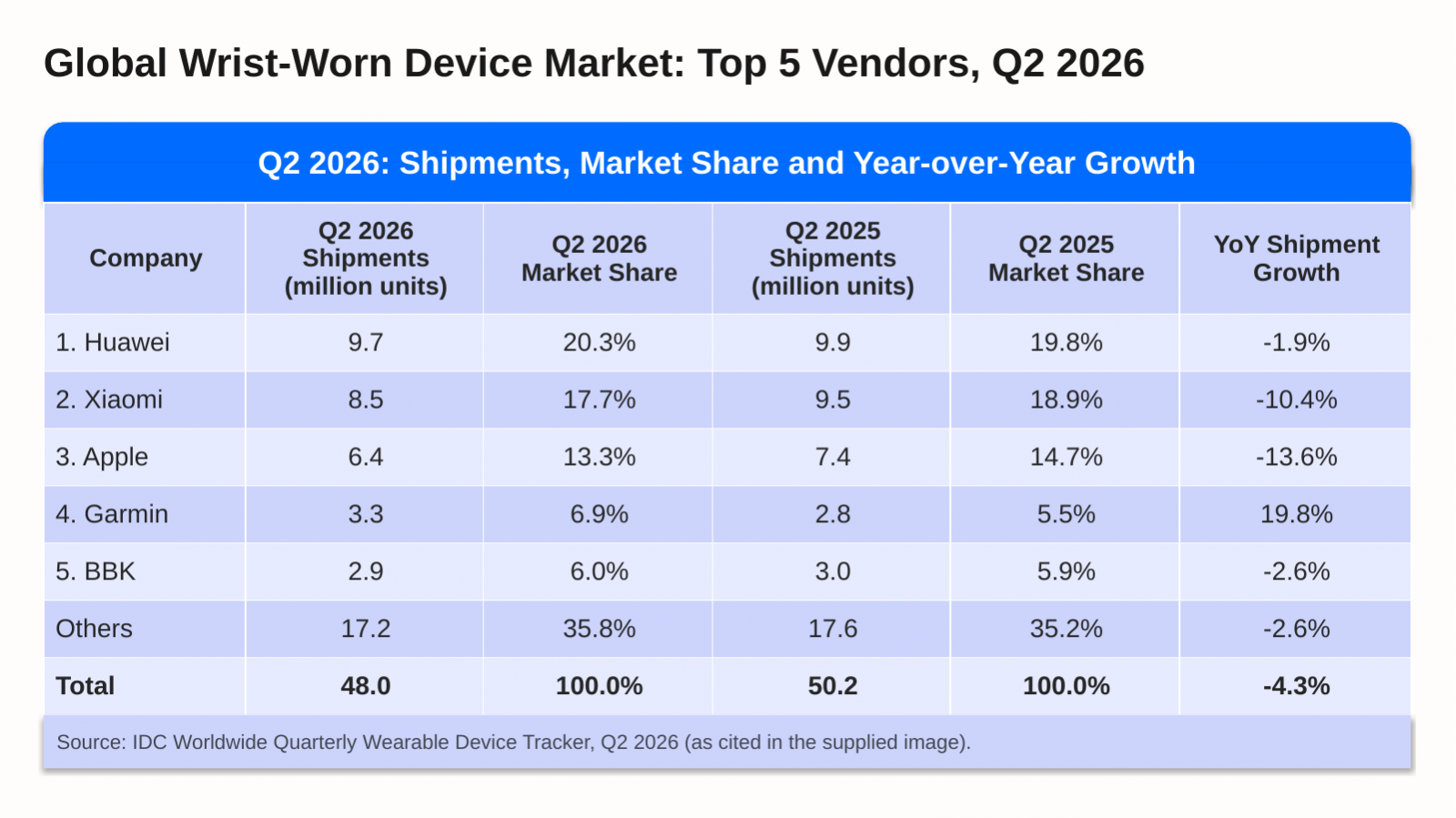
Garmin was the clear exception among the top five vendors, increasing shipments 19.8% year over year and lifting its market share from 5.5% to 6.9%. IDC counted 37.08 million smartwatches and 10.92 million wristbands during the quarter, and said vendors are looking to AI, health features and alternative form factors to create a stronger upgrade case.
Huawei's newly announced watches were not part of the second-quarter result. The company presented the following models in Munich in September, after the June end of the reporting period:
- Huawei Watch GT 7
- Huawei Watch 6
- Huawei Watch D3

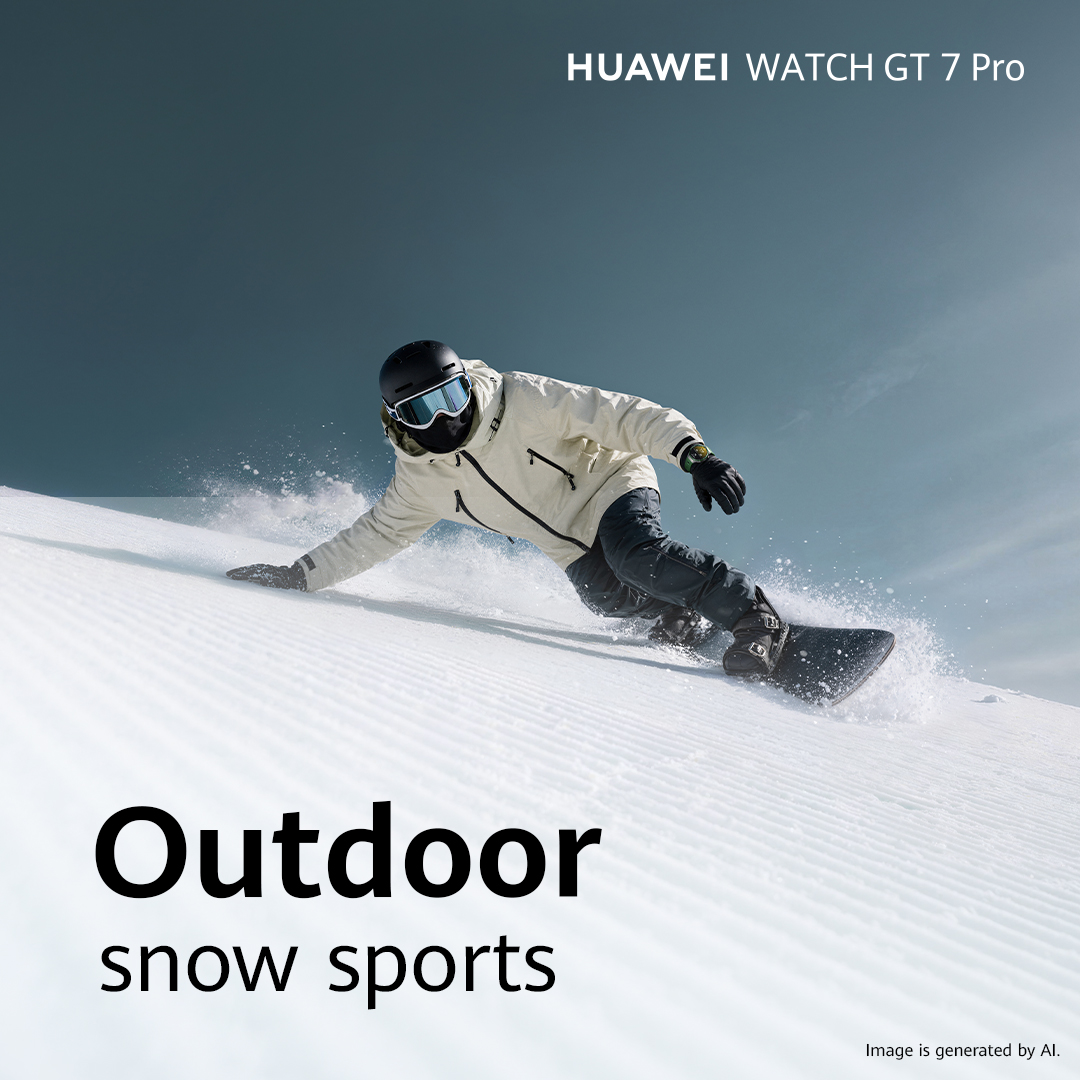
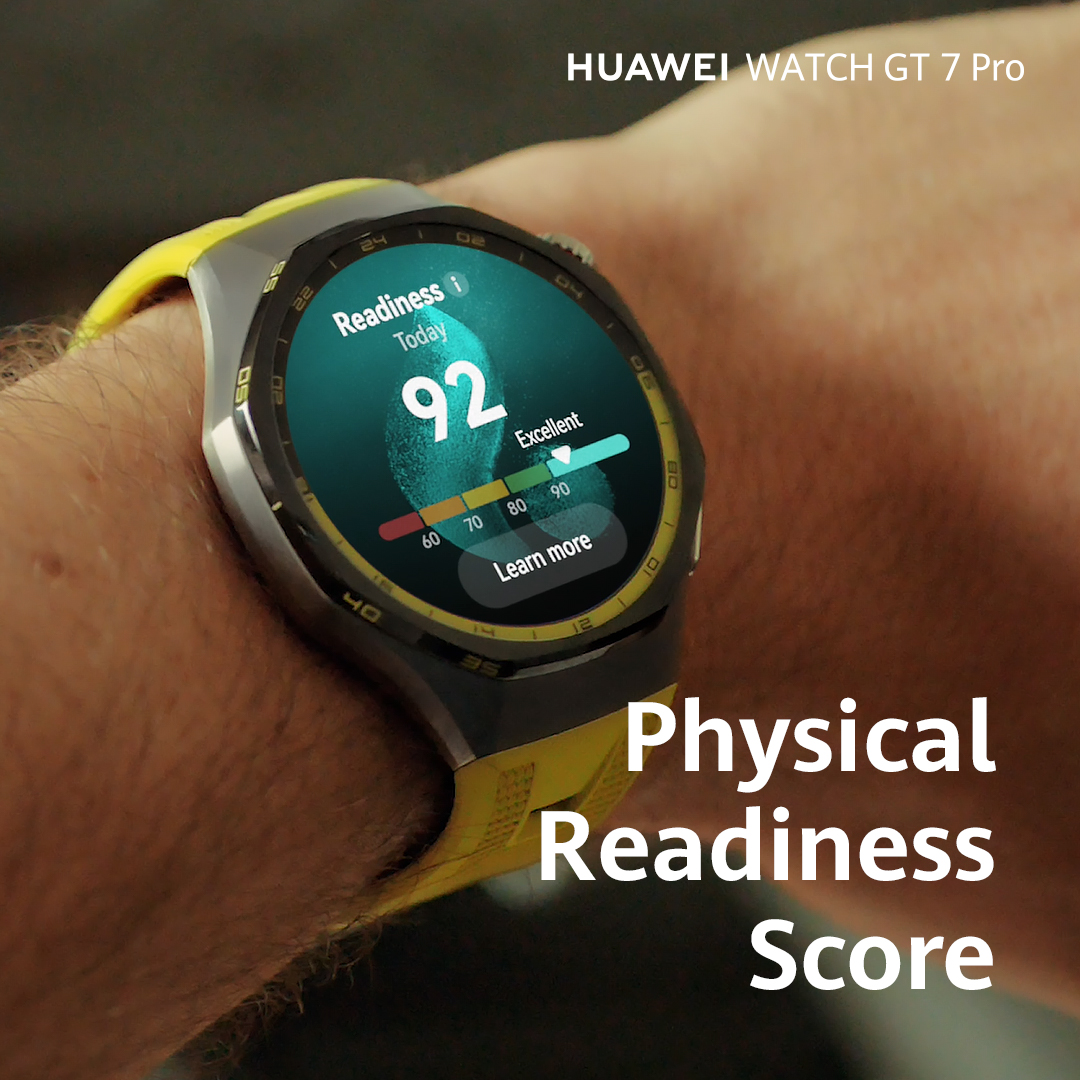
The Watch GT 7 carries official battery estimates of up to 21 days in a low-use scenario and 12 days in typical use, though GPS, always-on display use and continuous monitoring can materially affect endurance. The Watch D3 retains a mini pump and inflatable cuff for blood-pressure readings and 24-hour ambulatory blood-pressure monitoring, with before- and after-exercise measurements among its additions.
Huawei's next quarterly result will show whether those September launches can turn a share gain achieved during an industry downturn into renewed shipment growth.