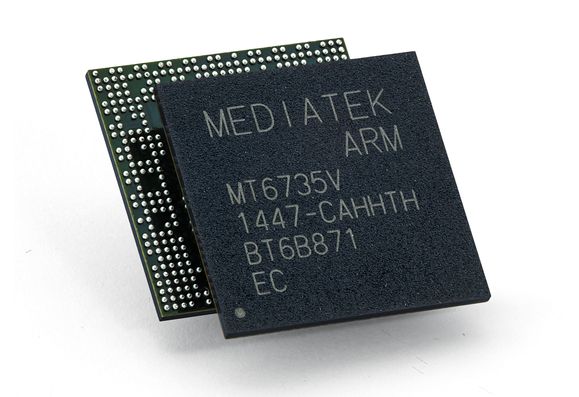

Samsung has reportedly begun mass production of its Exynos 2700 mobile processor, setting up the next Galaxy S27 generation while leaving the chip choice for the Galaxy S27 Ultra unresolved. According to The Elec, Samsung’s production target is more than 10% higher than that for the Exynos 2600, a rise reportedly linked to plans for an additional Galaxy S27 Pro model.
The current expectation is that Samsung will use the Exynos 2700 in Europe and South Korea, while versions destined for the US and China would use Qualcomm’s Snapdragon 8 Elite Gen 6. The reported regional plans break down as follows:
- Galaxy S27 — Exynos 2700 is expected in Europe and South Korea; Snapdragon 8 Elite Gen 6 is expected in the US and China.
- Galaxy S27+ — Exynos 2700 is expected in Europe and South Korea; Snapdragon 8 Elite Gen 6 is expected in the US and China.
- Galaxy S27 Pro — Exynos 2700 is expected in Europe and South Korea; Snapdragon 8 Elite Gen 6 is expected in the US and China.
- Galaxy S27 Ultra — Samsung has not finalized its processor strategy; it could use region-specific chips again or retain a Snapdragon-only approach.
Samsung System LSI, the group that designs Exynos processors, is reportedly pushing for the 2700 to power the Ultra model as well. Samsung MX, which oversees smartphones, is said to still be weighing performance, thermal behavior, cost and manufacturing capacity. Qualcomm chip pricing is also part of that assessment, and Exynos 2700 production alone does not confirm its inclusion in the Ultra.
Early internal Geekbench results reportedly put the Exynos 2700 about 9.5% ahead of the Snapdragon 8 Elite Extreme Gen 6 in multi-core performance, while Qualcomm’s chip retains a single-core advantage. Those preliminary figures do not establish sustained performance, power consumption or gaming behavior.
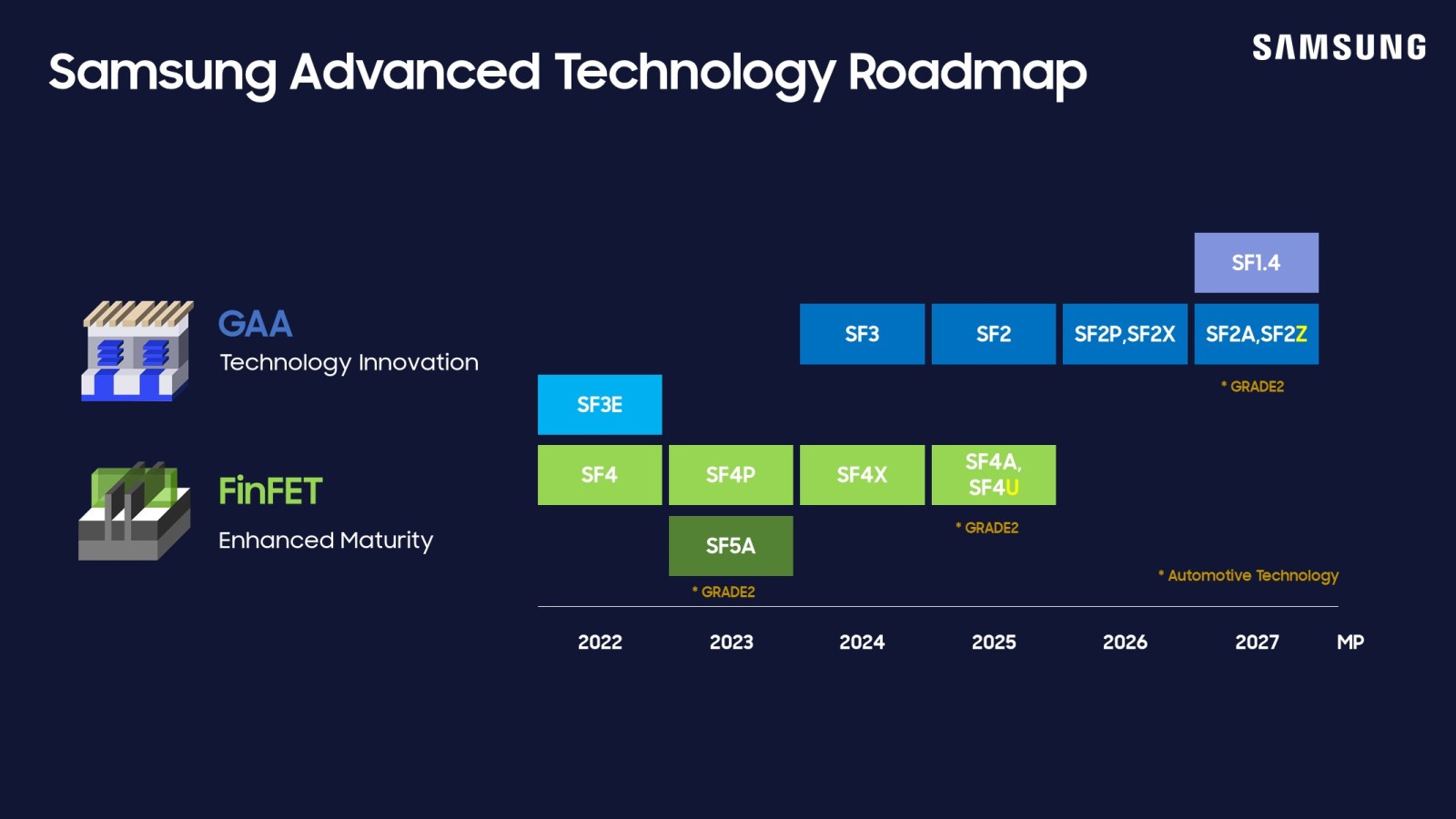
The chip is expected to use Samsung’s 2 nm SF2P process with Gate-All-Around transistors. Compared with the SF2 process used for Exynos 2600, Samsung’s newer manufacturing node is said to offer up to 12% higher performance, 25% lower power consumption and an 8% smaller area. Exynos 2700 may also move from Arm C1 CPU cores to newer Arm C2 cores.
A Galaxy S27 launch in February or March 2027 would fit the reported production schedule. The key remaining question is whether Samsung can translate the claimed process-node gains into an Exynos configuration that Samsung MX is willing to put in its highest-profile Galaxy S27 model.