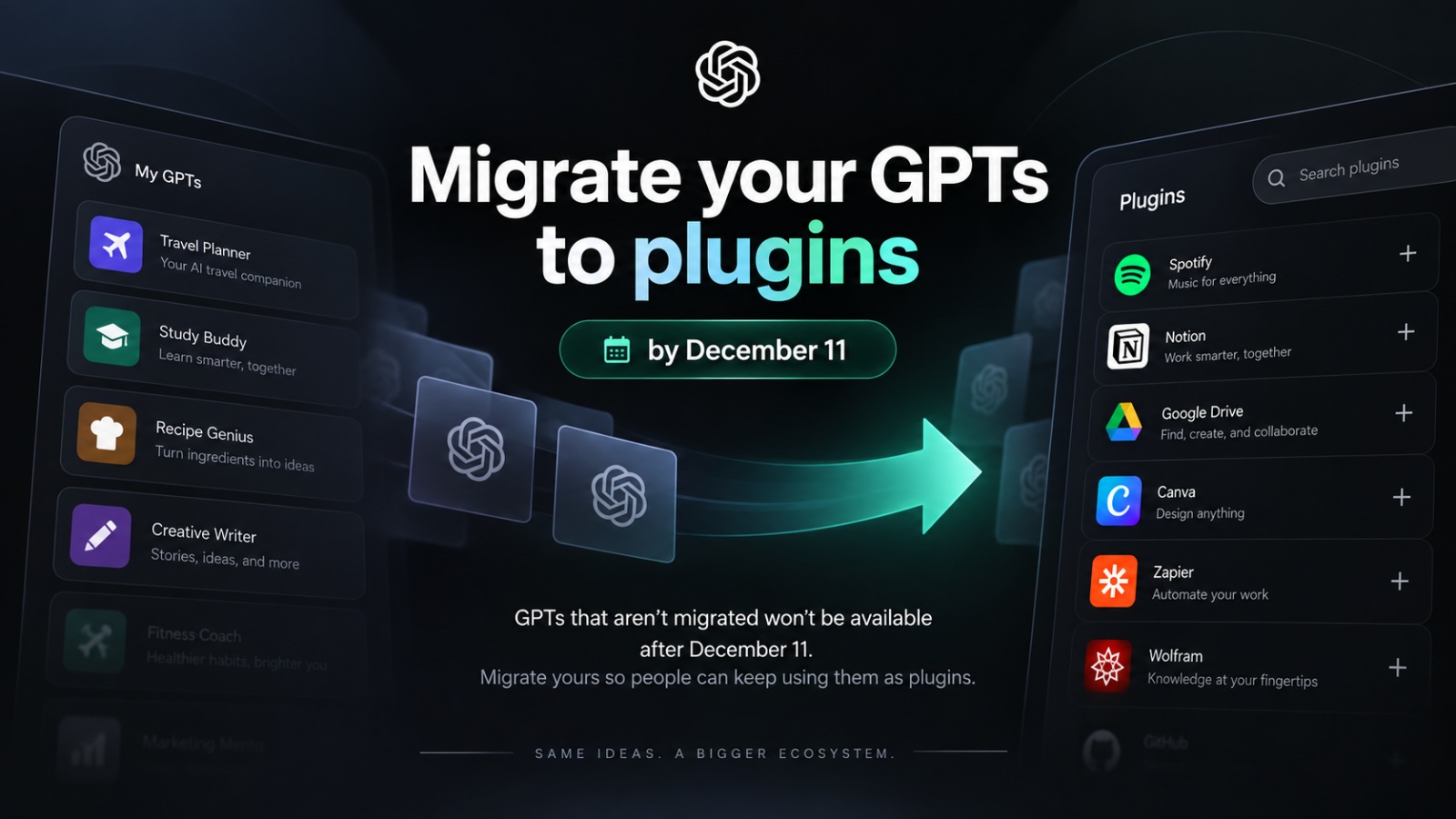
OpenAI plans to retire Custom GPTs on December 11, 2026, ending the standalone assistant format introduced alongside the GPT Store. The replacement is a migration to Plugins and Skills rather than ChatGPT Projects, according to the company’s official migration FAQ. The change applies across ChatGPT plans, although the migration option may reach accounts at different times.
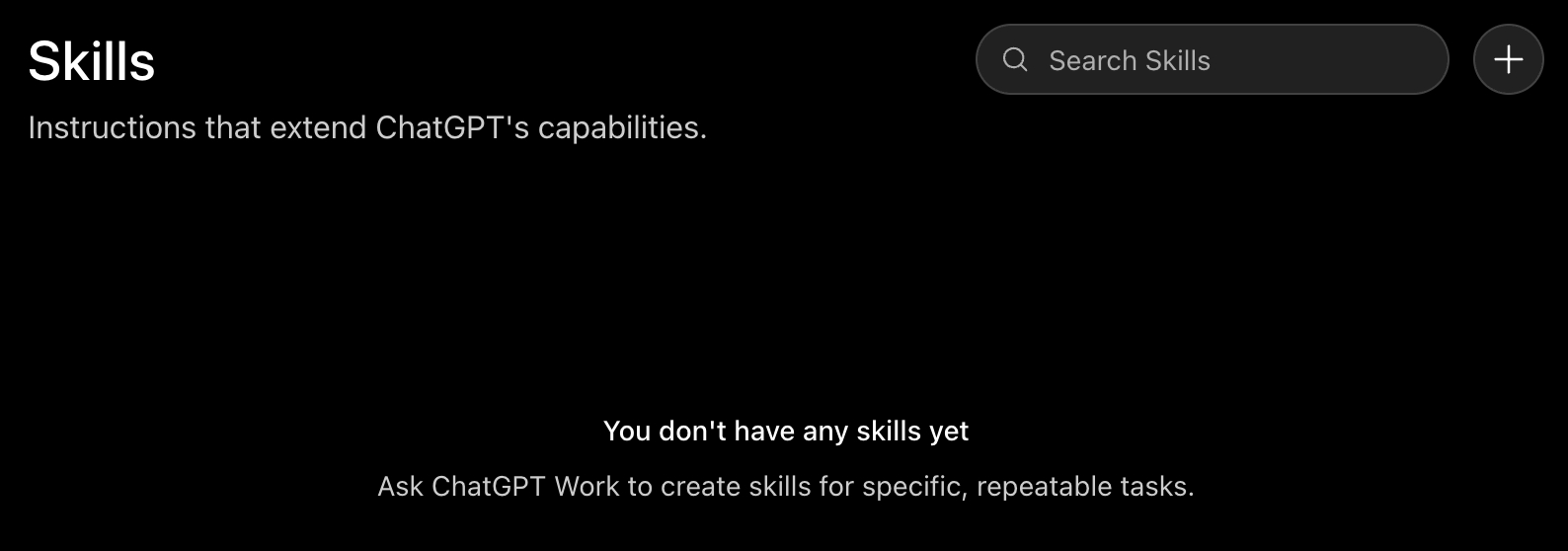
The migration tool will appear under My GPTs as “Migrate to plugin.” A Custom GPT’s instructions will become a Skill, its Knowledge files will be converted into reference files, and connected apps may be included in the resulting Plugin.
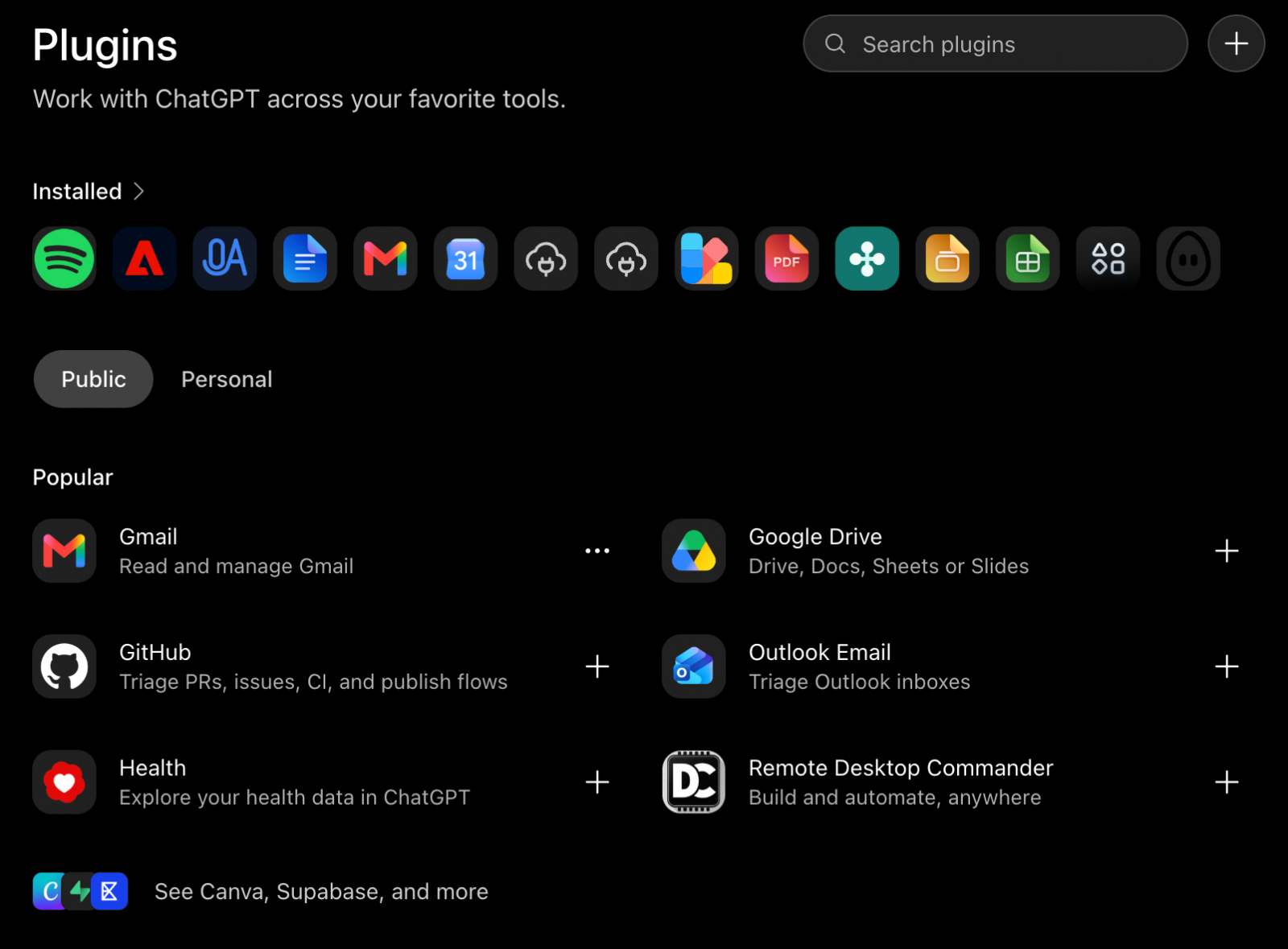
In OpenAI’s current terminology, these Plugins are not the older ChatGPT plugins. They are reusable work packages that can combine Skills, instructions and workflows with connected apps such as Google Drive or Slack. ChatGPT can automatically select a Skill when a request matches that Skill’s description.

Migration will not be one-to-one
The transition leaves several parts of a Custom GPT behind, creating extra work for developers and teams with more complex configurations.
- Existing conversations will not migrate.
- The GPT’s selected model will not be retained.
- Custom Actions will not transfer automatically; external API integrations may need to be rebuilt through an existing app or an MCP server.
- Sharing settings will not carry over. A migrated Plugin starts private, and people who had access to the original GPT will not automatically receive access to its replacement.
OpenAI also cautions that a migrated Plugin may respond differently from the original GPT and recommends testing the same prompts before completing a move. That distinction matters for GPTs built around external actions, established sharing arrangements or carefully tuned workflows, rather than simple instruction-and-document setups.
For affected Enterprise workspaces, OpenAI says the migration experience is already rolling out. The company has set October 26 as the planned cutoff for creating new Custom GPTs in those workspaces, while existing GPTs will continue operating until the December retirement date. Users should check their account or workspace notifications for timing differences.
The move continues OpenAI’s push toward reusable tools within a shared workflow, but it does not offer a direct conversion for every Custom GPT. The key remaining question for organizations is how smoothly their API-based and shared GPT deployments can be rebuilt before the December 2026 shutdown.