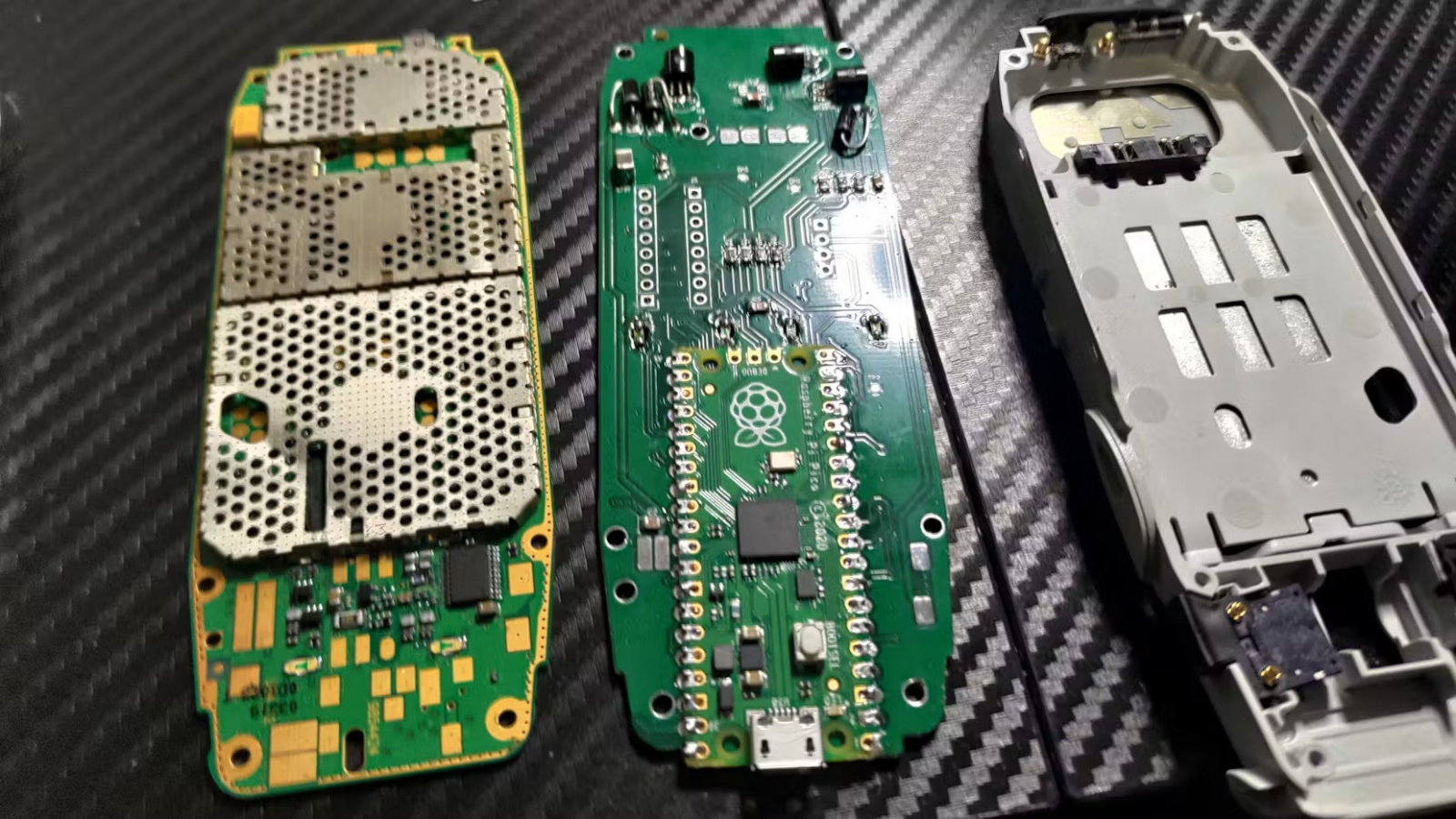
A custom PCB and Raspberry Pi Pico have given a classic Nokia 3310 a new role as a dedicated gaming device. Developer Hoani Bryson retained the handset’s original display and keypad while replacing its internal electronics, allowing it to run new software including Trick Shot II, a physics-based puzzle game that won the eighth Nokia 3310 Jam from a field of 51 entries.
The Nokia 3310 Jam challenges developers to recreate the constraints of games made for the original phone, even if the finished game runs on other hardware. Its technical limits include:
- An 84 × 48-pixel resolution
- A two-color palette
- One audio channel
- No more than 12 control buttons
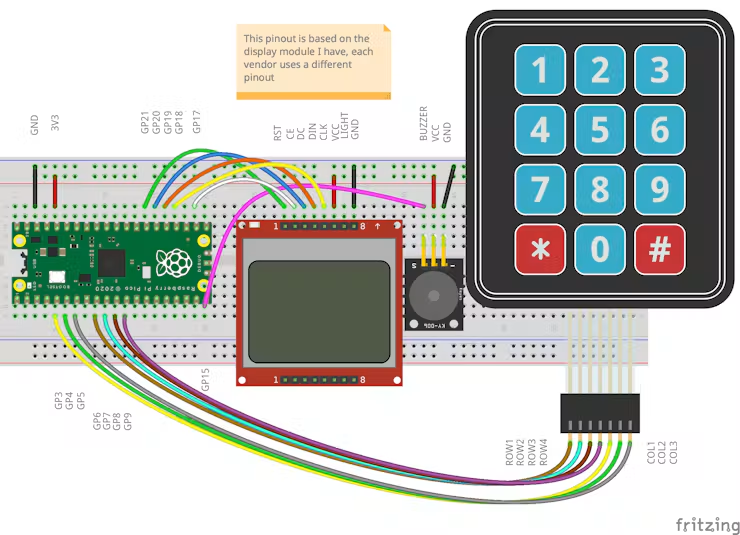
Bryson went beyond an emulator-style recreation by designing a board shaped for the 3310 chassis. The board connects to the phone’s display and keypad, while the Raspberry Pi Pico handles game processing. The result preserves the physical interaction of the original handset without relying on its original internal platform.
On the software side, Bryson built an open-source game engine in Go. It uses Ebitengine for desktop and browser builds, while TinyGo targets the microcontroller. The shared engine keeps the game logic intact across platforms while adapting graphics, sound and controls for each one. It supports text, geometric shapes and sprites, with dithering patterns used to suggest gray shades on the monochrome display.
The desktop version also emulates the pixel appearance and LCD response of the old handset. Bryson has published the custom PCB project alongside the software, while Trick Shot II is available to play free in a browser. Recreating the physical 3310 conversion still requires fabricating the board and assembling the components.