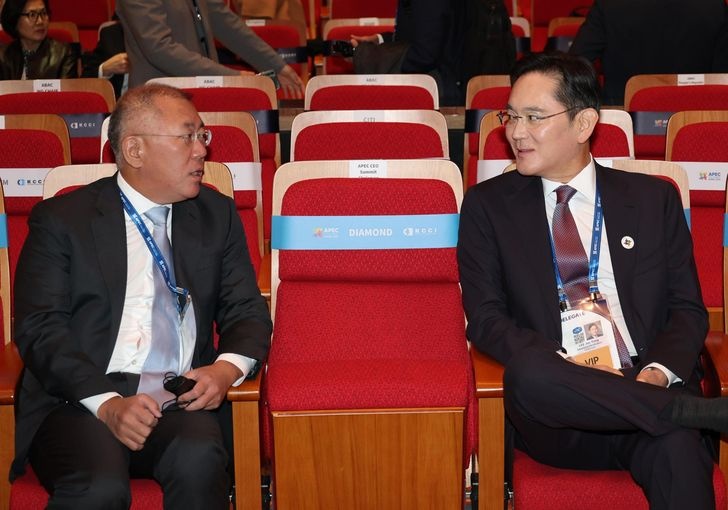
Samsung and Hyundai Motor Group are positioning their partnership for a wider technology push spanning electric vehicles, software-defined cars, autonomous driving, robotics and physical AI. The companies discussed the next phase of their relationship at HMG Appreciation Day, a gathering attended by 177 executives and family members, according to The Korea Times.
No new joint product, investment or major contract was announced at the event. The immediate significance is instead strategic: the groups are linking areas in which Samsung supplies core electronics and Hyundai brings vehicle platforms, mobility software and robotics expertise through Boston Dynamics.
Samsung presented a broad set of automotive technologies that could be used in future vehicles.
- Automotive processors
- Solid-state batteries
- Battery cells and modules
- Camera modules
- MLCC capacitors
- Next-generation displays
- Electronic control systems
The partnership already has a supply-chain foundation. Samsung SDI and Hyundai Motor signed their first EV battery supply agreement in 2023, covering 2026 through 2032. It involves Samsung SDI's prismatic P6 batteries, including units made at its Hungary plant.
Samsung and Hyundai have also tied their consumer ecosystems together. Hyundai and Kia vehicles gained SmartThings integration through Home-to-Car and Car-to-Home services, enabling users to check or control selected vehicle functions from home and interact with connected home devices from the car. The collaboration was later extended toward Hyundai and Kia software-defined vehicles.
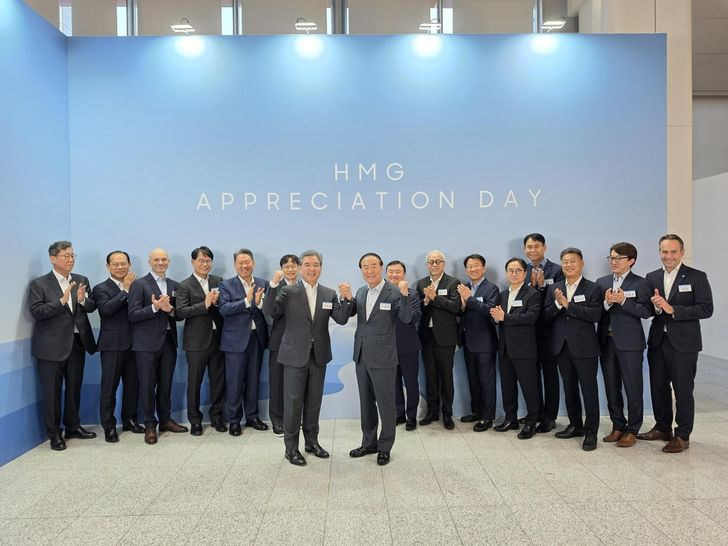
Robotics becomes the longer-term opportunity
The most ambitious shared area is physical AI: systems that use AI to perceive, move through and interact with the physical world rather than operating only in cloud services or chat interfaces. Hyundai Motor Group has a significant asset in Boston Dynamics, whose Atlas humanoid robot remains a prominent advanced robotics project, although large-scale industrial deployment is still a longer-term challenge.
Samsung is building out its own robotics operations. The company established Samsung RX, a dedicated robotics organization, in summer 2026, with plans beginning in industrial environments and potentially expanding to stores and homes.
Samsung SDI, Hyundai and Kia already have a concrete robotics project: an agreement to develop specialized batteries for robots. Combined with Samsung's processors, memory, cameras, sensors and battery technology, Hyundai's vehicle engineering, actuators and robotics platforms could cover a substantial portion of the hardware stack required for autonomous machines.
Whether the broader relationship produces a jointly developed robot, vehicle platform or new AI system remains unconfirmed. For now, the groups have signaled that a battery-and-components partnership may be evolving into a deeper strategic alliance across the technologies behind future mobility.