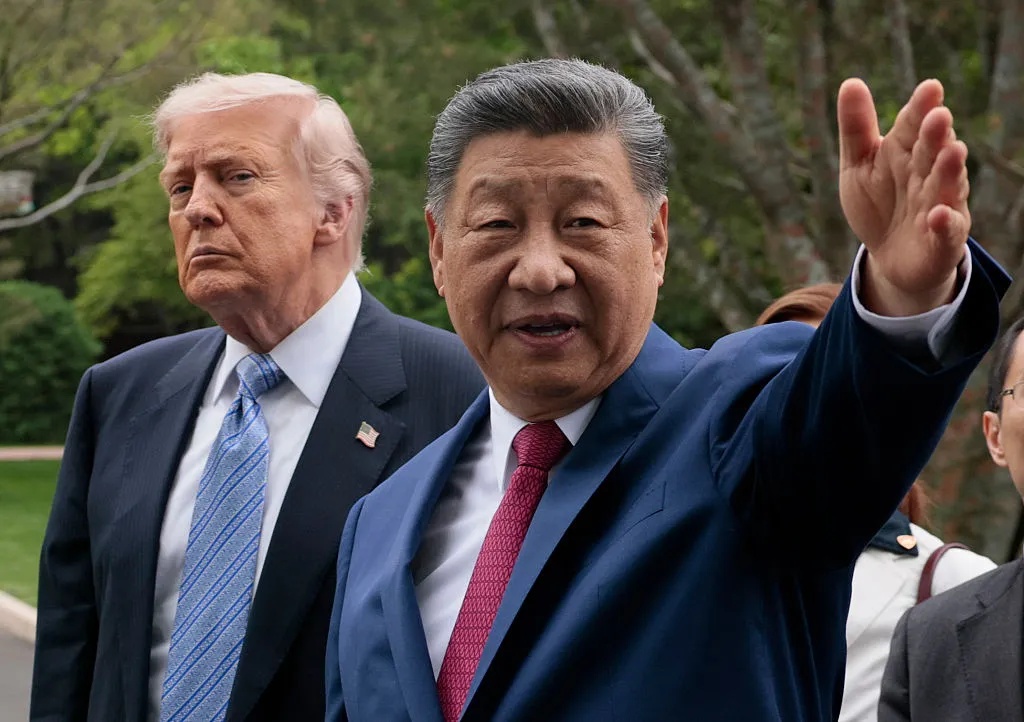
Calls to slow the development of frontier AI are now colliding directly with the U.S.-China technology race. U.S. Senator Chris Coons has urged Donald Trump to discuss AI risks with Xi Jinping in talks scheduled for September 24, arguing that cooperation between rivals could resemble Cold War-era nuclear negotiations.
The push follows public alignment from several of the industry’s best-known figures. Anthropic CEO Dario Amodei has called for a slower pace for frontier models and independent assessments; OpenAI CEO Sam Altman has entertained the prospect of an agreement among major labs; Google DeepMind CEO Demis Hassabis has said the direction is right; and Elon Musk summarized his view by saying, “Dario is right.”
Dario is right.
Elon Musk
Amodei’s proposal has three layers: independent verification inside AI companies, coordination among labs in democratic countries, and ultimately a global arrangement that includes China. The final stage is the most difficult. A country that restrains its own computing capacity and model development without a verifiable reciprocal commitment risks conceding economic and military advantages to a rival that continues to accelerate.
Safety cooperation alongside chip competition
Coons embodies the tension between shared AI safety goals and strategic competition. He is also a sponsor of the SAFE Chips Act, a proposal intended to limit China’s access to the most advanced AI accelerators. Its stated aim is for the U.S. to retain an edge in computing power and expand adoption of the American technology stack rather than China’s.
That creates a difficult policy split: governments may seek safeguards against highly capable AI systems while still treating advanced chips, data centers and model capabilities as strategic assets. Trump has framed AI largely as a competitive race, saying on September 4 that the U.S. was monitoring the risk of AI-driven cyberattacks before emphasizing that America leads China and that “whoever wins AI, wins.”
Unlike nuclear weapons, AI systems are especially hard to verify through traditional arms-control methods. A warhead can be counted and a missile silo can be observed, but a model is software that can be copied, modified and deployed across different infrastructure. Export controls can restrict leading chips, and large data centers can be monitored, yet measuring compliance with a limit on AI capabilities would require verification tools that are still at an early stage.
Independent evaluators are central to Amodei’s argument for that reason. Without credible ways to inspect or test what other developers are building, a mutual pledge to slow development has limited value.
China is also advancing its own AI strategy. At the BRICS summit in New Delhi, Xi proposed an open-source AI community for the bloc, including shared development and use of large language models, training programs and a more open ecosystem. The initiative positions AI as a channel of influence in emerging markets as well as a contest over technical benchmarks.
Hardware self-sufficiency is another part of the equation. TrendForce has forecast that high-end AI chips developed in China could approach 90% of the country’s domestic market in 2026. U.S. restrictions may constrain access to leading foreign hardware, but they also increase Beijing’s incentive to build an AI infrastructure less dependent on Washington.
The emerging debate is therefore about more than whether labs should build more cautiously. Safety rules could determine which companies can train the largest models, who is allowed to inspect them, what hardware can be purchased and which technical standards take hold. Costly compliance requirements may also be easier for OpenAI, Google, Anthropic and xAI to absorb than for smaller entrants.
The unresolved issue for any Trump-Xi discussion is whether the two countries can establish safeguards that are credible without giving either side a decisive advantage in the race for AI compute and capability.