
Early benchmark results put Apple’s A20 Pro well ahead of its predecessor in single-core CPU testing and Metal graphics, though direct comparisons with Qualcomm’s next flagship Snapdragon chip remain limited by different test versions and graphics APIs.
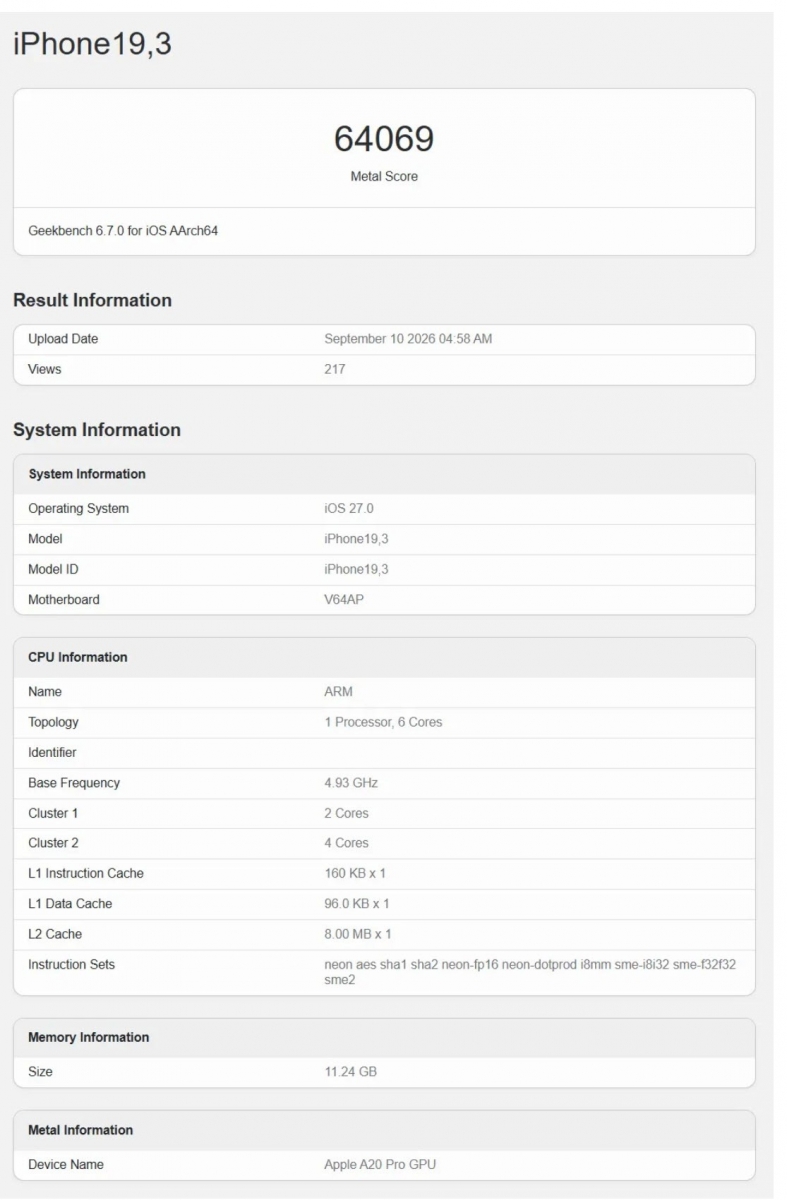
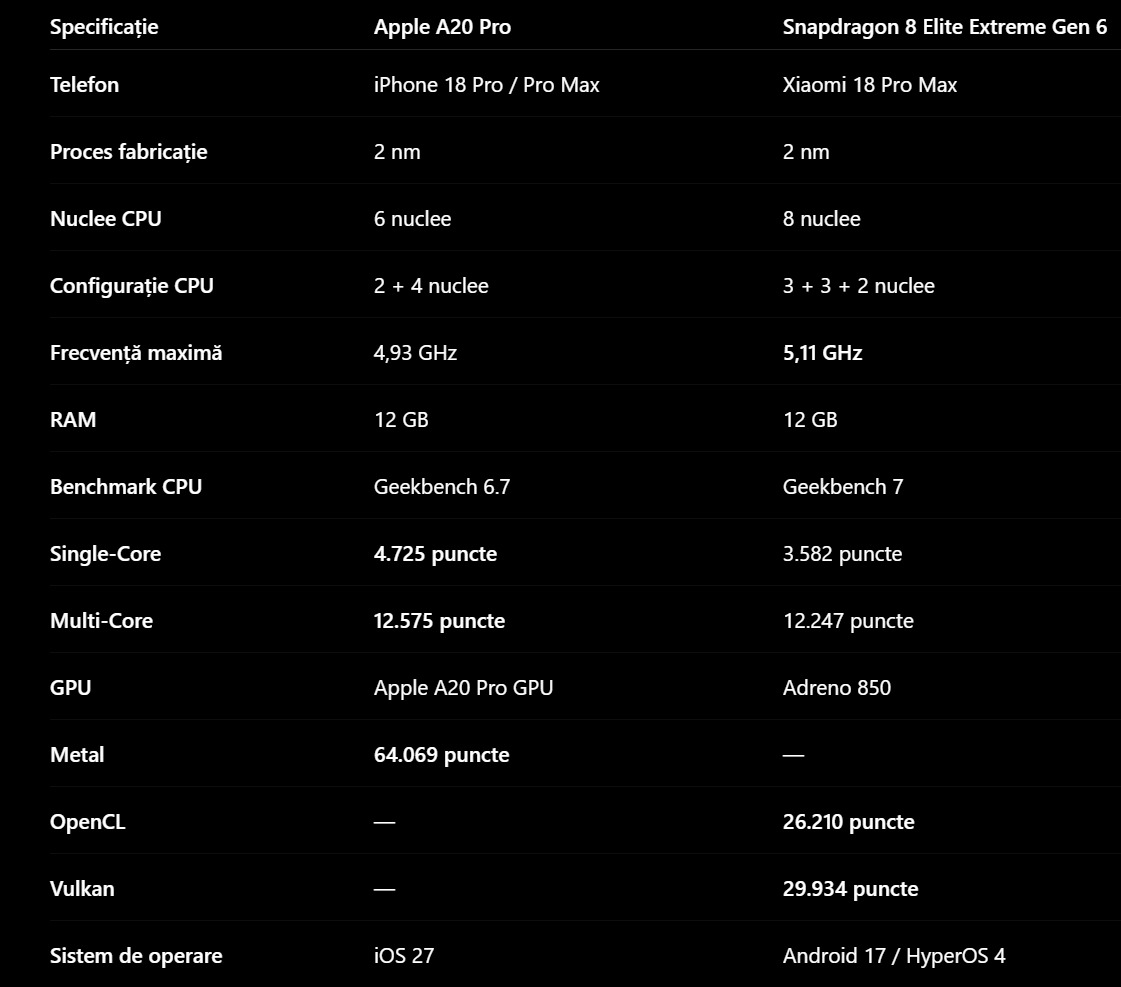
A Geekbench 6.7 listing for the iPhone19,3, identified as the iPhone 18 Pro Max, reports 4,725 points in single-core and 12,575 points in multi-core testing. Other runs are said to be close, with the iPhone 18 Pro reaching about 4,719 and 12,677 points respectively. The A20 Pro is listed with six CPU cores, including two performance cores, a peak frequency of 4.93GHz, and 12GB of RAM.
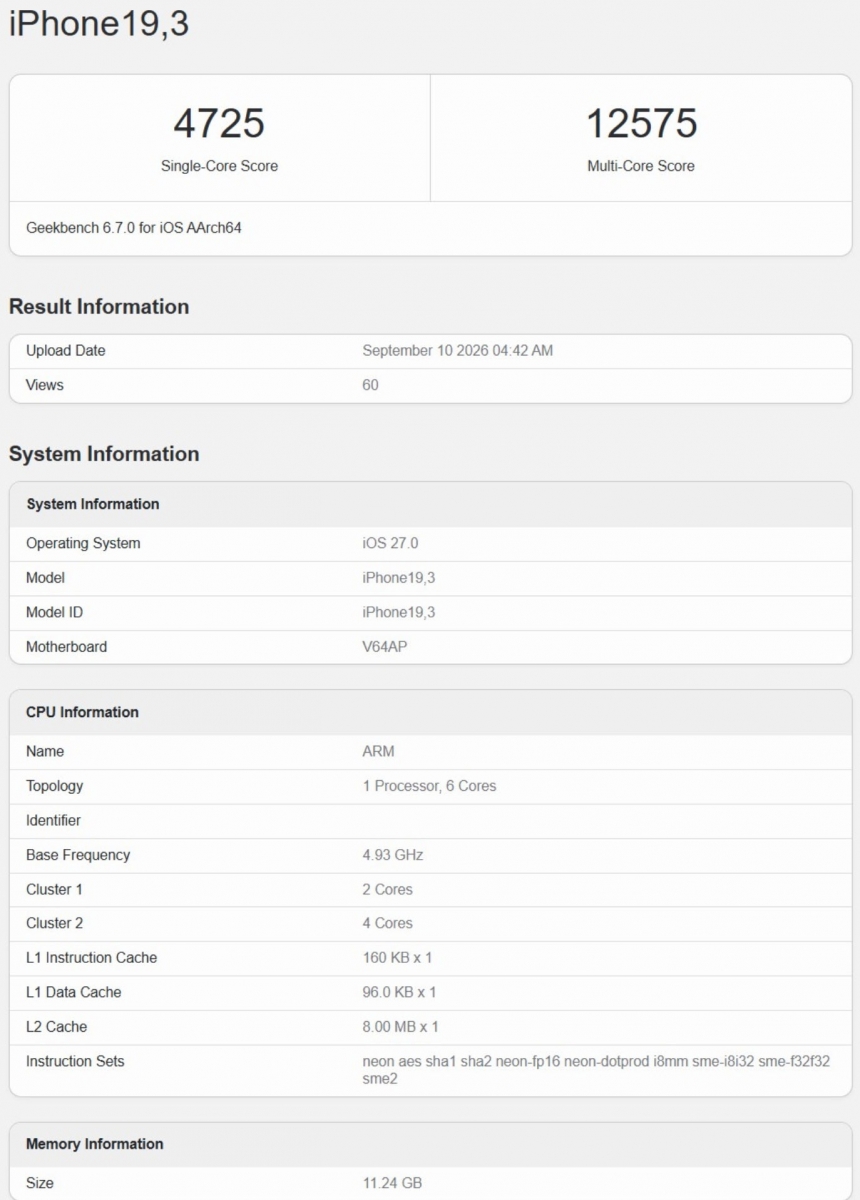
Those figures would represent gains of roughly 23% in single-core performance and 25% in multi-core performance over the A19 Pro. Apple has previously claimed up to a 40% improvement in sustained performance, a measurement that is distinct from a short benchmark run.

The A20 Pro’s early graphics result is also notable. It recorded 64,069 points in Geekbench Metal, nearly 40% above the A19 Pro GPU score cited in the early testing. An iPhone 18 Pro Max has also appeared in AnTuTu v11 with 3,551,073 points, compared with roughly 2.27 million for the prior generation; AnTuTu totals are not directly comparable between iOS and Android devices.
On the Android side, a Xiaomi 18 Pro Max benchmark entry identifies the Qualcomm SM8975 chip as the Snapdragon 8 Elite Extreme Gen 6, also referred to as the Gen 6 Pro. Its reported eight-core configuration comprises three cores at 3.74GHz, three at 4.03GHz, and two top cores at 5.11GHz. Paired with 12GB of RAM and Android 17, the device scored 3,582 single-core points and 12,247 multi-core points in Geekbench 7.
Those Xiaomi figures cannot be placed directly against the iPhone results because they use a different Geekbench version. Preliminary Snapdragon testing nevertheless indicates that Apple retains a substantial per-core advantage. The Xiaomi device also returned 26,210 points in OpenCL and 29,934 in Vulkan, but neither score is equivalent to Apple’s Metal result because the APIs and workloads differ.



The Snapdragon hardware and Xiaomi 18 Pro Max software remain pre-release, so clock behavior, thermal tuning and final performance could change before commercial devices arrive. Final cross-platform testing will be needed to establish how the next flagship chips compare under matched workloads.