
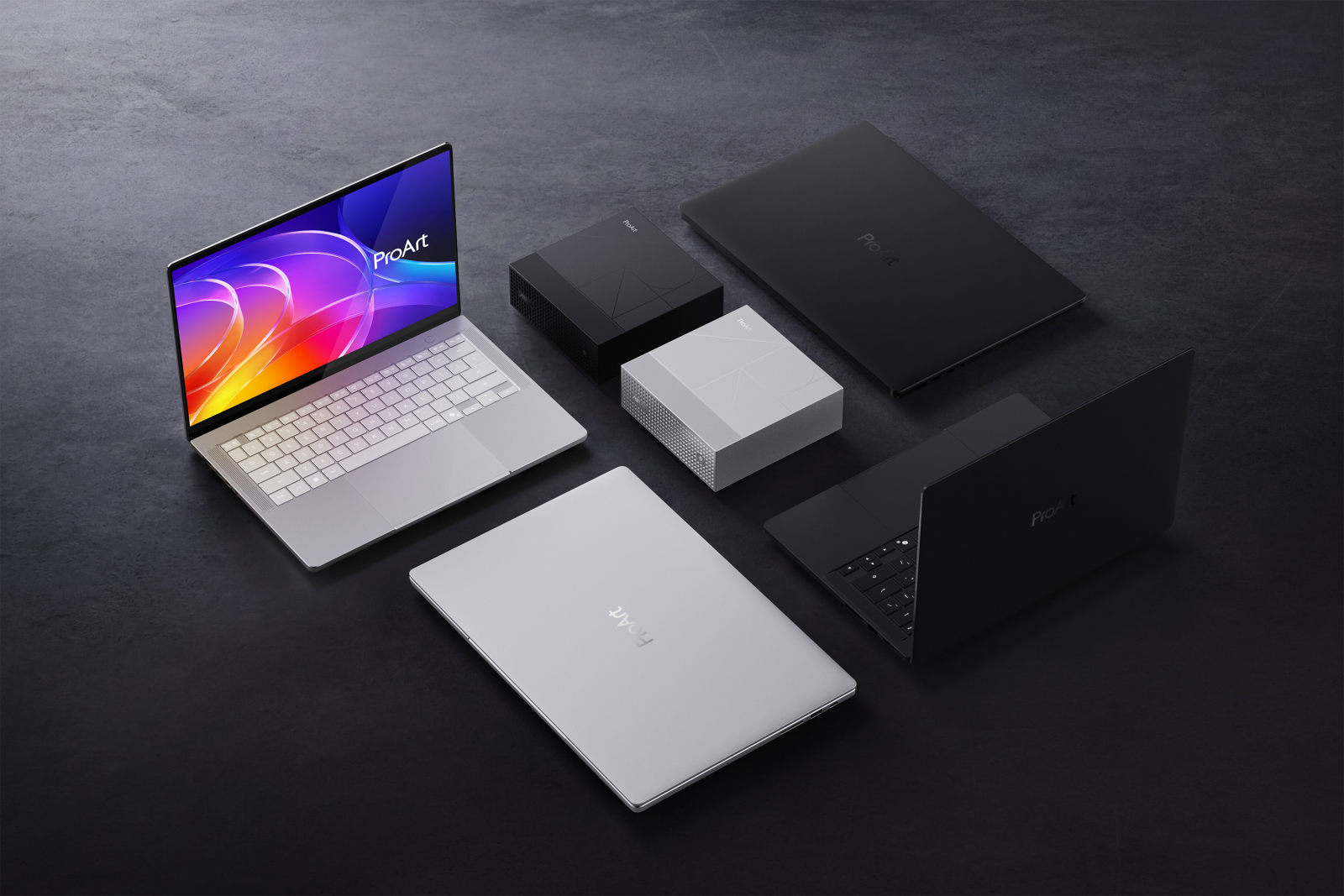
ASUS has detailed the ProArt P14 H7407, a 1.48kg creator laptop built around NVIDIA's RTX Spark N1X platform. The 14-inch model pairs a 20-core NVIDIA Grace CPU with a Blackwell RTX GPU and can be configured with up to 128GB of unified LPDDR5X memory, an unusually large shared memory pool for a portable system.
ASUS rates the platform at up to 1 petaFLOP of FP4 AI performance, with the Blackwell RTX GPU offering up to 6,144 cores. Because the CPU and GPU share unified memory rather than relying on wholly separate system RAM and graphics memory pools, the design is intended to accommodate larger local AI workloads than conventional mobile GPUs with more limited dedicated VRAM.
The ProArt P14 uses a 14-inch touch-enabled ASUS Lumina Pro OLED display with a 2,880 × 1,800 resolution, 16:10 aspect ratio and 120Hz variable refresh rate. ASUS claims 100% DCI-P3 coverage, Pantone validation, Delta E below 1, HDR brightness of up to 1,600 nits and stylus support. An anti-reflective coating is also included.
- NVIDIA RTX Spark N1X platform with a 20-core Grace CPU and Blackwell RTX GPU
- Up to 128GB of unified LPDDR5X memory
- Up to 1TB PCIe 4.0 NVMe SSD storage, plus one M.2 2280 PCIe 5.0 x4 expansion slot
- Three USB4 Type-C ports rated at 40Gbps, USB-A 3.2 Gen 2, HDMI 2.1 FRL, a 3.5mm audio jack and an SD 4.0 card reader
- Wi-Fi 7 and Bluetooth 5.4 connectivity
- FHD IR webcam with Windows Hello support
- 90Wh battery and 140W USB-C charger
- Dimensions of 310.7 × 218.9 × 13.9–15.9mm and a weight of 1.48kg
- Windows 11 Pro and MIL-STD-810H durability testing
The P14's 90Wh battery is only slightly smaller than the 99.9Wh unit in the larger ProArt P16, while the smaller machine is nearly 300g lighter. It also retains the 120Hz refresh rate and ASUS's color-accuracy positioning, though it moves down from the P16's 4K-class display to the 2,880 × 1,800 panel.
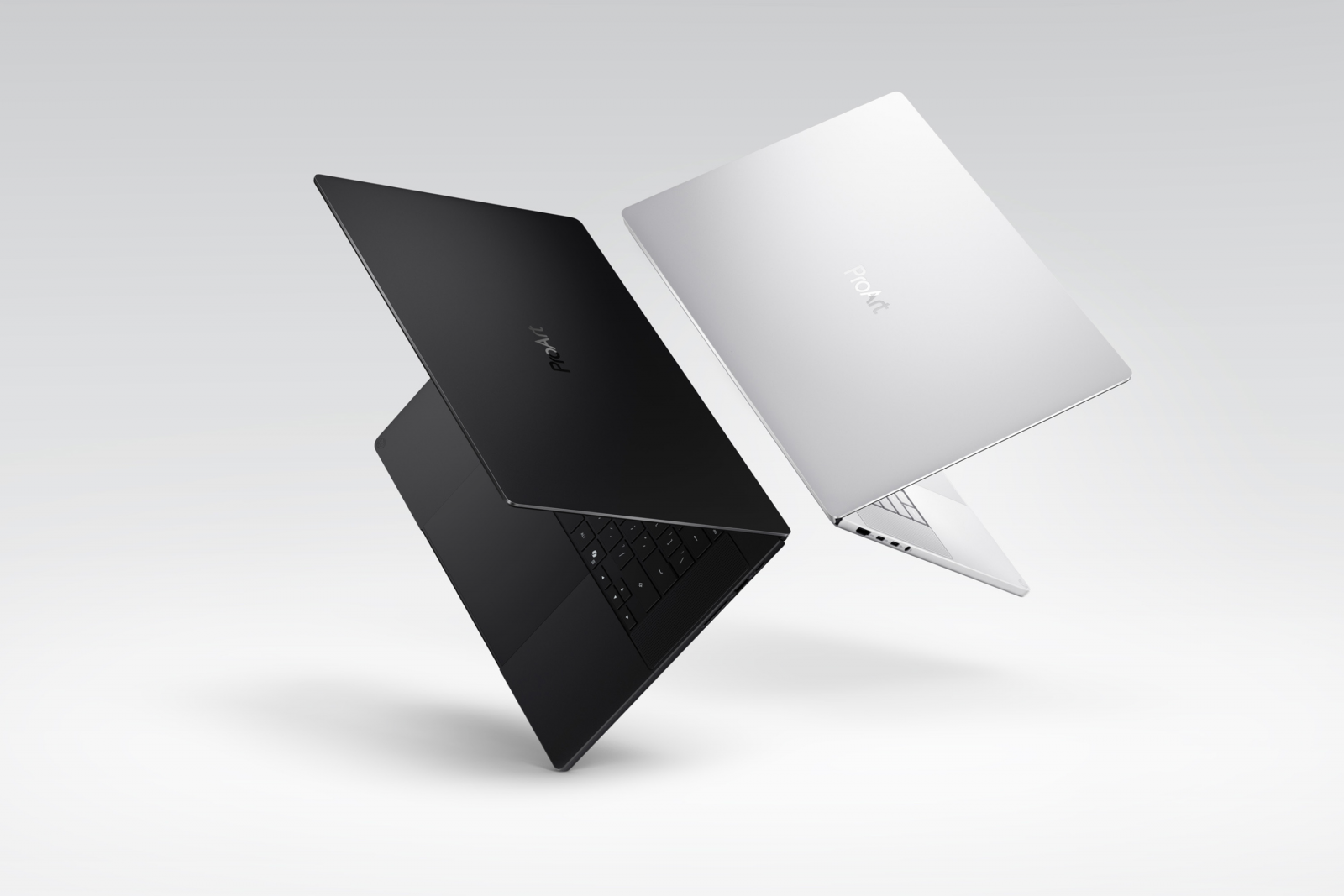
ASUS positions the system for local AI work through software including ComfyUI, Hermes Agent, MuseTree and StoryCube. The company cites support scenarios involving models up to 120B parameters, 4K AI video generation and 12K 4:2:2 video editing, but usable model size and performance will vary substantially between the 32GB and 128GB memory configurations.
The ARM-based Grace architecture also makes application compatibility a key consideration, particularly for workflows dependent on older x86 plug-ins. ASUS has not confirmed wider international pricing or availability for the ProArt P14 H7407.