
Huawei and Xiaomi have launched premium foldables built around processors developed in-house, making chip design and AI integration as central to their rivalry as displays and cameras. Huawei’s Mate XT 2 uses the Kirin 9050 Pro, while Xiaomi’s 18 Fold is powered by the XRING O3.
The two devices arrived on September 7. Huawei has taken the more ambitious hardware route with a dual-hinge tri-fold design and a 10.2-inch display on the Mate XT 2. Xiaomi’s 18 Fold uses a wider, near-square folding format and pairs its internally designed chip with LPDDR6 memory from Chinese supplier CXMT.
The shared in-house chip approach does not mean the companies have achieved the same degree of supply-chain independence. Huawei is developing Kirin while facing US restrictions on access to advanced semiconductor manufacturing technologies. The manufacturing process for the Kirin 9050 Pro has not been publicly confirmed, although Huawei has promoted a LogicFolding architecture for the chip.
Xiaomi has more manufacturing flexibility. Reuters has reported that TSMC produces the XRING O3 on a 3 nm process, even as Xiaomi retains control over the chip’s design and uses CXMT memory in the 18 Fold.
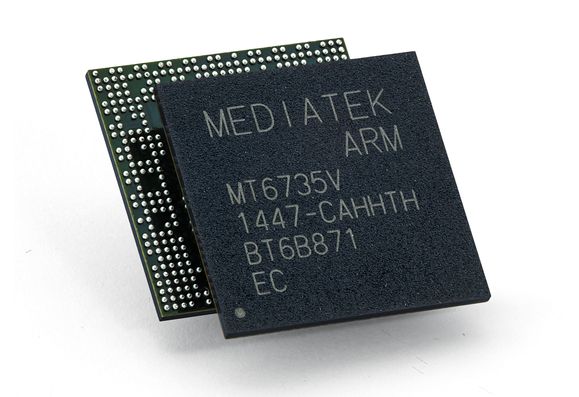
Controlling the SoC design can give handset makers several advantages beyond branding:
- The processor can be tuned for a company’s own hardware design.
- Power use and performance can be optimized alongside the operating system.
- Camera processing and AI features can be more tightly integrated.
- The product roadmap becomes less reliant on Qualcomm and MediaTek.
That is broadly the vertically integrated model Apple has pursued for years with its A-series and M-series chips. For Huawei and Xiaomi, foldables provide a high-profile platform to demonstrate the same strategy in devices that are technically complex and positioned at the top of their respective lineups.
Local AI and a China-focused ecosystem
Huawei combines HarmonyOS 7 with its Pangu AI services and DeepSeek integration on the Mate XT 2. Xiaomi is using XiaoAI alongside its own local models and services on the 18 Fold. These platforms are designed for the Chinese market, where local partnerships, services and regulatory requirements play an outsized role in which AI features can be deployed.
Huawei and Xiaomi have launched products that make video and social-media consumption easier and arrived ahead of Apple with certain AI features. Chinese companies appear to be leading smartphone evolution.
Nikkei China, as cited by Huawei Central
The broader claim remains open to interpretation, but the market context is clear. Reuters-cited data put Huawei at a 22.6% share of China’s smartphone market in the second quarter of 2026 and at roughly 68% of local foldable shipments. Xiaomi, with about 12.4% of the overall market, is using the 18 Fold and XRING platform to strengthen its position in the premium tier.
The key remaining question is how far each company can extend this control beyond a flagship foldable. Huawei’s semiconductor manufacturing path remains unclear, while Xiaomi’s XRING effort still depends on TSMC fabrication despite the company’s growing role in chip design.