
Insta360’s X6 is designed to handle one of the more time-consuming parts of 360-degree video: choosing where viewers should look. Its AI Director feature can analyze recent footage while the camera is powered off and charging, identify moments it considers notable, and automatically assemble a clip for transfer to the Insta360 app.
The analysis runs locally on the camera and can be switched off. Users can also select modes that prioritize either battery life or faster analysis, giving the automated workflow a degree of control over its background processing.
The X6 records 360-degree video at up to 8K at 50 fps. Its automated editing tools are powered by PanoMind, a multimodal model developed by Insta360 and trained on more than 10,000 hours of footage across over 30 scenario types, according to the company’s documentation.
For additional control, Auto Edit 2.0 can take selected clips and generate reframing, cuts, camera movements, music and transitions. The approach targets a longstanding trade-off of 360 cameras: recording every direction makes it possible to choose a conventional 2D perspective later, but that reframing process has traditionally required significant manual editing.
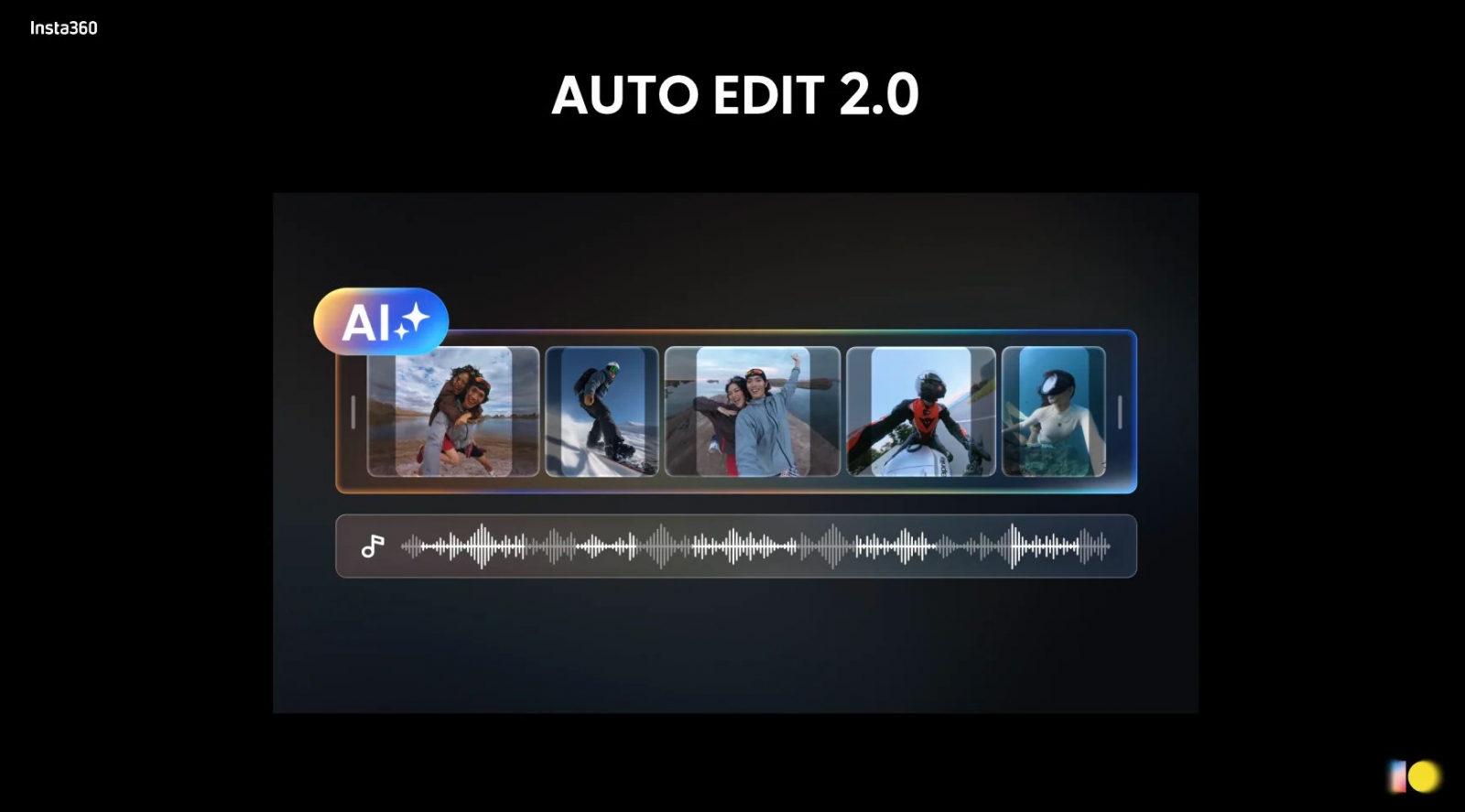
Insta360 X5 had already brought 8K capture and quicker editing tools to the range, while the X6 moves more of the selection and editing work onto the camera itself. Separately, the cloud-based Moments Pro service handles cloud-stored footage. Launch information also points to Google Gemini integration for generating edits from prompts covering factors such as subject, mood, style and desired duration.
Some reporting has referred to the underlying AI engine as the “APEV Model,” but Insta360’s X6 documentation and product page identify it as PanoMind. As competition in 360 cameras grows, including DJI’s reported work on an Osmo 360 II, the effectiveness of automated reframing and editing could become as important as headline recording resolution.