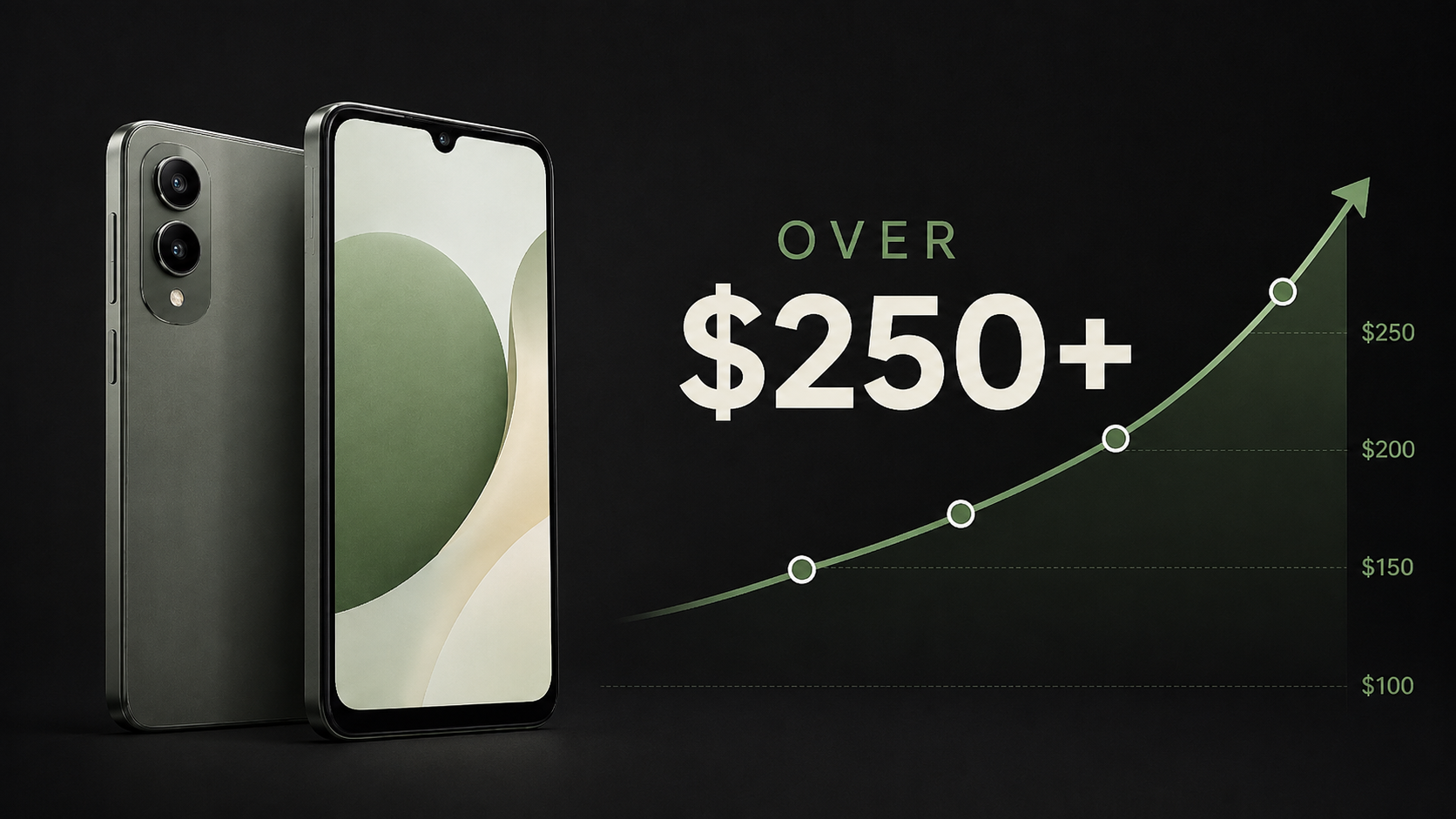
Smartphone makers are finding it harder to protect low-cost phones from rising component bills. Memory prices for smartphones climbed by more than 80% quarter over quarter in Q2 2026, according to Counterpoint Research, putting particular pressure on entry-level and mid-range devices where margins are already thin.
The effect is already emerging in retail pricing and product decisions. Samsung and Nothing have made repeated price adjustments in India, while Huawei, Xiaomi and Honor have also raised prices in China. These moves are regional, but they reflect a wider supply-chain problem: manufacturers can no longer consistently absorb higher RAM and storage costs without passing on some of the increase or changing a device’s specification.
For comparable low-end smartphone configurations, bill-of-materials costs were 70% higher year over year in Q2, with memory responsible for nearly all of the increase, Counterpoint said. Mid-range BOM costs rose 52%, and memory accounted for roughly 40% of the total. In flagship phones, DRAM has even overtaken the processor as the most expensive individual component.
The supply outlook offers little immediate relief. TrendForce expects conventional DRAM contract prices to rise another 13% to 18% in Q3 2026, while NAND Flash contract pricing is forecast to increase by 10% to 15%. Memory suppliers are directing part of their capacity toward AI servers and high-bandwidth memory, segments with stronger demand and margins than the smartphone market.
That leaves phone brands with three broad options: increase retail prices, reduce hardware configurations or accept lower margins. The last option is especially difficult for brands competing in the US$150 to US$250 segment, where there is little room to offset a higher component cost.
Configuration cutbacks may become more visible in upcoming launches. TrendForce has noted a move back toward 8GB RAM configurations in mid-range phones, while 16GB options are becoming less common in the high-end segment. Counterpoint also sees cost pressure limiting camera and processor upgrades in mid-tier devices.
POCO has provided an early example of this new calculation. The company said using the newest chipset would have pushed costs higher, so the POCO F9 Ultra retains the previous-generation platform. That does not necessarily weaken the device on its own, but it signals that annual upgrades in the same price tier may no longer reliably bring a newer chip, more RAM and higher storage capacity.
Europe is also feeling the impact. Counterpoint reported that European smartphone shipments fell 10% in Q2, marking the region’s weakest second quarter in three years. Higher component costs, increased retail prices and fewer promotions were cited as contributing factors, with Eastern Europe more exposed because affordable Chinese-brand phones make up a larger part of the market.
The industry’s revenue figures underline the shift. Global smartphone revenue rose 7% in Q2 2026 even as shipments declined, while the average selling price increased 17% year over year to about US$400. Premiumization is part of that trend, but Android price increases tied to memory costs are also contributing.
Premium devices have more room to absorb higher costs through larger margins, trade-in programs and promotions. Budget phones do not. Counterpoint had previously identified the European sub-US$250 segment as particularly vulnerable, and premium smartphones accounted for a record 29% of global sales in the first half of 2026, up from 25% a year earlier.
India and China show how quickly the pressure can translate into pricing. CNMO has documented successive increases for Samsung and Nothing models in India, including repeated adjustments to Samsung’s Galaxy A17 line. In China, the same report identified at least four waves of price rises during 2026, including recent moves from Huawei, Xiaomi and Honor. The key question for the next product cycle is whether brands will continue raising prices or make the next generation look more selective on memory, silicon and camera upgrades.